Clump Renewal
Every 3–4 years, slice out and discard the congested, woody center of the clump in late winter, then backfill with fresh, well-drained soil to maintain vigor and an even fountain shape.

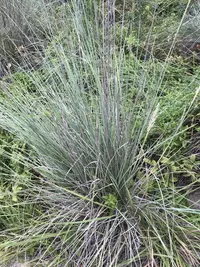
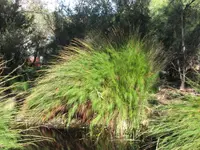
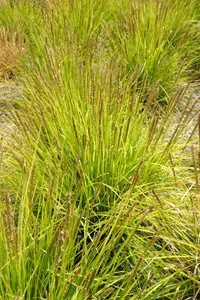
Lindheimer's muhly (Muhlenbergia lindheimeri) is a clump-forming ornamental grass native to Texas and northern Mexico. It grows in upright, fountain-like tufts with narrow blue-green leaves.
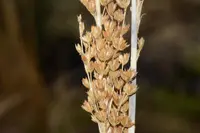
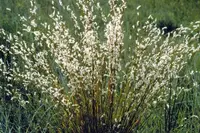
Plants produce airy, silver-tan flower plumes that rise above the foliage and sway in light wind, giving strong movement and texture in garden designs. It stays attractive through much of the year, even when dormant.
This species tolerates heat, drought, and poor soils, which makes it suitable for low-maintenance landscapes and beginners who want to learn how to care for Lindheimer's muhly. It performs best in full sun with well-drained soil and moderate to low moisture once established.

Care Difficulty
Easy Care

Light Preference
Full Sun

Water Requirements
Low Water

Temperature Preference
Cold Hardy

Hardiness Zone
6–9

Soil Texture
Sandy, Loamy, Rocky

Soil pH
Slightly acidic (6.5–7.0), Neutral (7.0)

Soil Drainage
Well-drained

Fertilization
Minimal (feed rarely)
Scan your plant to receive care tips personalized for your specific plant
Available on iOS and Android
This warm-season grass performs best in open, bright conditions with consistent sun exposure.
This species is drought-tolerant once established and prefers infrequent, deep watering in freely draining soil.
This grass prefers warm conditions but has good tolerance to both summer heat and winter cold in many climates.
This warm-season grass tolerates a wide humidity range and usually does not need special adjustment outdoors.
This grass thrives in lean, fast-draining mineral soils and resents waterlogged conditions.
This species can grow in containers if the pot is prepared for its deep, fibrous root system and upright clumps.
This native ornamental grass needs only light feeding under most garden conditions.
Pruning focuses on renewing foliage and keeping Muhlenbergia lindheimeri tidy, not reshaping it heavily.
This bunchgrass is usually grown in the ground, with transplanting done infrequently.
Propagation of Muhlenbergia lindheimeri is commonly done by seed or clump division.
This warm-season grass is generally cold hardy and requires minimal winter care in much of its range.

Plant Health Check
Not sure what's wrong with your plant? Check your plant's health inside the app.
This bunchgrass is naturally concentrated in central and south Texas, especially limestone hills and canyons, where it forms loose colonies along dry streambeds and rocky slopes.
It develops a strong, deeply penetrating root system that allows the clumps to stay green and functional in extended drought, making it valuable for xeric and low-input landscapes.
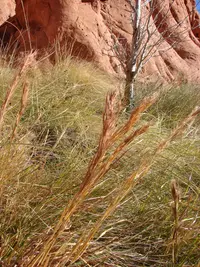
The foliage often shifts from blue-green in the growing season to tan or straw tones in winter, yet the upright, fountain-like clumps remain standing and provide structure, cover, and seed for wildlife when many other grasses have collapsed.

This species has been widely adopted in ecological restoration and roadside revegetation projects in its native range because it tolerates poor, alkaline soils, survives on natural rainfall once established, and helps stabilize slopes while still allowing visibility, making it a practical model for growing Lindheimer's muhly in dry urban landscapes.
This species forms tidy clumps and spreads slowly outward from the crown. It does not run by rhizomes, so it usually stays where planted and is not considered aggressive in typical garden settings.
Keep your plants happy and healthy with plant identification, disease detection, and easy care guidance.