Salt-tolerant placement
Use this grass in areas with mildly saline or alkaline runoff, such as near de-iced sidewalks or parking lots, where many other species struggle but alkali sacaton can establish and stabilize soil.

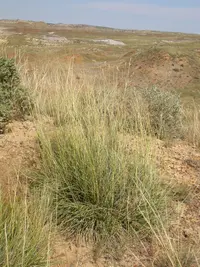
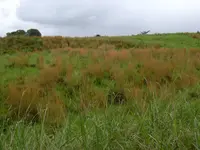
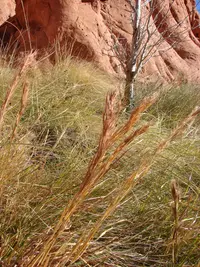
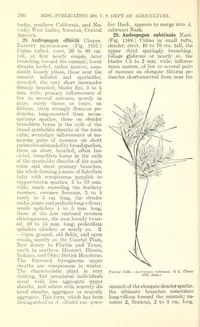
Alkali sacaton, Sporobolus airoides, is a warm-season perennial bunchgrass native to arid and semi-arid regions of North America. It often grows in alkaline or saline soils, including desert flats and dry prairies.
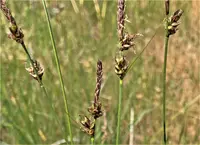
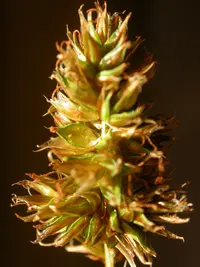
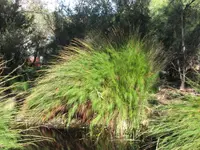
Plants form dense, upright clumps with fine, narrow leaves and open, airy flower panicles that create a soft, cloudlike effect. Mature clumps develop a strong, fibrous root system that gives good drought and soil-stabilizing performance.
This grass tolerates heat, drought, and poor soils once established, which makes it relatively low-maintenance in suitable climates. It prefers full sun and well-drained soil, and learning how to care for alkali sacaton mainly involves avoiding overly wet, shaded conditions.

Care Difficulty
Easy Care

Light Preference
Full Sun

Water Requirements
Low Water

Temperature Preference
Cold Hardy

Hardiness Zone
4–9

Soil Texture
Sandy, Loamy, Clay

Soil pH
Neutral (7.0), Alkaline (7.5–8.5)

Soil Drainage
Waterlogged tolerant

Fertilization
Minimal (feed rarely)
Scan your plant to receive care tips personalized for your specific plant
Available on iOS and Android
This warm-season grass thrives in open, bright sites with strong sun exposure.
This prairie grass is drought-tolerant once established and prefers infrequent, deeper watering.
This species tolerates a wide temperature range and is well adapted to hot, dry climates.
This drought-adapted grass tolerates typical indoor and outdoor humidity and rarely needs special adjustments.
This species prefers very well-drained, mineral soils and performs poorly in heavy, poorly aerated substrates.
This grass can be grown in containers if the pot and substrate are managed to stay dry between waterings.
This tough native grass needs minimal feeding, but light nutrition can support establishment and growth when grown in poor soils.
Sporobolus airoides benefits from simple, periodic pruning to keep the clump tidy and encourage fresh growth.
This grass is usually grown in the ground, so care focuses on thoughtful transplanting rather than frequent repotting.
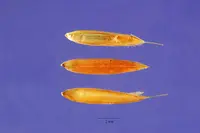
Propagation of Sporobolus airoides is most practical by division or seeds, depending on scale and desired uniformity.
This species is cold hardy in much of its range and usually needs only minimal winter attention in the landscape.

Plant Health Check
Not sure what's wrong with your plant? Check your plant's health inside the app.
This grass can complete its life cycle in soils with salinity levels that kill many crop plants, thanks to efficient salt exclusion at the root level and salt tolerance in its leaf tissues.
It naturally dominates in alkaline flats and seeps across western North America, where its roots tolerate high pH and carbonate-rich conditions that limit most other grasses.
Its dense, fibrous root system binds sandy or silty soils, so it often plays an important role in stabilizing dunes, drainageway margins, and disturbed saline sites in arid landscapes.

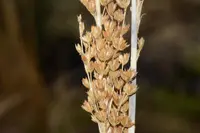
In wet years this species can produce abundant, airy seed heads that serve as a major food source for granivorous birds in desert and semi-desert wetlands, effectively linking saline grassland productivity to local bird populations.
Brown leaf tips usually come from drought stress, high soil salts, or old age of foliage. Check that soil drains well but is not bone dry, avoid fertilizer burn, and remove old blades during late-winter cleanup.
Keep your plants happy and healthy with plant identification, disease detection, and easy care guidance.