Clump Renewal
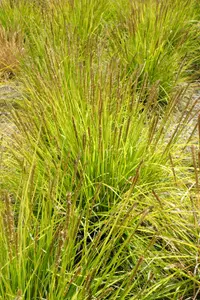
Every 3–4 years, slice and lift older clumps in early spring, replanting only the vigorous outer sections to maintain dense, upright growth and prevent the center from thinning out.

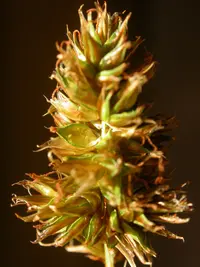
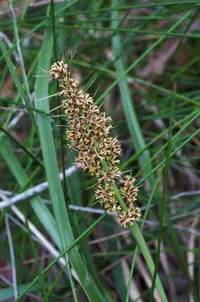
Hood's sedge (Carex hoodii) is a cool-season, clumping grass-like perennial from the sedge family. It forms narrow, arching tufts that add fine texture to plantings. Leaves are slender and often bluish green, with small, understated flower spikes that appear above the foliage. This species typically grows in dry to moderately moist open woods, rocky slopes, and grasslands across western North America. It is generally hardy, long-lived, and tolerant of cold and wind, which makes it relatively low maintenance once established. It prefers sun to light shade and well-drained, lean soils. Gardeners who care for Hood's sedge often value it for naturalistic, low-input landscapes.

Care Difficulty
Easy Care

Light Preference
Full Sun

Water Requirements
Moderate Water

Temperature Preference
Cold Hardy

Hardiness Zone
3–8

Soil Texture
Sandy, Loamy, Rocky

Soil pH
Acidic (5.5–6.5), Slightly acidic (6.5–7.0)

Soil Drainage
Well-drained

Fertilization
Minimal (feed rarely)
Scan your plant to receive care tips personalized for your specific plant
Available on iOS and Android
This cool-season sedge prefers bright outdoor conditions with moderate sun exposure.
This sedge prefers consistently moist but not waterlogged soil, reflecting its natural habitat.
This hardy sedge tolerates a wide range of outdoor temperatures in temperate climates.
This sedge handles a wide humidity range and rarely needs special humidity management.
Carex hoodii prefers lean, fast-draining mineral soils rather than rich, heavy mixes.
This species is suitable for container growing, especially in outdoor, well-drained setups.
This native sedge adapts to low-nutrient soils and usually needs only light feeding in cultivation.
Pruning Carex hoodii is mainly hygienic, aimed at keeping clumps tidy and healthy.
This sedge is more often transplanted in the ground than repotted, but container plants still need occasional attention.
Carex hoodii is most commonly propagated by division, with seed used mainly in restoration or larger projects.
This cool-season, cold-hardy sedge usually needs minimal winter care in temperate to cold climates.

Plant Health Check
Not sure what's wrong with your plant? Check your plant's health inside the app.
Carex hoodii is strongly associated with dry, open coniferous forests and rocky slopes of western North America, often forming part of the understory in montane and subalpine habitats where few other sedges tolerate such drought and exposure.
This species develops narrow, stiff, wiry leaves that help reduce water loss and mechanical damage, an adaptation that suits its native dry, wind‑exposed sites.
Hood’s sedge often begins growth early in the season, providing one of the first fine-rooted grasses or sedges available for forage and ground cover in some high-elevation ecosystems, which supports soil stability as snow recedes.
This bunch-forming species spreads slowly by short rhizomes and self-seeding, not by long runners. It usually forms modest clumps, but in ideal conditions seedlings can appear nearby. Simple thinning or division keeps patches within bounds.
Keep your plants happy and healthy with plant identification, disease detection, and easy care guidance.