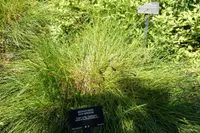
Japanese sedge Care (Carex kobomugi)

Japanese sedge

About Japanese sedge

Japanese sedge (Carex kobomugi) is a low, clumping grass-like perennial typically used for groundcover and erosion control, especially in sandy or coastal sites. It forms dense tufts of stiff, linear leaves that create a tidy, architectural look in borders, rock gardens, and naturalistic plantings.

This species is native to coastal areas of East Asia and has been used in some regions for stabilizing dunes. It is generally tough, with good wind and salt tolerance, which makes it forgiving in exposed gardens.

To care for Japanese sedge, provide well-drained, preferably sandy soil with moderate moisture and at least partial sun, and avoid sites that stay wet and heavy for long periods.

Main Plant Requirements

Care Difficulty

Easy Care

Light Preference

Full Sun

Water Requirements

Moderate Water

Temperature Preference

Cold Hardy

Hardiness Zone

6–9

Soil Texture

Sandy, Loamy

Soil pH

Acidic (5.5–6.5), Slightly acidic (6.5–7.0)

Soil Drainage

Well-drained

Fertilization

Minimal (feed rarely)

Get Personalized Care Plan

Scan your plant to receive care tips personalized for your specific plant

Available on iOS and Android

How to Care for the Japanese sedge

This coastal grass prefers bright conditions and copes well with full sun in most temperate climates.

  • Provide 6–8 hours of direct sun, ideally including morning sun; light afternoon shade helps in hot inland areas to reduce leaf scorch.
  • Tolerates light or partial shade (3–4 hours sun), but Japanese sedge forms looser, less dense clumps and may lean toward brighter exposure.
  • In summer, monitor for browning tips on the hottest, exposed sites; in winter, full sun helps maintain vigor and supports strong regrowth in spring.

This species prefers moist, sandy, well-drained soil but does not thrive in standing water.

  • In established beds, water when the top 3–5 cm of soil feels dry, applying a deep soak so moisture reaches the root zone without puddling.
  • During hot, windy periods, increase frequency if foliage starts to curl or lose turgor; in cool or rainy seasons, reduce watering to prevent rot.
  • Yellowing, limp leaves with sour-smelling soil suggest overwatering, while crisp, browning tips and very dry sand indicate underwatering for Carex kobomugi.

This dune grass is hardy and adapted to a wide range of outdoor temperatures in temperate coastal regions.

  • Active growth is strongest at 60–75°F (16–24°C), with cool nights supporting dense, compact clumps and healthy root development.
  • Established plants tolerate winter cold down to about 0°F (-18°C) with mulched roots, though foliage may burn back and resume from the base in spring.
  • Handles summer heat up to about 90–95°F (32–35°C) if soil is not bone dry; prolonged extreme heat with drought stress can cause leaf scorch and thinning.

Humidity is not critical for Carex kobomugi as long as soil moisture is managed correctly.

Carex kobomugi prefers sandy, fast-draining soil that mimics coastal habitats.

  • Use a sandy or sandy-loam mix with at least 50–70% sand or grit to prevent waterlogging.
  • Incorporate a small amount of compost or leaf mold to add structure without making the mix heavy.
  • Aim for slightly acidic to neutral pH, around 6.0–7.0, which suits most landscape situations.
  • Avoid compacted clay or boggy sites; raise beds or add coarse sand and fine gravel to improve aeration and drainage.

This species can be grown in containers, mainly for control of its spreading habit.

  • Choose a wide, heavy container that resists tipping and allows room for its creeping rhizomes to spread laterally.
  • Select a mineral-based, sandy mix in containers to keep roots from staying wet and to reduce rot risk.
  • Place the pot where wind exposure is moderate so the top growth does not act as a sail and tip the container.

Carex kobomugi is a tough grass-like perennial that benefits from modest feeding in poor or very sandy soils.

  • Use a balanced slow-release fertilizer (around 10-10-10) or a thin layer of compost in early spring as growth starts.
  • Apply once per growing season outdoors; container plants can receive a half-strength balanced liquid feed every 4–6 weeks.
  • Avoid fertilizing in winter or when growth is dormant to prevent weak, elongated leaves.
  • Do not overfeed; excess nutrients reduce drought tolerance and can cause overly lush, floppy foliage.

Pruning Carex kobomugi is mainly cosmetic and maintains a neat, compact clump.

  • Best time is late winter or very early spring before new shoots emerge.
  • Shear back browned or tattered foliage to 5–8 cm with clean hand shears or hedge shears.
  • Remove dead, damaged, or badly crowded tufts at the base to improve air flow and reduce disease.
  • Light shaping along the clump edge helps contain spread and maintain a defined outline in borders.

This coastal sedge is usually grown in the ground, so focus on dividing and transplanting clumps rather than frequent repotting.

  • Transplant or divide every 3–4 years in early spring or early fall when temperatures are mild.
  • Look for congested centers, slow growth, or roots circling a container as signs that division or moving is needed.
  • Lift clumps with a fork, gently tease or cut into sections with healthy roots, and replant at the same depth.
  • Water thoroughly after transplanting and keep soil evenly moist for 2–3 weeks to limit root stress and improve establishment.

Carex kobomugi is most commonly propagated by division, which preserves the parent plant’s characteristics.

  • Divide established clumps in early spring or early fall when soil is workable and temperatures are cool.
  • Lift the plant and split it into sections with several shoots and a firm root mass using a sharp knife or spade.
  • Replant divisions at original depth in well-drained soil, spacing them to allow spreading.
  • Water consistently until new growth is visible and the divisions resist gentle tugging, indicating new roots.

This sedge is quite cold hardy and typically needs minimal winter care in most temperate coastal climates.

  • In USDA zones where it is hardy, foliage may brown but roots usually survive normal frosts.
  • Apply a light mulch layer around the root zone in late fall in exposed or inland sites to buffer freeze–thaw cycles.
  • Container plants in colder regions can be sunk into the ground or moved to a sheltered, unheated area to reduce root freezing.

Care Tips

Sand stabilization

Plant clumps slightly deeper than nursery level and lightly mound sand around the base to help anchor roots and reduce erosion in windy, exposed sites.

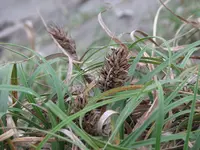
Controlled spread management

Install a shallow root barrier (20–30 cm deep) around beds or along paths to prevent this rhizomatous grass from spreading into lawns or natural areas where it is not wanted.

Salt and wind hardening

In coastal projects, gradually expose young plants to stronger wind and salt spray over 2–3 weeks before planting in the most exposed spots to reduce transplant shock and foliage burn.

Autumn grooming

In late winter or very early spring, rake through the clumps with a gloved hand or flexible shrub rake to remove dead blades without cutting into new growth, which keeps the plant tidy and reduces fungal buildup.

Companion groundcover use

Combine it with other low, tough coastal species of similar vigor to create a dense, interlocking groundcover that suppresses weeds and stabilizes sand while growing Japanese sedge in large landscape areas.

Common Pests and Diseases

Leaf spot fungi

This disease causes small brown to dark purple spots on leaf blades that can merge into larger blotches under prolonged wet conditions. Symptoms include reduced vigor and an overall patchy, scorched look in dense clumps.

Solution

Remove and discard affected foliage to reduce spore load, then avoid overhead watering and reduce thatch so leaves dry quickly. In landscape settings, improve spacing and airflow; for severe, recurring outbreaks, a labeled ornamental grass fungicide containing chlorothalonil or propiconazole can be used according to local regulations and label directions.

Rust

This disease produces orange to brown powdery pustules on the undersides of leaves, often with yellowing or pale streaks on the upper surface. Symptoms include gradual thinning of clumps and reduced ornamental quality, especially in humid, crowded plantings.

Solution

Cut back and dispose of heavily infected foliage and fallen leaves to remove the main source of spores. Improve air circulation, avoid prolonged leaf wetness, and in high-value plantings with persistent rust, rotate fungicides labeled for rust on ornamental grasses, applying only as directed and when conditions favor the disease.

Aphids

These insects cluster on tender leaf bases and flowering stems, sucking sap and causing distortion, yellowing, and sticky honeydew that can attract sooty mold. This pest tends to build up on lush, fertilized growth or stressed plants in warm weather.

Solution

Wash colonies off with a firm stream of water and encourage natural predators such as lady beetles by minimizing broad-spectrum insecticides. For persistent infestations, spot-treat colonies with insecticidal soap or a light horticultural oil, coating the insects thoroughly and repeating as needed according to the product label.

Spider mites

This pest feeds on the undersides of leaves, causing fine speckling, dull or bronzed foliage, and in severe cases fine webbing between leaf blades. Symptoms include a dry, off-color appearance in hot, dry, windy sites where the plants are stressed.

Solution

Rinse foliage thoroughly with water, focusing on leaf undersides, to remove mites and raise local humidity around the clump. In ongoing infestations, apply horticultural oil or insecticidal soap labeled for mites, and reduce plant stress by providing adequate water and avoiding excessive nitrogen fertilization as part of broader Carex kobomugi care instructions.

Interesting Facts

Native dune specialist

This species is naturally found on sandy coastal dunes in eastern Asia, especially along the shores of Japan, Korea, and parts of China, where it is adapted to dry, shifting sand and salt spray exposure.

Strong sand-binding roots

Its dense, spreading rhizomes form tough underground networks that stabilize loose sand, helping to build and maintain dunes in its native range.

Invasive on Atlantic coasts

Introduced as a dune stabilizer in the northeastern United States, it has become invasive in some Atlantic coastal areas, outcompeting native beach grasses and altering dune ecosystems.

Botan icon

Did you know?

In parts of Japan, this species has been traditionally used in coastal protection plantings because its rhizomes tolerate burial by moving sand better than many native grasses, allowing it to persist even as dunes shift over time.

FAQs about Japanese sedge

This species spreads by short rhizomes and can gradually form dense clumps, especially in sandy soil. It is not usually invasive in managed gardens, but edging, root barriers, or dividing clumps limits unwanted spread.

Grow Healthy Plants with Botan Care

Keep your plants happy and healthy with plant identification, disease detection, and easy care guidance.

Botan plant care app — identify plants on mobile

Explore More Plants