Rhizome Containment
In garden beds, install a 20–30 cm deep root barrier or sink bottomless containers into the ground to prevent this spreading sedge from invading nearby plantings while still allowing natural clump expansion.

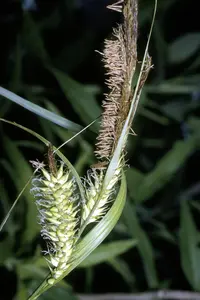
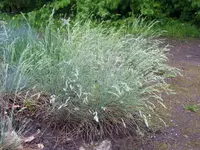
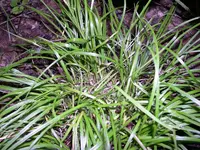
Hairy sedge, Carex lacustris, is a clumping, grass-like perennial commonly found along lakeshores, marsh edges, and wet ditches in cooler regions of North America. It forms dense, upright tufts of arching, narrow leaves with rough-textured margins and tall stems that carry modest brownish flower spikes.
This species naturally stabilizes wet soils and often grows in full sun to light shade where the ground stays consistently moist. Its preference for wet, even boggy conditions is the main factor that influences how easy it is to grow, and understanding how to care for hairy sedge begins with providing steady moisture and suitable site conditions.

Care Difficulty
Moderate Care

Light Preference
Full Sun

Water Requirements
Aquatic

Temperature Preference
Cold Hardy

Hardiness Zone
3–7

Soil Texture
Loamy, Silty, Organic-rich

Soil pH
Acidic (5.5–6.5), Slightly acidic (6.5–7.0)

Soil Drainage
Waterlogged tolerant

Fertilization
Minimal (feed rarely)
Scan your plant to receive care tips personalized for your specific plant
Available on iOS and Android
Carex lacustris prefers bright, open conditions typical of wetlands and pond edges.
Carex lacustris is adapted to consistently wet sites and shallow standing water.
This cool-temperate sedge is hardy and tolerates a wide range of outdoor temperatures.
This sedge prefers consistently moist air but usually adapts well to typical outdoor humidity levels.
This species prefers saturated, organic-rich soil that mimics the edges of natural wetlands.
This sedge can grow in containers if the pot is managed to stay consistently wet and stable.
Carex lacustris is a low-maintenance native sedge that benefits from modest feeding in poor soils or containers.
Carex lacustris responds well to light pruning that refreshes foliage and maintains a tidy clump.
This sedge is most often grown in the ground near water, so transplanting is more common than repotting.
Carex lacustris is most reliably propagated by division, with seeds used mainly for larger restoration plantings.
This cold-hardy sedge tolerates freezing conditions and usually needs minimal winter care in the ground.

Plant Health Check
Not sure what's wrong with your plant? Check your plant's health inside the app.
This sedge naturally forms dense stands along lake shores, ponds, and slow streams, where its extensive rhizome network helps stabilize saturated soils and reduce shoreline erosion.
In colder climates, many leaves of this species remain standing and partly green through winter, providing structure and habitat in frozen wetlands when many other emergent plants have collapsed.
Thick clumps of this sedge create shelter and nesting material for marsh birds, amphibians, and invertebrates, making it a key structural species in northern freshwater wetlands.

In suitable wetland conditions, this species can form nearly monospecific bands or zones along shorelines, strongly influencing how water flows, how sediments settle, and where other plant species are able to establish.
This species spreads steadily by short rhizomes and self-seeding where conditions stay consistently moist. It can form large clumps and patches but is usually manageable with edging, division every few years, and removal of unwanted seedlings.
Keep your plants happy and healthy with plant identification, disease detection, and easy care guidance.