saltgrass Care (Distichlis spicata)

Also known as: Seashore Saltgrass, Desert Saltgrass
saltgrass

About saltgrass

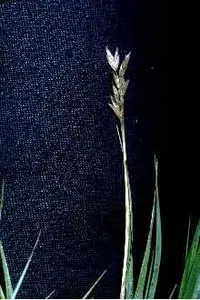
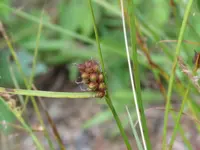
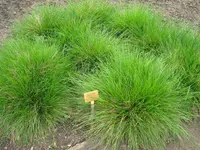
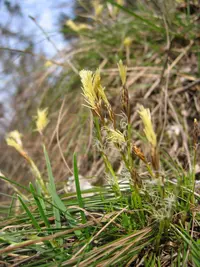
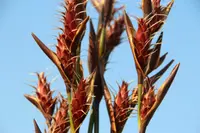
Saltgrass (Distichlis spicata) is a tough, warm-season perennial grass that forms low, spreading patches or small clumps. It has stiff, narrow leaves and often shows a bluish-green color.

This species is native to coastal marshes, salt flats, and inland saline areas across North America, where it tolerates high salt levels that damage most other plants. Its strong rhizomes help stabilize soil and allow it to spread in challenging sites.

Because it thrives in salty, periodically dry or waterlogged conditions, it is generally low-maintenance once established. Gardeners who care for saltgrass usually plant it in full sun, with well-drained soil that does not stay fresh or low in salts for long.


Main Plant Requirements

Care Difficulty

Easy Care

Light Preference

Full Sun

Water Requirements

Aquatic

Temperature Preference

Cold Hardy

Hardiness Zone

4–9

Soil Texture

Sandy, Loamy, Silty

Soil pH

Neutral (7.0), Slightly alkaline (7.0–7.5)

Soil Drainage

Waterlogged tolerant

Fertilization

Minimal (feed rarely)

Get Personalized Care Plan

Scan your plant to receive care tips personalized for your specific plant

Available on iOS and Android

How to Care for the saltgrass

This coastal grass species thrives in strong light and is adapted to open, exposed sites.

  • Provide full sun for 6–8 hours per day; saltgrass forms denser, stronger turf in open, unshaded locations.
  • It tolerates light to moderate partial shade, but growth becomes looser and patchy if daily sun drops below about 4 hours.
  • In hot inland summers, intense late-afternoon sun is acceptable if soil moisture stays high; shaded winter sites may slow regrowth.

This halophytic grass is adapted to wet, even periodically flooded, conditions.

  • Aim for consistently moist to wet soil; do not allow the top 2–5 cm to dry completely on exposed, sandy sites.
  • In cool seasons, reduce irrigation slightly and watch for yellowing, limp shoots, which often signal waterlogged, low-oxygen soil.
  • During hot, windy periods, increase watering if leaf tips brown or curl, keeping soil damp while ensuring excess water can drain away slowly.

This warm-season perennial grass tolerates a wide temperature range in coastal and inland habitats.

  • Active growth occurs around 70–90°F (21–32°C), with the strongest spread during warm late spring and summer conditions.
  • Established plants survive down to about 10–15°F (-12– -9°C), though foliage may brown and go dormant after hard freezes.
  • Heat tolerance is high up to 100°F (38°C) if soil moisture remains ample; extended cold, wet periods can slow Distichlis spicata recovery in spring.

This halophytic grass tolerates a wide humidity range and usually does not need special humidity management indoors or outdoors.

  • Target 30–60% humidity, as saltgrass is adapted to open, often windy coastal and inland sites.
  • Expect it to handle dry indoor air without stress, provided watering and light are appropriate.
  • Watch for leaf tip browning and crispy edges mainly as a sign of drought or salt imbalance rather than low humidity.

Distichlis spicata prefers sandy, saline, and often waterlogged soils but adapts if drainage and structure are managed correctly in cultivation.

  • Use a sandy or sandy-loam mix with 40–60% coarse sand plus mineral topsoil, optionally with 10–20% compost for container or landscape planting.
  • Ensure very sharp drainage but allow periodic saturation by combining coarse sand with grit or fine gravel to prevent prolonged anaerobic conditions.
  • Aim for pH 6.5–8.5; this species tolerates alkaline and saline soils, so avoid strongly acidic mixes unless gradually adjusted with lime.
  • Avoid heavy, compacted clay; if clay is present, improve aeration by incorporating coarse sand and fine gravel rather than only organic matter.

This coastal grass can grow in containers when the pot and medium are chosen to mimic its naturally wet yet fast-draining habitats.

  • Select a wide, heavy container to stabilize the spreading rhizomes and resist tipping in strong winds common in outdoor placements.
  • Use a deep pot that allows a saturated lower zone and a better-aerated upper layer, supporting both wet-tolerant roots and oxygen access.
  • Drill extra side holes near the pot base if necessary to let water drain quickly after flooding or heavy rain while still permitting brief waterlogging periods.

Distichlis spicata is a tough native grass that needs only light feeding in most soils.

  • Use a balanced, slow-release fertilizer (for example 10-10-10) or a thin layer of compost in spring if growth looks weak.
  • Apply once at the start of the growing season; avoid repeated doses in the same year for established clumps.
  • Use half-strength products on sandy or saline sites where saltgrass is often planted, to avoid fertilizer burn.
  • Do not fertilize during winter dormancy; stop feeding 6–8 weeks before expected frost.

Distichlis spicata benefits from simple clean-up pruning to maintain a neat, low mat of foliage.

  • Best timing is late winter to very early spring before new shoots emerge.
  • Shear or cut back old, straw-colored foliage to 5–8 cm using hand shears or sharp hedge shears.
  • Remove dead, damaged, or badly matted sections to improve air flow and reduce fungal issues.
  • Light shaping along bed edges helps contain spread and maintains a defined border line.

This salt-tolerant grass is usually grown in the ground, so focus on dividing and transplanting established clumps.

  • Plan transplanting or division in early spring or early fall when temperatures are mild.
  • Look for crowded mats, bare centers, or slow spread as signs a clump benefits from lifting and resetting.
  • Dig up sections with a spade, keeping a solid root-soil mass, then replant at the same depth in prepared, moist soil.
  • Water thoroughly before and after moving, and shade for a few days if conditions are hot to limit transplant shock.

Distichlis spicata is most commonly propagated by division, with seed used mainly in restoration projects.

  • Divide established clumps in early spring or early fall, when soil is workable and plants are actively rooting.
  • Cut the sod into small sections, each with healthy shoots and roots, then replant promptly.
  • Keep new divisions evenly moist until new growth appears and roots anchor the plant.
  • For seed, sow on the soil surface in trays or beds, keep moist, and provide full sun for germination.

Distichlis spicata is cold hardy across much of its range and usually needs minimal winter care.

  • In the ground, no special protection is needed once plants are established in well-drained soil.
  • Allow foliage to brown naturally; delay cutting back until late winter to help insulate the crown.
  • In containers, use a potting mix with good drainage and avoid waterlogged conditions during freezes.

Care Tips

Salinity Management

Maintain moderate to high soil salinity by periodically irrigating with slightly saline water or mixing a small portion of seawater with fresh water in coastal areas, which helps this halophyte stay competitive and suppresses many glycophyte weeds.

Erosion Control Planting

For shoreline or bank stabilization, plant in staggered, triangular patterns with close spacing (15–30 cm) so the rhizomes knit together quickly and form a dense, erosion-resistant sod.

Rhizome Division Renewal

Rejuvenate aging stands every 3–4 years by lifting and dividing vigorous rhizome sections, then replanting only the firm, white to light-tan pieces and discarding any dark, mushy, or dry segments.

Targeted Weed Suppression

Use a combination of shallow cultivation between rows and a coarse sand or fine gravel topdressing to reduce broadleaf weed pressure without creating overly rich soil that disadvantages this species.

Seasonal Mowing Strategy

In late winter, mow or trim back dead foliage to 5–8 cm before new growth emerges, then avoid frequent low mowing during the active season so the stand can thicken and better tolerate foot traffic when growing saltgrass.

Common Pests and Diseases

Saltmarsh cutworms

These insects are caterpillar larvae that feed on foliage and stems, often causing irregular chewing damage and thinning patches in planted stands. Symptoms include notched blades, severed young shoots, and reduced vigor, especially in newly established plants.

Solution

Monitor at dusk and night for feeding larvae and hand-pick where feasible in small plantings. Encourage natural predators, avoid mowing too short, and, if damage is severe, use a targeted biological control such as Bacillus thuringiensis (Bt) applied according to label directions to young larvae on foliage.

Grasshoppers

These insects chew blades and stems, creating ragged edges and sometimes stripping foliage in exposed, dry sites. Symptoms include sudden defoliation on outer edges of plantings and noticeable jumping insects when disturbed.

Solution

Reduce nearby tall weeds where grasshoppers hide, and use row covers or fine mesh barriers for small, valuable patches during peak feeding periods. In larger landscape plantings, spot-treat with baits or biological products labeled for grasshoppers, focusing applications on the surrounding habitat rather than directly on waterlogged saltmarsh soils.

Leaf spot

This disease causes small tan, brown, or dark purple spots on leaves that may merge into larger lesions under prolonged humidity. Symptoms include premature yellowing and thinning foliage in dense or poorly ventilated stands.

Solution

Remove and dispose of heavily affected foliage and accumulated thatch to lower the amount of fungal spores. Improve airflow by avoiding overly dense seeding, limit overhead irrigation, and, in high-value plantings, consider a grass-safe fungicide labeled for leaf spot applied preventively during warm, humid periods as part of broader Distichlis spicata care instructions.

Smuts

This disease is caused by specialized fungi that replace normal grass flower structures with dark, powdery spore masses. Symptoms include black, sooty streaks or swollen seed heads that shed dark spores when touched.

Solution

Cut and dispose of infected seed heads before spores disperse, and avoid moving contaminated material to new planting areas. Promote strong growth with appropriate watering and nutrition, and if a planting is repeatedly affected, consider re-establishing from clean, certified plant material and rotating away from chronically infected soil patches.

Interesting Facts

Natural salt excreter

This species has specialized salt glands on its leaves that actively excrete excess salt, allowing it to survive in soils and waters too saline for most other grasses.

Strong soil stabilizer

Its dense, creeping rhizomes bind sandy and muddy substrates, so it is widely used in coastal and salt marsh restoration projects to reduce erosion and trap sediments.

Wide salinity tolerance

The grass can grow in environments ranging from brackish to highly saline, including tidal marshes, salt flats, and the edges of inland saline lakes, making it a key model species in studies of plant salt tolerance and Distichlis spicata care.

Botan icon

Did you know?

This species is dioecious, meaning individual plants are either male or female, and in some salt marshes entire patches can be dominated by only one sex, which strongly shapes local patterns of flowering and seed production.

FAQs about saltgrass

Container culture is possible if the pot is wide, heavy, and has excellent drainage. Use a sandy, lean mix and avoid constant saturation. Regular division prevents overcrowding and supports stable growth, especially when growing saltgrass on patios or balconies.

Grow Healthy Plants with Botan Care

Keep your plants happy and healthy with plant identification, disease detection, and easy care guidance.

Botan plant care app — identify plants on mobile

Explore More Plants