Shallow Water Placement
Set containers or root balls so the crown sits at or just above the normal waterline, since this species dislikes being buried too deep under water or soil in pond margins.

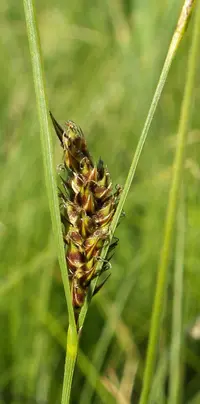
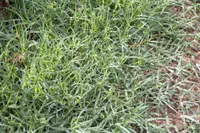
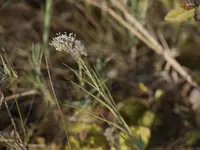
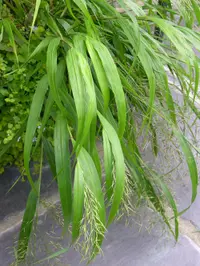
Slender sedge (Carex lasiocarpa) is a fine-textured, grass-like wetland plant forming narrow clumps or loose colonies. It has thin, arching blue-green leaves and delicate seed heads.
This species naturally occurs in cool temperate regions, often along bogs, lake margins, and other saturated, low-nutrient sites. Its preference for consistent moisture and cooler conditions can make it less adaptable to hot, dry gardens.
Gardeners who want to care for slender sedge should provide damp soil, good light, and protection from severe drying winds or intense heat.

Care Difficulty
Moderate Care

Light Preference
Partial Sun

Water Requirements
Aquatic

Temperature Preference
Cold Hardy

Hardiness Zone
3–7

Soil Texture
Loamy, Silty, Peaty

Soil pH
Strongly acidic (4.5–5.5), Acidic (5.5–6.5)

Soil Drainage
Waterlogged tolerant

Fertilization
Minimal (feed rarely)
Scan your plant to receive care tips personalized for your specific plant
Available on iOS and Android
This wetland sedge prefers bright, cool light with protection from harsh afternoon sun.
This species is adapted to consistently wet, even saturated, conditions rather than intermittent drying.
This cool- to cold-hardy sedge tolerates a wide temperature range once established.
This sedge prefers consistently moist air but adapts to a wide range of outdoor humidity.
This wetland sedge needs saturated, organic-rich soil rather than a typical free-draining garden mix.
This species can be grown in containers if the setup mimics waterlogged, shoreline conditions.
Carex lasiocarpa is a low-nutrient wetland grass-like plant that needs only light feeding in cultivation.
Carex lasiocarpa benefits from periodic cleanup rather than structural pruning.
This species is more often transplanted in wetland beds or ponds than repotted, but container plants still need occasional attention.
This sedge is most commonly propagated by division, while seed is used for larger restoration projects.
Carex lasiocarpa is cold hardy in much of the US and usually needs minimal winter care in the ground.

Plant Health Check
Not sure what's wrong with your plant? Check your plant's health inside the app.
This species is strongly associated with open, minerotrophic fens and poor to moderate bogs, often forming nearly monospecific stands on floating peat mats in cool-temperate regions of the Northern Hemisphere.
Its dense, creeping rhizomes bind peat and organic sediments together, helping create buoyant mats that can move slightly with water level changes and provide habitat structure for specialized wetland plants and invertebrates.
The species has a distinctly boreal and cool-temperate range, occurring across northern North America, northern and central Europe, and parts of northern Asia, and is largely absent from warmer lowland climates.

In some northern peatland lakes, this sedge can form extensive, almost ring-shaped floating mats along shorelines, creating a distinct transitional zone between open water and solid peatland that is important for rare fen and bog species.
Leaf tips often brown from inconsistent moisture, drying winds, or excess fertilizer salts. Check soil to stay evenly moist, avoid hard tap water if possible, and trim damaged tips with clean scissors to reduce stress.
Keep your plants happy and healthy with plant identification, disease detection, and easy care guidance.