Edge containment
Install a shallow, 5–8 cm deep root barrier or edging strip around clumps to keep them from creeping into paths or beds while still allowing natural arching growth.

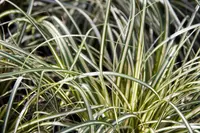
Japanese sedge (Carex oshimensis) is a compact, clumping ornamental grass-like plant valued for its dense, arching foliage. It is commonly used for edging, groundcover, and container plantings.
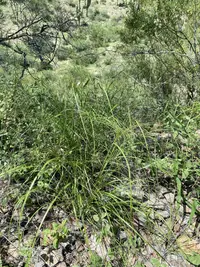
The plant typically forms low mounds of fine, strap-shaped leaves, often in shades of green, gold, or variegated patterns, depending on the cultivar. It brings soft texture and structure to shaded or partially shaded spaces.
Native to rocky slopes and woodlands of Japan, it is adapted to cool, moist, yet well-drained conditions. This background helps explain how to care for Japanese sedge in gardens with similar environments.
It is generally considered easy to grow, provided it receives consistent moisture, protection from harsh midday sun, and soil that does not stay waterlogged.

Care Difficulty
Easy Care

Light Preference
Partial Shade

Water Requirements
Regular Water

Temperature Preference
Cold Hardy

Hardiness Zone
5–9

Soil Texture
Loamy, Silty, Organic-rich

Soil pH
Acidic (5.5–6.5), Slightly acidic (6.5–7.0)

Soil Drainage
Moist but well-drained

Fertilization
Minimal (feed rarely)
Scan your plant to receive care tips personalized for your specific plant
Available on iOS and Android
This grass prefers bright, gentle light rather than intense, all-day sun.
This sedge prefers consistently moist, but not waterlogged, soil.
This hardy sedge tolerates a wide temperature range but grows best in moderate conditions.
This grass tolerates a wide humidity range, so humidity is rarely a limiting factor for Carex oshimensis.
Carex oshimensis prefers cool, moist, airy soil that drains freely yet holds consistent moisture.
This sedge grows very well in containers on patios, balconies, and shaded entries.
This ornamental sedge needs only light feeding to maintain healthy, dense foliage.
Carex oshimensis benefits from modest annual pruning to keep the clump tidy and vigorous.
This sedge is often grown in borders but also adapts well to containers when transplanted correctly.
This species is most commonly multiplied by division rather than seed.
This evergreen sedge is generally cold hardy and often needs only minimal winter attention in temperate climates.

Plant Health Check
Not sure what's wrong with your plant? Check your plant's health inside the app.
This species retains its narrow, arching leaves year-round in mild climates, forming persistent mounds of foliage rather than dying back completely in winter, which is unusual among many temperate sedges.
It forms dense, low clumps typically 20–40 cm tall and wide, a growth habit that reflects its origin on the rocky, well-drained slopes and outcrops of Japan’s Oshima region.
Although a grass-like plant, it is adapted to bright shade and dappled light in its native habitat, which makes grow Carex oshimensis useful where many true ornamental grasses struggle with low light.
This ornamental grass is semi-evergreen to evergreen in many mild climates. Foliage usually stays attractive through winter, though older leaves may brown at the tips and benefit from light grooming at the end of the cold season.
Keep your plants happy and healthy with plant identification, disease detection, and easy care guidance.