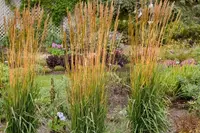
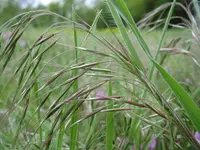
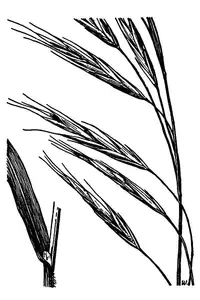
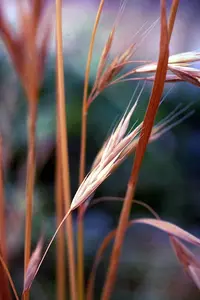
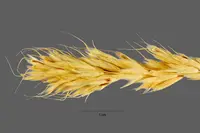
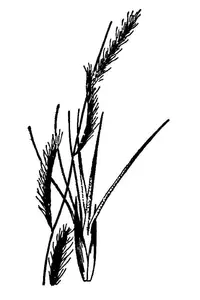
broadleaf sedge Care (Carex platyphylla)

Also known as: broad-leaved sedge, wide-leaved sedge
broadleaf sedge

About broadleaf sedge

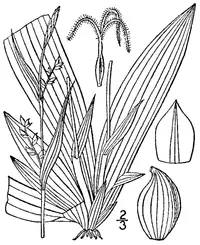
Carex platyphylla, commonly called broadleaf sedge or silver sedge, is a cool-season, clumping ornamental sedge. It forms low, arching mounds of broad, blue-green to silvery leaves that give a soft, grassy look.

This species is native to shaded woodlands in eastern North America, where it grows in humus-rich, often rocky soils. It is valued as a groundcover under trees and in shaded borders, especially where turf grass struggles.

The plant is generally low-maintenance and long-lived when given consistent moisture and shade. Understanding how to care for broadleaf sedge starts with providing cool, shaded conditions and soil that drains well but does not dry out completely.

Main Plant Requirements

Care Difficulty

Easy Care

Light Preference

Partial Shade

Water Requirements

Moderate Water

Temperature Preference

Cold Hardy

Hardiness Zone

4–9

Soil Texture

Loamy, Silty, Organic-rich

Soil pH

Acidic (5.5–6.5), Slightly acidic (6.5–7.0)

Soil Drainage

Moist but well-drained

Fertilization

Minimal (feed rarely)

Get Personalized Care Plan

Scan your plant to receive care tips personalized for your specific plant

Available on iOS and Android

How to Care for the broadleaf sedge

This shade-loving sedge prefers cool, filtered light rather than strong direct sun.

  • Provide bright dappled shade or light shade, with at most 1–3 hours of gentle morning sun and no harsh afternoon sun, especially in warmer climates.
  • In deep shade, growth becomes sparse and blades elongate and flop; in too much sun, broadleaf sedge foliage can scorch and turn pale or brown at the tips.
  • Site it under open-canopy trees, on the north or east side of buildings, and expect slightly stronger light tolerance in cool spring and fall than in mid-summer.

This woodland sedge prefers consistently moist, cool soil that never stays waterlogged.

  • Aim for evenly moist soil; allow only the top 1–2 cm to dry between waterings in average conditions, especially during the first growing season.
  • During hot, dry weather, increase watering frequency and monitor for curling or folding blades, which indicate the plant is too dry and needs a deep soak.
  • Use soil that drains well yet holds moisture, such as loam with organic matter; reduce watering in fall and winter to avoid soggy conditions and root rot in Carex platyphylla.

This hardy perennial sedge tolerates cold winters and cool summers best.

  • Optimal active growth occurs around 55–75°F (13–24°C), with strongest performance in cooler, evenly moist woodland conditions.
  • Mature plants typically survive down to about -20°F (-29°C) when planted in the ground with good soil drainage and a natural leaf-litter mulch layer.
  • Heat tolerance is moderate; extended periods above 85°F (29°C) can stress plants, so provide shade, mulch, and consistent moisture during hot, dry spells.

This species handles typical indoor humidity but stays healthiest with slightly moist air.

  • Aim for 40–60% humidity to minimize leaf-tip browning on broadleaf sedge.
  • Tolerates short dry spells, but prolonged air below 30% may cause crispy edges and dull, slow growth.
  • Increase humidity locally with a pebble tray or grouping plants rather than misting, which has only brief effects.

This sedge prefers consistently moist, well-drained, humus-rich soil.

  • Use a loose, loamy mix with 40–60% organic matter such as compost or leaf mold to mimic woodland conditions for Carex platyphylla.
  • Ensure moderate drainage by blending fine bark and a small amount of perlite so the mix holds moisture without staying waterlogged.
  • Target slightly acidic to neutral pH around 6.0–7.0, which supports nutrient availability and healthy root function.
  • Avoid heavy clay, pure sand, or compacted mixes that stay soggy or form a crust when dry, as these reduce aeration.

This sedge is suitable for container growing on shaded patios or balconies.

  • Choose a squat, wide container to match its spreading habit and keep the root zone evenly moist without deep saturated pockets.
  • Use a slightly heavier pot material such as ceramic to stabilize the clump and reduce rapid moisture swings outdoors.
  • Raise the pot on feet or bricks so drainage holes stay clear and excess water escapes quickly after rain or watering.

Carex platyphylla needs only light feeding, as it is adapted to modest soil fertility.

  • Apply a thin layer of compost or leaf mold around the clumps once in spring for slow, gentle nutrition.
  • In lean soils, use a balanced slow-release fertilizer (around 10-10-10) at half strength in early spring.
  • Avoid midsummer or late-season feeding to prevent soft, weak growth going into winter.
  • Container-grown broadleaf sedge may benefit from a diluted balanced liquid fertilizer every 4–6 weeks during active growth.

Carex platyphylla benefits from simple cleanup pruning to maintain a neat, healthy clump.

  • Cut back winter-tatty or dead foliage in late winter or very early spring before new growth emerges.
  • Remove damaged, yellowing, or crowded leaves at the base using clean, sharp hand pruners or scissors.
  • Light thinning of older outer leaves helps maintain an attractive arching shape and encourages fresh growth.
  • Avoid cutting into the crown; always leave some green foliage to support photosynthesis and recovery.

Broadleaf sedge is usually grown in the ground, so transplanting is more common than container repotting.

  • Plan transplanting for early spring or early fall when temperatures are mild and soil is moist but not waterlogged.
  • Move clumps when growth slows, centers thin out, or roots fill and circle a container or planting pocket.
  • Lift the plant with a fork, keep the root ball as intact as possible, and replant at the same depth in amended soil.
  • Water thoroughly after transplanting, then keep soil evenly moist and shade the plant lightly for 1–2 weeks to limit stress.

Carex platyphylla is most reliably propagated by division rather than by seed.

  • Divide mature clumps in early spring or early fall, when temperatures are cool and soil moisture is stable.
  • Lift the parent clump and gently tease or cut it into sections, each with healthy roots and several shoots.
  • Replant divisions immediately at the same depth in well-drained, humus-rich soil, spacing to allow spread.
  • Water well after planting, then keep soil evenly moist and provide light shade until divisions establish.

Carex platyphylla is generally cold hardy in temperate climates and needs minimal winter care outdoors.

  • In colder regions, apply a 5–8 cm layer of mulch around the root zone after the ground cools, not touching the crown.
  • Leave most foliage in place over winter to shield the crown, then trim back damaged leaves in late winter.
  • Move container plants into a sheltered, unheated but frost-free or slightly protected spot to reduce freeze–thaw stress.

Care Tips

Divide aging clumps

Every 3–4 years, lift and divide congested clumps in early spring, replanting smaller sections at the same depth to keep foliage dense and to prevent the center from thinning out.

Use living mulch

Plant this sedge in a continuous band under shrubs or open-canopy trees so the foliage acts as a living mulch, suppressing weeds and stabilizing soil on light slopes.

Protect from winter heave

In colder regions with freeze–thaw cycles, add a 2–3 in layer of shredded bark around but not over the crowns in late fall to reduce frost heaving and root damage.

Gentle leaf grooming

In late winter, comb through the foliage with gloved hands or a soft rake to remove dead blades without cutting the plant back hard, which preserves its natural arching form.

Plan for dry spells

When growing broadleaf sedge in dry shade, install a simple soaker hose or leaky pipe under the mulch layer so occasional deep irrigations reach the root zone during extended droughts.

Common Pests and Diseases

Rust fungus

This disease causes yellow, orange, or brown pustules on leaves, often on older foliage in shaded, moist conditions.

Solution

Remove and discard affected leaves, avoid overhead watering, and increase spacing and airflow around clumps; in persistent cases, apply a sulfur or chlorothalonil-based fungicide according to label directions during wet periods.

Leaf spot

This disease produces small water-soaked or tan to dark-brown spots that can merge into larger patches, leading to premature leaf decline.

Solution

Trim and dispose of spotted foliage, keep irrigation at soil level, and reduce dense thatch around the plant; for recurring issues, use a copper-based fungicide early in the season and maintain good air circulation.

Aphids

These insects cluster on young shoots and leaf bases, sucking sap and sometimes causing distortion, yellowing, and sticky honeydew on nearby foliage.

Solution

Rinse clumps thoroughly with a strong stream of water to dislodge colonies, encourage beneficial insects such as lady beetles, and use insecticidal soap or a neem oil spray on undersides and bases of leaves if populations remain high.

Spider mites

These pests feed on leaf surfaces in hot, dry conditions, leading to fine stippling, dull or bronzed foliage, and sometimes very fine webbing deep in the clump.

Solution

Increase humidity around the plant, hose down foliage regularly to knock mites off, and apply horticultural oil or insecticidal soap directed into the leaf bases at repeated intervals if damage continues.

Foliar blight

Symptoms include rapid browning and dieback of leaf tips and margins, often starting on stressed plants grown in overly wet or crowded conditions.

Solution

Cut back and remove blighted leaves, thin congested clumps, and adjust watering to keep soil evenly moist but not saturated; in severe or recurring cases, consider a labeled ornamental grass fungicide and avoid overhead irrigation during cool, humid weather for consistent Carex platyphylla care.

Interesting Facts

Native Appalachian specialist

This sedge is naturally restricted to rich, rocky deciduous forests of the eastern United States, especially the Appalachian region, where it often grows on shaded slopes and ravine bottoms with base-rich, well-drained soils.

Distinctive blue foliage

The plant is noted for its broad, glaucous blue-green leaves, which are unusually wide for a sedge and keep their color well in shade, making it easy to distinguish from most finer-textured woodland Carex species.

Clump-forming woodland habit

Unlike many sedges that spread aggressively by rhizomes, this species forms relatively compact, slow-spreading clumps, which allows it to persist for many years in stable woodland understories without dominating the ground layer.

Botan icon

Did you know?

In several states within its natural range, this species is tracked as uncommon or locally rare because it depends on intact, undisturbed calcareous or mafic woodlands, making it an indicator of high-quality forest habitat.

FAQs about broadleaf sedge

This species spreads slowly by short rhizomes and forms clumps rather than running widely. It can gently expand over time but is not considered aggressive. Occasional division keeps it within bounds in designed plantings.

Grow Healthy Plants with Botan Care

Keep your plants happy and healthy with plant identification, disease detection, and easy care guidance.

Botan plant care app — identify plants on mobile

Explore More Plants