Rhizome containment
Install a shallow root barrier or sink edging 15–20 cm deep around beds to keep spreading rhizomes in bounds and make future clump division straightforward.

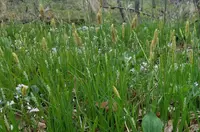
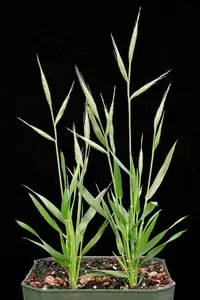
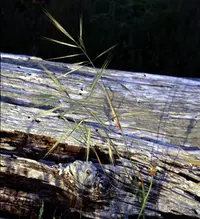
Pretty sedge (Carex woodii) is a clump-forming, woodland sedge valued for its fine, arching foliage and tidy, low-growing habit. It stays relatively compact, which suits small gardens and naturalistic plantings.
This species occurs naturally in shady, deciduous woodlands of eastern North America, often in moist but well-drained soils rich in organic matter. Its texture and soft green leaves make it a subtle ground layer plant under trees and shrubs.
Carex woodii is generally undemanding once established, provided it has consistent moisture, partial shade, and soil that does not stay waterlogged. These traits make it straightforward to care for pretty sedge in many temperate garden settings.

Care Difficulty
Moderate Care

Light Preference
Partial Shade

Water Requirements
Regular Water

Temperature Preference
Cold Hardy

Hardiness Zone
4–8

Soil Texture
Loamy, Silty, Organic-rich

Soil pH
Acidic (5.5–6.5), Slightly acidic (6.5–7.0)

Soil Drainage
Moist but well-drained

Fertilization
Minimal (feed rarely)
Scan your plant to receive care tips personalized for your specific plant
Available on iOS and Android
This woodland sedge prefers soft, filtered light that mimics a bright forest edge.
This species prefers consistently moist, but not waterlogged, soil throughout the growing season.
This hardy sedge tolerates a wide temperature range typical of temperate outdoor gardens.
This sedge handles a wide humidity range but grows best with moderate ambient moisture.
This woodland sedge prefers consistently moist, loose soil with high organic content.
This species is suitable for container culture, especially on shaded patios or balconies.
Carex woodii is a low-feeding native sedge that benefits from light, targeted nutrition in lean soils.
Pruning Carex woodii is mainly done to refresh appearance and remove old foliage rather than to control size.
This sedge is usually grown in the ground, so transplanting clumps is more common than container repotting.
Carex woodii is most reliably propagated by division, which preserves the exact form of the parent plant.
This native sedge is cold hardy in much of its range and usually needs minimal winter care.

Plant Health Check
Not sure what's wrong with your plant? Check your plant's health inside the app.
This species is one of the earliest sedges to leaf out in deciduous woodlands of eastern North America, often forming green clumps on the forest floor before many broadleaf perennials emerge.
Carex woodii spreads slowly by short rhizomes, forming soft, arching tufts that can knit into loose colonies, which helps stabilize leaf litter and upper soil layers in its woodland habitat.
The plant is strongly associated with semi-shaded, mesic to dry-mesic hardwood forests, where it benefits from dappled light before the tree canopy fully closes in late spring, a key point in Carex woodii care instructions for gardeners trying to mimic its native conditions.
This species spreads slowly by short rhizomes, forming loose clumps rather than fast-running mats. It can gradually widen over several years but is not considered aggressive and is usually easy to keep within defined beds or borders.
Keep your plants happy and healthy with plant identification, disease detection, and easy care guidance.