Encourage Compact Growth
Pinch back overly long, soft shoots in late winter or very early spring to keep plants dense and low, which helps the mat close over soil quickly and reduces weed invasion when growing Late Goldfig.

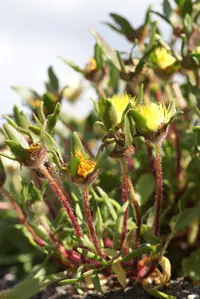
Carpanthea pomeridiana, commonly called late goldfig, is a low, spreading succulent from coastal South Africa. It forms a mat of fleshy leaves dotted with bright yellow, daisy-like flowers. Flowers often open in the afternoon and attract pollinators, creating a vivid display in rock gardens and coastal landscapes. The plant is typically used as a groundcover where a drought-tolerant, sun-loving accent is needed.
It prefers sandy, very well-drained soil and struggles in heavy, wet conditions. Its tolerance of poor soils and dry spells makes it relatively easy for beginners who want to learn how to care for Late Goldfig.

Care Difficulty
Easy Care

Light Preference
Full Sun

Water Requirements
Low Water

Temperature Preference
Tropical / Frost Sensitive

Hardiness Zone
10–11

Soil Texture
Sandy, Loamy, Rocky

Soil pH
Slightly acidic (6.5–7.0), Neutral (7.0)

Soil Drainage
Well-drained

Fertilization
Minimal (feed rarely)
Scan your plant to receive care tips personalized for your specific plant
Available on iOS and Android
This coastal succulent thrives in strong light and needs plenty of direct sun to flower well.
This drought-tolerant succulent prefers deep, infrequent watering and fast-draining soil.
This South African succulent favors mild, frost-free conditions with warm, dry summers.
This coastal succulent tolerates a wide humidity range and rarely needs special humidity care indoors.
This plant prefers very free-draining, sandy soil that mimics coastal or dune habitats.
This species adapts well to container growing, especially in regions with wet or cold winters.
This coastal succulent needs only light feeding to support compact, floriferous growth in containers or poor soils.
Light, timely pruning keeps Carpanthea pomeridiana dense, flowering well, and within bounds.
This plant is usually grown in the ground but can be transplanted or moved in containers with minimal disturbance.
Carpanthea pomeridiana is commonly propagated from seed and soft to semi-ripe stem cuttings.
This mild-climate succulent has low frost tolerance and benefits from simple winter protection in cooler regions.

Plant Health Check
Not sure what's wrong with your plant? Check your plant's health inside the app.
This species opens its bright yellow, daisy-like flowers mainly in the afternoon and on sunny days, a behavior reflected in its common name afternoon goldfig and the species epithet pomeridiana, which relates to midday or afternoon.
Native to the winter-rainfall zones of South Africa’s Western Cape, it grows actively during cool, moist months and survives the hot dry summer as a more drought-tolerant, semi-succulent coastal plant.
In its natural range, this low, spreading plant helps bind loose coastal sands with its mat-forming growth, contributing to dune stabilization and preventing erosion in windy shoreline habitats.
This species forms low, spreading mats but is not usually aggressive. It slowly enlarges from the original planting, filling nearby gaps. Occasional edging or trimming keeps it within bounds in small beds or rock gardens.
Keep your plants happy and healthy with plant identification, disease detection, and easy care guidance.