Early structure training
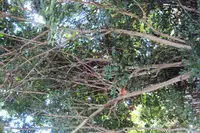
In the first 3–5 years, select 1 strong leader and 3–5 well‑spaced lateral branches, removing tight crotch angles and rubbing shoots to build a stable framework that resists storm damage later.

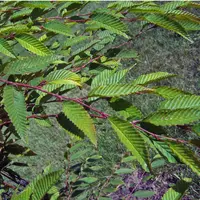
Japanese hornbeam, Carpinus japonica, is a small to medium deciduous tree valued for its fine, elegant branching and textured, serrated leaves. It is often used in gardens, as a street tree, and for bonsai. In nature it grows in woodlands of Japan, forming a graceful, rounded crown with smooth gray bark and decorative hanging seed clusters. Its steady growth, good tolerance of pruning, and strong structure make it moderately easy to manage in cultivation. It prefers cool to mild climates, evenly moist but well-drained soil, and light ranging from bright dappled shade to sun, which guides how to care for Japanese Hornbeam.

Care Difficulty
Moderate Care

Light Preference
Partial Sun

Water Requirements
Moderate Water

Temperature Preference
Cold Hardy

Hardiness Zone
5–8

Soil Texture
Loamy, Clay, Organic-rich

Soil pH
Acidic (5.5–6.5), Slightly acidic (6.5–7.0)

Soil Drainage
Moist but well-drained

Fertilization
Minimal (feed rarely)
Scan your plant to receive care tips personalized for your specific plant
Available on iOS and Android
This species prefers bright conditions with some protection from harsh midday sun.
This tree prefers evenly moist, well-drained soil without prolonged dryness or saturation.
This hardy deciduous tree tolerates a wide temperature range once established outdoors.
This species accepts a wide humidity range but grows best with moderate atmospheric moisture.
Carpinus japonica prefers evenly moist, well-aerated mineral soil with ample organic matter.
This species can adapt to container growing, particularly for bonsai or small patio specimens.
This tree grows well in average garden soil and needs only light feeding to stay healthy.
Thoughtful pruning keeps Carpinus japonica structurally sound and maintains a natural, refined outline.
This species is usually grown in the ground, so care focuses on thoughtful transplanting rather than frequent repotting.
Propagation of Carpinus japonica is typically done from seed and is moderate in difficulty for home growers.
This hardy species usually needs little winter care when planted in the ground in appropriate climates.

Plant Health Check
Not sure what's wrong with your plant? Check your plant's health inside the app.
This species develops long, pendulous fruiting catkins whose overlapping bracts resemble hops, each bract subtending a single small nutlet that is dispersed primarily by wind and gravity rather than by animals.
The tree forms a relatively shallow but wide-spreading root system that anchors it well on slopes, helping stabilize forest soils in its native Japanese mountain habitats.
In Japan it typically grows as a small to medium tree in mixed deciduous forests, where its tolerance of partial shade allows it to occupy the understory beneath taller canopy species such as oaks and maples.

In traditional Japanese horticulture this species is valued for fine ramification, meaning its ability to form many small branchlets, which makes it a sought-after subject for bonsai and detailed landscape pruning.
This tree has a slow to moderate growth rate. Under good conditions, it typically adds about 15–30 cm of height per year, sometimes slightly more in youth, then slows as it reaches structural maturity.
Keep your plants happy and healthy with plant identification, disease detection, and easy care guidance.