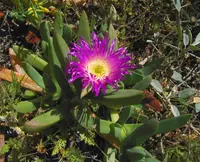




Best Soil for ice plant (Carpobrotus chilensis)

Carpobrotus chilensis grows best in loose, gritty, well-drained soil that supports healthy roots and avoids prolonged moisture around them.

Soil Texture

Sandy, Loamy, Rocky

Soil pH

Slightly acidic (6.5–7.0), Slightly alkaline (7.0–7.5)

Soil Drainage

Well-drained

Carpobrotus chilensis Soil Guide

Native to coastal Chile, Carpobrotus chilensis grows in sandy, rocky ground with fast drainage and plenty of air around the roots. That habitat helps explain why dense, slow-drying soil is a poor match for this species.

The best soil for ice plant is loose, gritty, and mineral-leaning rather than rich and moisture-retentive. Its shallow, spreading root system is adapted to brief moisture followed by quick drying, so well-drained sandy or loamy soil supports steadier root health. A slightly acidic to slightly alkaline reaction suits its natural range.

A simple homemade mix can give Carpobrotus chilensis the fast drainage and light structure it prefers in containers.

100% total mix = 20 scoops
10%
fine gravel or small lava rock2 scoops
20%
coarse sand4 scoops
30%
pumice or perlite6 scoops
40%
coarse cactus potting soil8 scoops

The finished mix should feel gritty, airy, and crumbly, with water passing through quickly instead of lingering.

A good target for ice plant is about 6.5–7.5 pH, which places it from slightly acidic to slightly alkaline soil. This range supports balanced nutrient availability without pushing the root zone too far in either direction.

Carpobrotus chilensis can handle a fairly neutral soil environment well, especially when the mix is not highly acidic. Staying near that range helps the plant access key minerals more consistently over time.

This species is less forgiving of stale, compacted root conditions than many common houseplants. Soil may be part of the issue when growth starts to stall.

Compaction:

Compaction: Soil that feels hard, crusted, or slow to absorb water can limit root airflow, so gently loosen the surface and consider replacing the mix with a fresher, more open one.

Staying wet too long:

Staying wet too long: If the root zone remains damp for days, Carpobrotus chilensis may decline in heavy media, so check drainage and let excess moisture escape freely.

Salt buildup:

Salt buildup: A pale crust on the soil surface can point to mineral accumulation, so scrape off the top layer and flush the container thoroughly if drainage is good.

Surface debris:

Surface debris: Trapped dead leaves or dense top cover can slow evaporation and airflow, so clear the surface to keep conditions cleaner and drier.

Find the Right Soil

Botan helps match this plant to a more suitable growing medium so it is easier to choose a soil that fits its natural needs.

FAQ

Yes. Drainage holes help excess water leave the container instead of collecting around the roots, which keeps the mix more stable and closer to the best soil for ice plant in everyday care.

Everything About ice plant

More Plant Soil Guides

Scan for Soil Problems

Botan’s photo-based assessment can help you check whether a visible issue may be linked to soil conditions worth reviewing.

Botan app helping with soil and plant care
How to Group Plants in Landscaping: A Practical Layout Guide

8 min read · 31 Aug 2026

How to Group Plants in Landscaping: A Practical Layout Guide

Good plant grouping can mean the difference between a well-planned garden and one that looks sloppy. This guide explores layers, spacing, cluster shapes, and the plants that thrive when you group them.

Plant Care
How to Group Plants in Landscaping: A Practical Layout Guide
What Plants Don't Like Epsom Salt?

11 min read · 29 Jul 2026

What Plants Don't Like Epsom Salt?

Learn which plants can be seriously damaged by Epsom salt and which will thrive on it. We’ll explain when and how to use it properly, provide tips for indoor & outdoor plants — read on and enjoy a healthy garden.

Plant Care
What Plants Don't Like Epsom Salt?
When to Harvest Carrots: Timing, Signs, and How to Pick Them

6 min read · 23 Oct 2026

When to Harvest Carrots: Timing, Signs, and How to Pick Them

Carrots are usually ready 60-80 days after sowing them in the soil, depending on the variety. Learn how to recognize maturity signs, choose the right harvest season, pull carrots without damaging them, and store roots after picking.

Plant Care
When to Harvest Carrots: Timing, Signs, and How to Pick Them