





Best Soil for Arrowhead (Sagittaria sagittifolia)

Sagittaria sagittifolia grows best in moisture-retentive, fine-textured soil with a suitable pH, which supports steady root development and overall vigor.

Soil Texture

Loamy, Silty, Organic-rich

Soil pH

Slightly acidic (6.5–7.0), Neutral (7.0)

Soil Drainage

Waterlogged tolerant

Sagittaria sagittifolia Soil Guide

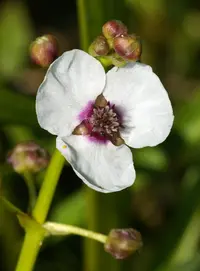
Native to Europe and western Asia, Sagittaria sagittifolia grows in shallow wetlands, pond margins, and slow-moving water. That habitat explains its preference for loamy to silty, organic-rich substrate that stays consistently wet and can even remain waterlogged without stressing the roots.

Its underground growth is adapted to soft, moisture-retentive ground, so the best soil for Arrowhead should feel fine-textured rather than coarse or fast-draining. A slightly acidic to neutral reaction suits steady nutrient availability, while some organic matter helps anchor growth and supports the saturated conditions this species prefers.

A homemade mix can give Sagittaria sagittifolia the dense, moisture-holding root zone this species prefers in containers or water gardens.

100% total mix = 20 scoops
10%
coarse sand2 scoops
20%
silt-rich topsoil4 scoops
30%
compost or well-rotted organic matter6 scoops
40%
loam-based garden soil8 scoops

The finished blend should feel heavy, smooth, and cohesive, staying evenly moist while settling into a stable planting medium.

A practical target for Sagittaria sagittifolia is about 6.5–7.0 pH. This places it in slightly acidic to neutral soil, where many essential nutrients remain readily available to the roots.

Staying near that range helps the plant access minerals without major pH-related lockout, which is when nutrients are present but harder for roots to absorb.

This species handles saturated conditions well, but poor substrate quality can still contribute to slower growth or weaker rooting. Check the root zone before assuming a broader care issue.

Collapsed mix:

Collapsed mix: if the substrate turns dense and sour-smelling, it may have broken down too far; replace part of it with fresh material that holds shape better.

Nutrient-poor soil:

Nutrient-poor soil: pale, weak new growth can point to exhausted media; top up with richer organic material so roots have a steadier reserve.

Excess surface crust:

Excess surface crust: a hard top layer can limit gas exchange at the soil line; gently loosen only the surface without disturbing the planted base.

Shifting plant base:

Shifting plant base: if Arrowhead wobbles in its container, the soil may be too loose or shallow; firm it lightly and add more around the roots.

Get the Soil Right

Botan helps match this plant to a more suitable soil setup, so root conditions are easier to judge before problems build up.

FAQ

For standard containers, drainage holes are usually less important than with many houseplants because this species tolerates saturated media well. In decorative indoor pots, still avoid stagnant, foul-smelling buildup by monitoring the root zone closely.

More Plant Soil Guides

Could It Be the Soil?

Soil may be part of the issue. Botan’s photo-based assessment can help you check whether the growing medium is worth a closer look.

Botan app helping with soil and plant care
15 Best Scary Halloween Plants and Fungi for a Spooky Garden

8 min read · 9 Oct 2026

15 Best Scary Halloween Plants and Fungi for a Spooky Garden

Want a garden that looks eerie in October? Here are 15 Halloween plants and fungi, from carnivorous traps to bleeding mushrooms. For each species, we cover its appearance, care requirements, and potential uses in your landscape.

Plant Recommendations
15 Best Scary Halloween Plants and Fungi for a Spooky Garden
Planting Grass Seed in Summer – What Works and What Fails

7 min read · 6 Aug 2026

Planting Grass Seed in Summer – What Works and What Fails

Summer seeding succeeds when the grass type suits the season, and the soil stays moist. Find out how to prepare the seedbed and choose a safe window for planting.

Plant Care
Planting Grass Seed in Summer – What Works and What Fails
Best Fertilizer for Grass in Summer: How to Choose the Right One

6 min read · 18 Aug 2026

Best Fertilizer for Grass in Summer: How to Choose the Right One

The right fertilizer in summer can make a lawn thrive. The wrong one can damage it. Here, you’ll learn the best NPK ratios by grass type, when and how to apply your formula, and how to recognize the signs of over- or under-fertilizing.

Plant Care
Best Fertilizer for Grass in Summer: How to Choose the Right One