Encourage Denser Mats
Pinch or lightly trim overly long runners in early spring to encourage side shoots, which creates a thicker, more weed‑suppressing mat when growing Delicious Sourfig.

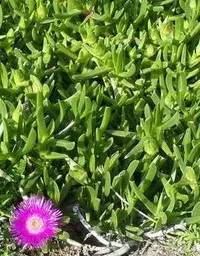
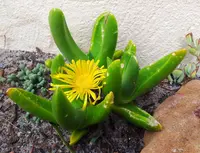
Delicious sourfig, Carpobrotus deliciosus, is a low-growing succulent groundcover known for its thick, triangular leaves and large, daisy-like purple to pink flowers. It forms dense, trailing mats that help stabilize sandy soils and cover open ground quickly.
This species is native to coastal areas of South Africa, where it thrives in full sun, salty air, and well-drained, sandy soils. It is drought-tolerant and generally tough, which makes it fairly simple to care for Delicious Sourfig in mild climates.
The plant prefers bright light, infrequent but deep watering, and soil that never stays soggy. Its robust nature and fast growth make it suitable for coastal gardens, rock gardens, and erosion control in regions without harsh winter freezes.

Care Difficulty
Easy Care

Light Preference
Full Sun

Water Requirements
Low Water

Temperature Preference
Tropical / Frost Sensitive

Hardiness Zone
10–11

Soil Texture
Sandy, Loamy, Rocky

Soil pH
Slightly acidic (6.5–7.0), Slightly alkaline (7.0–7.5)

Soil Drainage
Well-drained

Fertilization
Minimal (feed rarely)
Scan your plant to receive care tips personalized for your specific plant
Available on iOS and Android
This coastal succulent thrives with strong sun exposure in mild to hot climates.
This drought-tolerant groundcover prefers infrequent, deep watering in sharply drained soil.
This species favors mild, frost-free conditions but tolerates considerable heat once established.
This coastal succulent tolerates low indoor humidity and rarely needs special moisture control.
This species requires very fast-draining, sandy soil to avoid root rot.
This trailing succulent is well suited to container cultivation, especially hanging baskets and raised pots.
This coastal succulent needs only light feeding, as excessive nutrients reduce flowering and compact growth in Delicious Sourfig.
Pruning helps keep Carpobrotus deliciosus dense, tidy, and flowering along the edges of beds or slopes.
This groundcover succulent is more often transplanted outdoors than kept long term in containers.
Carpobrotus deliciosus is commonly propagated vegetatively for fast coverage and consistent flower color.
This succulent tolerates light coastal chills but is damaged by hard or prolonged frost.

Plant Health Check
Not sure what's wrong with your plant? Check your plant's health inside the app.
This species is naturally restricted to the Eastern and Western Cape coasts of South Africa, where it grows on coastal dunes and rocky shores exposed to salt-laden winds.
It produces striking, large, magenta to purple flowers with many narrow petals, which open fully in bright sun and are mainly visited by bees and other daytime insect pollinators.
The fleshy, fig-like fruits are edible, with a salty-sour taste traditionally used in local preserves and snacks, which inspired the common name delicious sourfig.

Carpobrotus deliciosus forms dense, mat-like stands that help stabilize coastal dunes, and in parts of its native range it is actively used in dune rehabilitation projects to limit wind erosion and protect inland habitats from sand movement.
This species spreads quickly through long, prostrate stems that root at the nodes. It can form dense mats and smother nearby plants, especially in mild coastal climates, so it often needs edge control or barriers in gardens.
Keep your plants happy and healthy with plant identification, disease detection, and easy care guidance.