Pot selection strategy
Use a wide, shallow terracotta pot with multiple drainage holes to accommodate the plant’s lateral root spread and reduce the risk of rot in heavy rain or accidental overwatering.

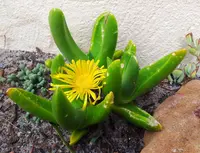
Royal tonguefig, Glottiphyllum regium, is a compact, clumping succulent from arid regions of South Africa. It is grown mainly as a decorative pot or rock garden plant. Thick, smooth, tongue-shaped leaves form low rosettes, often with a slightly glossy surface and soft green to bluish tones. Bright yellow, daisy-like flowers appear near the leaf tips and add contrast to its sculptural foliage. This species grows slowly and stays relatively small, so it suits windowsills and small indoor collections. Its drought tolerance and modest nutrient needs make it appealing to beginners who want to learn how to care for Royal Tonguefig. It prefers strong light, a fast-draining gritty mix, and careful, infrequent watering.

Care Difficulty
Moderate Care

Light Preference
Full Sun

Water Requirements
Low Water

Temperature Preference
Tropical / Frost Sensitive

Hardiness Zone
10–11

Soil Texture
Sandy, Loamy, Rocky

Soil pH
Slightly acidic (6.5–7.0), Neutral (7.0)

Soil Drainage
Well-drained

Fertilization
Minimal (feed rarely)
Scan your plant to receive care tips personalized for your specific plant
Available on iOS and Android
This South African succulent prefers bright, direct light similar to its native open habitats.
This species is a drought-tolerant succulent that needs infrequent but thorough watering.
This compact succulent prefers warm, dry conditions with mild temperature swings between day and night.
This succulent prefers dry indoor air and does not need elevated humidity.
Glottiphyllum regium needs a very fast-draining, mineral-based substrate to prevent root and stem rot.
This species is well suited to container growing, including small dish-style pots.
This succulent has modest nutrient needs, so light, infrequent feeding supports steady growth without causing weak, stretched tissue in Royal Tonguefig.
Glottiphyllum regium needs minimal pruning, mainly to maintain a compact form and remove declining tissue in container or rock garden culture.
This species grows slowly and prefers a stable root environment, so repotting is infrequent and done mainly to refresh soil or relieve root congestion.
Propagation of Glottiphyllum regium is commonly done from leaf or stem cuttings and occasionally from seed, given the right warmth and dryness.
This succulent is not reliably frost hardy and benefits from careful winter management in regions with freezing temperatures.

Plant Health Check
Not sure what's wrong with your plant? Check your plant's health inside the app.
The species epithet regium means royal and refers to the plant’s unusually broad, tongue-like leaves that stand out among other Glottiphyllum species in its South African habitat.
This species is native to arid parts of the Little Karoo in South Africa, where it grows in shallow, stony soils and often shelters between rocks that moderate temperature and reduce water loss.
Its thick, flattened leaves are oriented to reduce direct midday sun exposure, which helps limit overheating and water loss in its high-radiation, semi-desert environment.

Glottiphyllum regium forms compact clumps with fleshy leaves that can channel scarce rain and dew toward its shallow root zone, an efficient adaptation for survival in its naturally low-rainfall range.
Brown leaves usually come from underwatering, sudden sun intensity, or cold drafts. Check the substrate moisture with your finger, adjust light gradually, and protect the plant from temperatures below its tolerance to prevent tissue damage and scarring.
Keep your plants happy and healthy with plant identification, disease detection, and easy care guidance.