Rocky crevice placement
Tuck plants into vertical rock walls, gaps in stone steps, or shallow crevices with minimal competing roots to mimic their natural niche and extend plant longevity.

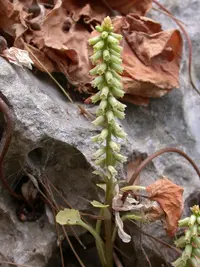
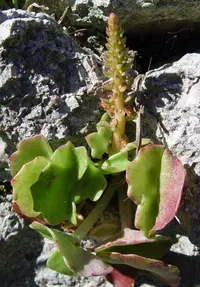
Intermediate navelwort (Umbilicus intermedius) is a small, rosette-forming succulent often found on rocky walls, old stonework, and shallow crevices. It stores water in its fleshy leaves, which helps it survive in dry, exposed sites.
This species occurs mainly around the Mediterranean region, thriving in mild climates with well-drained, often poor soils. Its slow, compact growth and modest size make it suitable for rock gardens, troughs, and niche plantings.
Because it tolerates drought and low nutrients, it is not demanding once established, though it dislikes heavy, soggy substrates. Those who want to learn how to care for intermediate navelwort should focus on providing sun to light shade, sharp drainage, and protection from prolonged hard frost.

Care Difficulty
Moderate Care

Light Preference
Partial Shade

Water Requirements
Moderate Water

Temperature Preference
Cool Climate

Hardiness Zone
6–9

Soil Texture
Sandy, Loamy, Rocky

Soil pH
Slightly acidic (6.5–7.0), Neutral (7.0)

Soil Drainage
Well-drained

Fertilization
Minimal (feed rarely)
Scan your plant to receive care tips personalized for your specific plant
Available on iOS and Android
This species prefers bright but gentle light that mimics its natural rocky, north- or east-facing habitats.
Umbilicus intermedius prefers slightly dry, sharply drained conditions rather than constant moisture.
This rock-dwelling species thrives in mild climates with cool to warm, but not extreme, temperatures.
This species prefers moderately dry air and usually does not need special humidity control indoors.
Umbilicus intermedius prefers mineral, sharply drained soil that mimics rocky ledges or walls.
This species is well suited to container growing, especially in shallow troughs, wall pockets, or rock-garden pots.
This species is adapted to poor, rocky soils, so feeding should stay light and infrequent for healthy growth.
Umbilicus intermedius needs minimal pruning, focused mainly on tidying and maintaining plant health.
This plant is often grown in rock crevices or shallow containers and prefers minimal disturbance.
Umbilicus intermedius is commonly propagated from seed and can also spread by self-sowing in suitable sites.
This species is fairly cold tolerant in temperate climates and usually needs only light winter care.

Plant Health Check
Not sure what's wrong with your plant? Check your plant's health inside the app.
This species is naturally adapted to grow in shallow soil pockets and limestone rock crevices in the eastern Mediterranean, anchoring itself in tiny cracks where few other vascular plants can persist.
It has leaf and inflorescence traits that are morphologically between those of its close relatives Umbilicus rupestris and Umbilicus horizontalis, which is why taxonomists named it intermedius, meaning intermediate.
The plant behaves as a winter–spring grower in its native range, making use of cool, moist conditions, then often going dormant or greatly reducing growth during the hot, dry Mediterranean summer as a drought-avoidance strategy.

In shaded limestone cliffs and walls in parts of the eastern Mediterranean, this species can form scattered vertical colonies where individual plants line cracks and ledges, subtly tracing underlying fracture patterns in the rock and making it a useful visual indicator of microhabitats that retain slightly higher moisture.
Poor flowering usually comes from too little light, depleted soil, or overcrowded clumps. After flowering, allow some seed set but remove spent spikes to reduce energy drain. Occasional feeding and division every few years restore blooming performance.
Keep your plants happy and healthy with plant identification, disease detection, and easy care guidance.