


bitternut hickory Identification (Carya cordiformis)

To recognize bitternut hickory, check for alternate compound leaves with 7 to 11 narrow leaflets and a long terminal leaflet.

It usually forms a tall, straight trunk. Twigs are slender, and the buds are small, pointed, and sulfur-yellow, a reliable field mark for Carya cordiformis.

Carya cordiformis Identification

Check Your Plant ID

Upload a plant photo and check the identification in seconds.

Clear images work best. Avoid photos taken too close or too far away

  • 1 free identification
  • No sign-up
  • 30,000+ plants in database

Use a few visible structure cues to check this tree.

  • Leaves are alternate and pinnate, usually 6-10 inches (15-25 cm) long.
  • Each leaf often has 7-11 narrow leaflets, with the end leaflet usually the largest.
  • Buds are slim, pointed, and bright sulfur-yellow, standing out at twig tips.
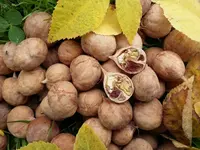
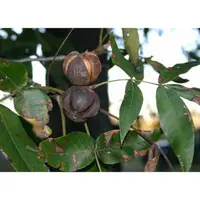
  • The fruit is a small round husk with four seams, usually about 1-1.5 inches (2.5-4 cm) wide.
  • Bark is light gray and fairly tight, with shallow ridges rather than long peeling strips.

Check buds and leaflet count together for the fastest visual match.

Carya cordiformis shows clear visual differences from sapling growth to nut-bearing maturity.

  • Seedling: Seedlings show a single upright stem with alternate compound leaves; the first leaves often have fewer leaflets than later growth.
  • Young plant: Young plants form a narrow, straight sapling with smooth gray bark and longer compound leaves bearing 7-11 slender, curved leaflets.
  • Mature plant: Mature trees develop a tall trunk and higher crown, with bark becoming more ridged and furrowed than on younger stems.
  • Fruiting stage: Fruiting branches carry small, nearly round husked nuts about 1 inch (2.5 cm) wide, a feature absent on nonbearing younger plants.

In spring, Carya cordiformis becomes easier to spot as long yellow-green catkins hang from twigs while new compound leaves unfold. The leaflets are soft and pale at first, then deepen to green by early summer. By fall, the foliage often turns clear yellow before dropping. After leaf fall, slender twigs and the distinctive sulfur-yellow terminal buds stand out through winter, offering one of the clearest cold-season clues.

A few hickories and walnuts can be mistaken for bitternut hickory.

pignut hickory(Carya glabra)

Both have pinnate leaves and slender nuts. Pignut usually has 5 leaflets, not 7-11, and its winter buds are brown, not sulfur-yellow.

pecan(Carya illinoinensis)

Both can show many narrow leaflets. Pecan leaflets are more sickle-shaped and sharply toothed, and the nuts are longer and more cylindrical.

black walnut(Juglans nigra)

Its long compound leaves can suggest hickory at a glance. Black walnut has many more leaflets, often 15-23, and round green husked fruits rather than angled hickory husks.

Carya cordiformis is native to eastern North America, from southern Ontario and Quebec south to Florida and Texas, and west into the Midwest. That range helps separate it from hickories limited to drier uplands or narrower regional zones. It is most often found in bottomland woods, floodplains, streambanks, and moist mixed forests, sometimes on low terraces. Finding a hickory in consistently moist low ground is a useful clue toward bitternut hickory rather than species centered on dry ridges.

Does Your Plant Match?

Use Botan to compare a photo and help identify or confirm the plant before you spend time on the wrong species.

FAQ

For quick Carya cordiformis identification, check the sulfur-yellow terminal bud. Leaves usually have 7 to 9 narrow leaflets, and the nut has a thin husk with prominent wings along the shell.

More Plant Identification Guides

Find Out What Plant It Is

Identify it from a photo with Botan, then view plant details, care information, and common problems for that species.

Botan app identifying a plant from a photo
Best Fertilizer for Grass in Summer: How to Choose the Right One

6 min read · 18 Aug 2026

Best Fertilizer for Grass in Summer: How to Choose the Right One

The right fertilizer in summer can make a lawn thrive. The wrong one can damage it. Here, you’ll learn the best NPK ratios by grass type, when and how to apply your formula, and how to recognize the signs of over- or under-fertilizing.

Plant Care
Best Fertilizer for Grass in Summer: How to Choose the Right One
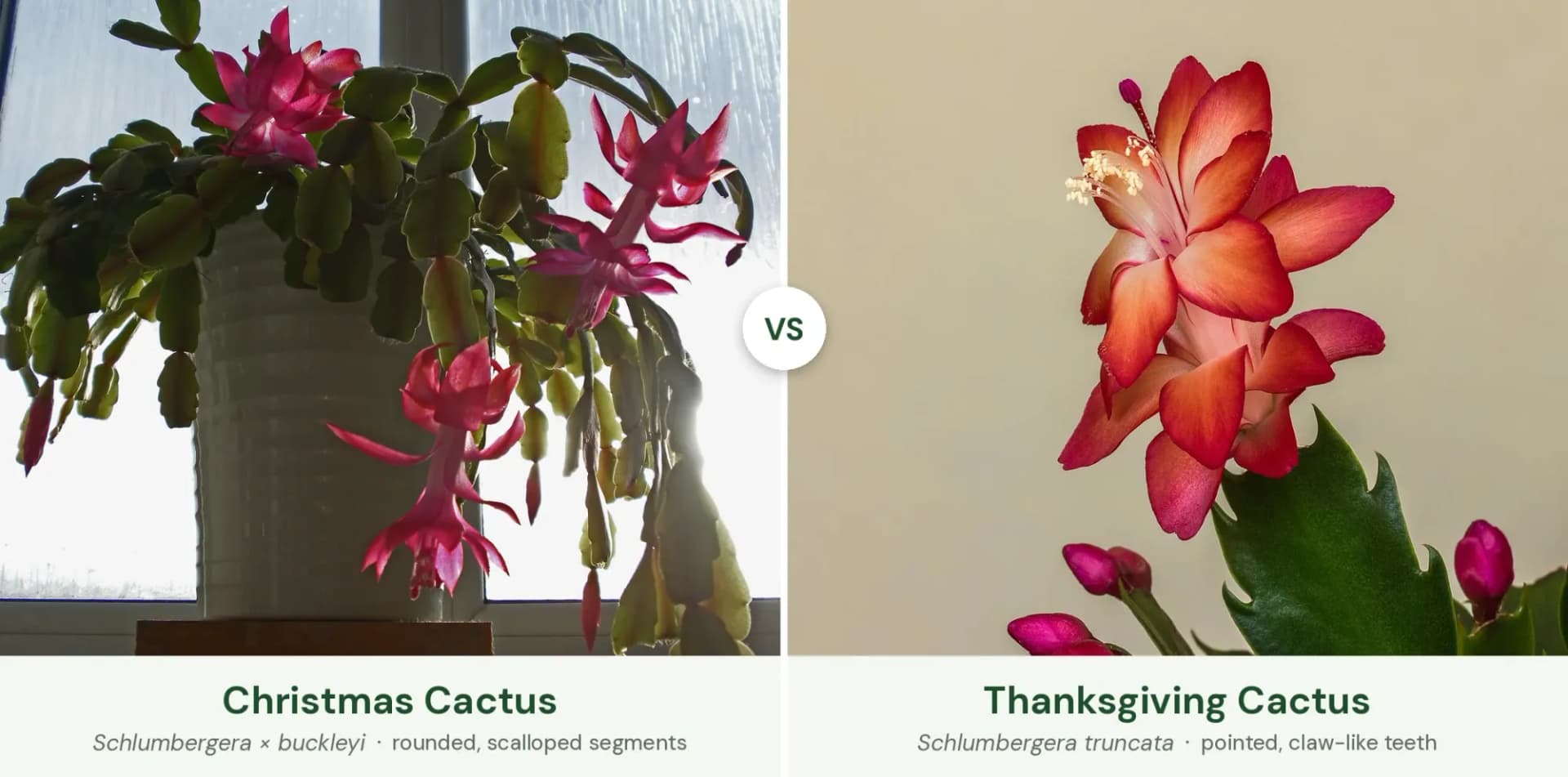
Christmas Cactus vs Thanksgiving Cactus: How to Tell Them Apart

7 min read · 24 Nov 2026

Christmas Cactus vs Thanksgiving Cactus: How to Tell Them Apart

Christmas and Thanksgiving cacti look remarkably similar, but their stem shapes, flowers, and blooming seasons reveal important differences.

Plant Recommendations
Christmas Cactus vs Thanksgiving Cactus: How to Tell Them Apart
Top 15 Fast-Growing Trees For Your Garden

13 min read · 28 Jul 2026

Top 15 Fast-Growing Trees For Your Garden

Learn which of the 15 fastest-growing trees will suit your area. We’ll share detailed information on each: growth rate, mature spread, key tree demands, and main vulnerabilities. Read on and make the best choice possible.

Plant Recommendations
Top 15 Fast-Growing Trees For Your Garden