Early framework training
In the first 2–3 years, select 3–5 strong scaffold branches evenly spaced around the trunk and remove competing shoots to build a stable framework that supports heavy flower clusters later.

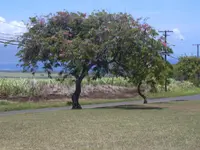
Cassia javanica, commonly called apple blossom tree or pink shower tree, is a tropical flowering tree known for its striking clusters of pink and white blooms. It forms a medium to large, spreading canopy with feathery, compound leaves that give a soft, airy appearance in the landscape.
This species is native to Southeast Asia and thrives in warm, frost-free climates where it can grow outdoors year-round. It prefers full sun, moderately moist but well-drained soil, and benefits from a distinct dry season. In suitable climates it is considered moderately easy to care for apple blossom, provided it receives enough light and space to develop a strong crown.

Care Difficulty
Moderate Care

Light Preference
Full Sun

Water Requirements
Moderate Water

Temperature Preference
Tropical / Frost Sensitive

Hardiness Zone
10–11

Soil Texture
Sandy, Loamy, Organic-rich

Soil pH
Acidic (5.5–6.5), Slightly acidic (6.5–7.0)

Soil Drainage
Well-drained

Fertilization
Minimal (feed rarely)
Scan your plant to receive care tips personalized for your specific plant
Available on iOS and Android
Cassia javanica thrives in bright, direct outdoor sun in warm climates.
Cassia javanica prefers evenly moist but not saturated soil once established in the landscape.
This tropical tree grows best in consistently warm, frost-free conditions outdoors.
Cassia javanica prefers moderately humid, warm air but adapts to many outdoor conditions.
Cassia javanica grows best in loose, well-drained, moderately fertile soil.
This species can be grown in large containers for several years, especially in warm climates.
Cassia javanica benefits from moderate feeding during active growth to support foliage and flower production.
Pruning Cassia javanica helps maintain a safe, open canopy and encourages better flowering.
Cassia javanica is usually grown in the ground, so transplanting young trees correctly is more important than long-term container repotting.
New Cassia javanica plants are most often raised from seeds, with cuttings used less commonly.
Cassia javanica is frost-sensitive and needs thoughtful winter care in regions with cool or cold seasons.

Plant Health Check
Not sure what's wrong with your plant? Check your plant's health inside the app.
Individual flower clusters often display white, pale pink, and deep rose blossoms at the same time, because buds, newly opened flowers, and aging flowers sit together on the same inflorescence. This overlapping development gives the tree its distinctive multicolored flowering canopy during the blooming season.
In many tropical and subtropical climates, this species is semi-deciduous, shedding most of its leaves right before or during flowering. The reduced leaf canopy makes the pink blossoms appear even more prominent on the branch structure.
The flowers produce both nectar and pollen and are structured to be accessible to bees and other insects, which act as primary pollinators. The dense clusters and strong visual contrast of the pink petals against bare or sparse branches improve visibility for pollinators at medium distance.

Cassia javanica is widely used in breeding programs with related Cassia species to create ornamental hybrids, such as Cassia x nealiae, combining heavy flowering with enhanced cold or drought tolerance for urban landscape use in warm regions.
Lack of flowers often comes from insufficient light, young age, or heavy nitrogen fertilization. Pruning at the wrong time can also remove flower buds. Consistent warmth, full sun, and balanced fertilizer usually restore blooming over several seasons.
Keep your plants happy and healthy with plant identification, disease detection, and easy care guidance.