

Host selection
Choose a vigorous, woody host plant with dense, fine twigs so the stems can anchor well, and avoid using weak or newly planted shrubs as hosts to reduce stress and dieback.

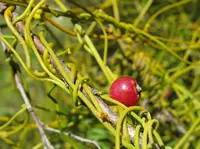
Devil's tresses, Cassytha ciliolata, is a leafless, twining parasitic vine in the laurel family. It forms fine, threadlike stems that wrap tightly around host plants. The plant occurs mainly in South Africa, where it grows on shrubs and small trees in sunny, open habitats. Its wiry stems and small clustered flowers give it a distinctive, tangled appearance. As a parasitic species, it is challenging to grow without suitable host plants and controlled conditions. Gardeners who want to care for devil's tresses should understand its reliance on hosts, preference for bright light, and need for consistently mild, frost-free environments.

Care Difficulty
Hard Care

Light Preference
Full Sun

Water Requirements
Moderate Water

Temperature Preference
Warm Climate

Hardiness Zone
10–11

Soil Texture
Sandy, Loamy

Soil pH
Acidic (5.5–6.5), Slightly acidic (6.5–7.0)

Soil Drainage
Well-drained

Fertilization
Minimal (feed rarely)
Scan your plant to receive care tips personalized for your specific plant
Available on iOS and Android
Cassytha ciliolata needs bright, open exposure but benefits from some protection during the harshest sun.
This parasitic vine relies partly on host plants but still reacts strongly to soil moisture conditions around its roots or attachments.
This species prefers mild, frost-free conditions typical of warm temperate to subtropical climates.
This semi-parasitic species tolerates a wide range of humidity and usually does not need special humidity control when grown as devil's tresses.
Soil choice matters mainly for the host plant, as Cassytha ciliolata attaches to and draws resources from it.
This species can be grown in containers indirectly by establishing it on a suitable host plant in a pot.
Cassytha ciliolata is a low-nutrient parasitic vine, so supplemental fertilizer is usually unnecessary and can even stress the host plant.
Pruning Cassytha ciliolata is mainly done to manage spread and protect host plants rather than to shape the vine itself.
Cassytha ciliolata is almost always grown outdoors on host plants, so transplanting focuses on managing where it grows rather than moving its own roots.
Propagation of Cassytha ciliolata is specialized and usually left to habitat managers or researchers, not casual gardeners.
Cassytha ciliolata comes from mild climates and has low frost tolerance, so winter care focuses on avoiding hard freezes where it is cultivated.

Plant Health Check
Not sure what's wrong with your plant? Check your plant's health inside the app.
This species is a leafless parasitic vine endemic to South Africa’s Western Cape, where it mainly exploits shrubland hosts in fynbos and coastal habitats rather than occurring worldwide like several related species.
The species name ciliolata refers to the very fine hair-like projections, or cilia, along the stems, which help distinguish it from other Cassytha species that have smoother or differently textured stems.
Field observations show that this plant tends to parasitize particular native shrub and heath species in the Cape Floristic Region, indicating a more selective host range than many other Cassytha species.
This parasitic vine can spread quickly over suitable host plants, forming dense tangles of stems. In gardens or natural areas, monitor and prune regularly to prevent unwanted coverage and to protect weaker host species.
Keep your plants happy and healthy with plant identification, disease detection, and easy care guidance.

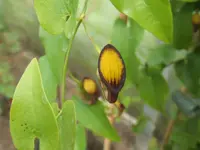
Climbing Birthwort
Aristolochia sempervirens
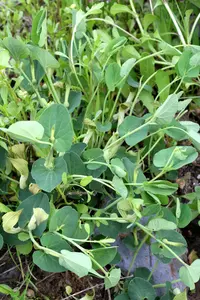
Aristolochia fontanesii
Aristolochia fontanesii
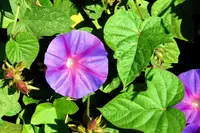
oceanblue morning-glory
Ipomoea indica
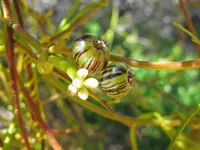
Coarse Dodder-laurel
Cassytha melantha
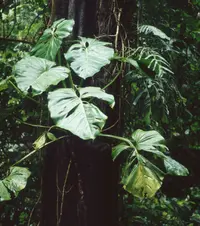
Philodendron pterotum
Philodendron pterotum
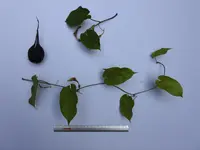
Aristolochia constricta
Aristolochia constricta
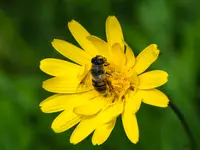
Aristolochia griffithii
Aristolochia griffithii
Scarlet clock vine
Thunbergia coccinea