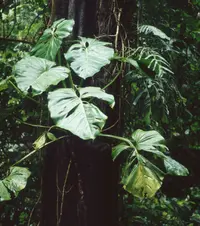
Scarlet clock vine Care (Thunbergia coccinea)

Scarlet clock vine

About Scarlet clock vine

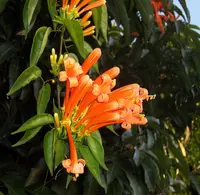
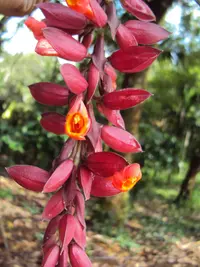
Scarlet clock vine, Thunbergia coccinea, is a tropical evergreen climber grown mainly for its hanging chains of bright red, tubular flowers. It forms long, twining stems with lush green leaves and is usually trained on trellises, pergolas, or hanging structures.

This species is native to forested areas of India and Southeast Asia, where it grows in warm, humid, and partially shaded conditions. It is moderately challenging for beginners because it needs consistent warmth, moisture, and support to climb.

Gardeners who learn how to care for Scarlet clock vine usually focus on providing bright filtered light, evenly moist but well-drained soil, and protection from cold or very dry air.

Main Plant Requirements

Care Difficulty

Moderate Care

Light Preference

Partial Sun

Water Requirements

Keep Soil Moist

Temperature Preference

Tropical / Frost Sensitive

Hardiness Zone

10–11

Soil Texture

Loamy, Sandy, Organic-rich

Soil pH

Acidic (5.5–6.5), Slightly acidic (6.5–7.0)

Soil Drainage

Moist but well-drained

Fertilization

Moderate (every 2–4 weeks)

Get Personalized Care Plan

Scan your plant to receive care tips personalized for your specific plant

Available on iOS and Android

How to Care for the Scarlet clock vine

Thunbergia coccinea grows best in bright, warm conditions that mimic a tropical edge-of-forest habitat.

  • Provide 4–6 hours of morning sun or bright filtered light; avoid harsh, direct afternoon sun in hot climates to prevent leaf scorch.
  • Plant Scarlet clock vine where it receives dappled shade at midday; it tolerates light shade but flowering decreases in deep shade.
  • In summer, protect from reflective heat near walls; in cooler seasons, choose the sunniest spot available to maintain strong growth and bud formation.

Thunbergia coccinea prefers consistently moist but not saturated soil, with careful attention during hot weather.

  • Water when the top 3–5 cm of soil feels dry, then soak thoroughly so moisture reaches the deeper root zone without leaving standing water.
  • Improve drainage with loose, well-aerated soil; yellowing, soft leaves and a sour smell indicate overwatering, while crisp, drooping leaves signal drought stress.
  • Reduce watering in cool seasons when growth slows, but never allow the root zone to bake hard and dry for extended periods.

This species thrives in warm, frost-free climates and reacts quickly to temperature extremes.

  • Aim for growing temperatures of 65–85°F (18–29°C) for strong vegetative growth and flowering.
  • Protect from cold below 50°F (10°C); foliage and stems can be damaged near 40°F (4°C) and usually die back or perish with frost.
  • In hot periods above 90°F (32°C), provide afternoon shade and mulch the root zone to keep soil cooler and reduce heat stress.

This species prefers moderately humid air and reacts noticeably to very dry conditions.

  • Aim for 50–70% humidity, which supports lush foliage and steady flowering.
  • It tolerates brief dips to 40% but prolonged dry indoor air leads to crisp leaf edges and stalled buds.
  • Increase humidity with grouped plants, a pebble tray beneath the pot, or a nearby cool-mist humidifier rather than misting flowers directly.

Thunbergia coccinea grows best in airy, moisture-retentive, sharply draining soil.

  • Use a loose, loamy mix made from roughly 2 parts peat- or coir-based potting mix, 1 part compost, and 1 part perlite or bark chips.
  • Ensure rapid drainage; water should pass through within seconds rather than pooling on the surface.
  • Keep pH slightly acidic to neutral (pH 6.0–7.0) to support nutrient availability and root health.
  • Avoid heavy clay, compacted, or waterlogged soil, which promotes root rot and weak, chlorotic growth.

This vine is well suited to container growing when its climbing habit and root vigor are considered.

  • Choose a deep, heavy pot that resists tipping once the vine climbs a trellis or support structure.
  • Select containers with wide surface area to allow multiple support stakes or a small obelisk to anchor the stems.
  • Use a pot material with moderate moisture retention, such as glazed ceramic or thick plastic, to buffer the root zone from rapid drying.

Thunbergia coccinea benefits from moderate, consistent nutrition during its active growing season.

  • Use a balanced liquid fertilizer (for example 10-10-10 or 20-20-20) diluted to 1/2 strength every 2–3 weeks in spring and summer.
  • Alternatively, apply a slow-release balanced fertilizer or a thin layer of well-rotted compost at the start of the growing season.
  • Pause or reduce feeding to 1/4 strength once every 4–6 weeks in fall and winter, especially in low light or cool conditions.
  • Flush the pot with plain water every 4–6 weeks to prevent salt buildup and reduce root stress for Scarlet clock vine.

Thunbergia coccinea responds well to thoughtful pruning that manages size and encourages flowering.

  • Carry out main pruning in late winter or early spring before vigorous new growth begins.
  • Remove dead, damaged, or weak stems first, then thin crowded shoots to improve light and air movement.
  • Shorten long, sprawling vines to maintain a manageable framework and encourage branching and more flower clusters.
  • Use clean, sharp bypass pruners and make angled cuts just above a leaf node to support healthy regrowth.

This vine grows quickly and may need periodic repotting or transplanting to maintain healthy roots and strong top growth.

  • Check for roots circling the container, growing from drainage holes, or unexplained slow growth as signs it needs more space.
  • Plan repotting or transplanting in late spring when temperatures are stable and active growth supports recovery.
  • Move to a pot or ground space 1–2 sizes larger, using well-draining, fertile soil and gently loosening circling roots.
  • Water thoroughly after planting, then keep soil evenly moist and shade the plant lightly for 3–5 days to reduce transplant shock.

Thunbergia coccinea is commonly propagated from semi-ripe cuttings or seeds under warm, humid conditions.

  • Take 8–10 cm semi-ripe stem cuttings in late spring or early summer, each with 2–3 nodes.
  • Remove lower leaves, dip the cut end in rooting hormone, and place in a moist, free-draining mix such as perlite and peat or coco coir.
  • Maintain 70–80°F, bright indirect light, and high humidity until roots form, usually in several weeks.
  • Sow fresh seed in warm, sterile seed mix, covering lightly and keeping evenly moist for reliable Thunbergia coccinea plant care.

This species is frost-tender and needs protection in climates with cold winters.

  • In regions below USDA zone 10, grow in containers so plants can be moved indoors before temperatures drop below 50°F.
  • Indoors, provide bright light, slightly cooler (60–65°F) conditions, and reduce watering while allowing only light drying between waterings.
  • In mild climates, apply a 5–8 cm mulch layer around the root zone to moderate soil temperature and conserve moisture.

Care Tips

Provide sturdy trellis

Install a fixed trellis, wires, or mesh before vigorous growth starts so stems can be guided and tied loosely with soft ties every 20–30 cm to prevent wind damage and tangling.

Encourage flowering spurs

After the first main flush of blooms, lightly shorten overly long, non-flowering shoots by 10–20 cm to stimulate side shoots that bear more flowers on the next cycle.

Root-zone mulching

Apply a 3–5 cm layer of fine bark or leaf mold around, but not touching, the stems to keep roots cool, reduce evaporation, and buffer soil moisture during hot weather.

Seasonal container rotation

If grown in a pot, rotate the container a quarter turn every 2–3 weeks in the growing season so flower clusters develop evenly along the vine rather than only on one side.

Regular pest scouting

Inspect the undersides of leaves and tender shoot tips weekly for spider mites, aphids, and whiteflies, and treat early with a horticultural soap or oil spray according to label directions when pests first appear, which is key in caring for Scarlet clock vine.

Common Pests and Diseases

Spider mites

This pest thrives on Scarlet clock vine grown in warm, dry air and on plants with dense foliage. Symptoms include fine webbing on stems and leaf undersides, pale stippling, and general leaf dullness.

Solution

Rinse foliage thoroughly with a strong but gentle stream of water, focusing on leaf undersides, and repeat every few days. For persistent mites, use insecticidal soap or a neem oil spray, improve humidity to 50–60%, and avoid placing the plant in very hot, dry spots.

Aphids

These insects cluster on tender shoot tips, young leaves, and flower stalks, sucking sap and excreting sticky honeydew that can attract sooty mold. New growth may look curled, distorted, or stunted.

Solution

Pinch or hose off heavily infested shoot tips, then wash the plant with lukewarm water. Follow with insecticidal soap, making sure to coat all soft tissues, and repeat weekly until no new aphids appear, while also checking nearby plants to prevent reinfestation.

Whiteflies

This pest often appears in protected, warm locations such as patios or greenhouses where Scarlet clock vine is grown, especially under cover. Symptoms include small white insects flying up when the plant is disturbed, sticky leaves, and reduced vigor.

Solution

Vacuum or tap off adult whiteflies early in the morning when they move slowly, then apply yellow sticky cards around the plant to trap emerging adults. Treat leaf undersides with insecticidal soap or horticultural oil every 5–7 days for several cycles to break the life cycle and combine with good airflow to reduce population build‑up.

Powdery mildew

This disease can develop on dense vines in shaded, humid conditions with poor air movement. Symptoms include white, powdery patches on upper leaf surfaces, followed by yellowing and premature leaf drop.

Solution

Remove and discard the worst affected leaves and thin overly dense stems to improve light penetration and airflow. Keep foliage as dry as possible, water at the base, and if needed apply a sulfur-based or potassium bicarbonate fungicide according to label instructions at the first sign of powdery growth.

Leaf spot

This disease shows as small brown, tan, or purplish spots on leaves that may enlarge, merge, and cause partial defoliation, especially during long, warm, wet periods. Symptoms include irregular lesions often with a darker margin and possible yellow halos.

Solution

Prune off and discard affected leaves and any fallen debris around the base to reduce sources of reinfection. Water early in the day at soil level, avoid overhead watering, increase spacing or trellis training for better airflow, and if outbreaks persist use a copper-based fungicide as a preventive spray during wet spells.

Interesting Facts

Specialized bird pollination

The long tubular orange-red flowers are adapted for pollination by sunbirds in its native range, matching the birds’ curved beaks and tongue length so pollen is transferred efficiently while they feed on nectar.

Hanging raceme displays

This vine produces long, pendulous flower clusters known as racemes that can hang 30–60 cm, with buds opening sequentially from the top down and creating a prolonged, tiered floral display.

Evergreen montane climber

In the wild it grows as a woody evergreen climber in humid, mid-elevation forests of the eastern Himalayas and nearby regions, where it uses trees as support to reach higher light levels along forest edges and clearings.

Botan icon

Did you know?

Thunbergia coccinea has been introduced into cultivation far beyond its native Himalayan range and is often used in tropical and subtropical botanical gardens as a showpiece vine, both for public display and for teaching about bird-pollinated flower evolution.

FAQs about Scarlet clock vine

This species performs best outdoors in warm, frost-free climates, where it can climb and flower freely. Indoors it survives only with strong light, ample space, and a sturdy support, so indoor growing is more challenging long term.

Grow Healthy Plants with Botan Care

Keep your plants happy and healthy with plant identification, disease detection, and easy care guidance.

Botan plant care app — identify plants on mobile

Explore More Plants