Host plant selection
Choose vigorous, established host shrubs or groundcovers rather than young or stressed plants, as Slender Devil's Twine can weaken a small or unhealthy host quickly.

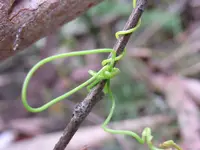
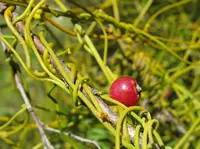
Slender devil's twine (Cassytha glabella) is a leafless, twining parasitic vine that forms fine, threadlike green to yellow stems over its host plants. It uses small suckers called haustoria to tap into other plants for water and nutrients, so it does not rely on its own roots in soil.
This species is native to Australia and is often seen draped over shrubs or low vegetation in heathlands, woodlands, and coastal areas. Its parasitic nature and specific host requirements make it challenging to grow in home gardens, so most plant owners will only need to recognize and care for Slender Devil's Twine in naturalized or outdoor settings.

Care Difficulty
Moderate Care

Light Preference
Full Sun

Water Requirements
Moderate Water

Temperature Preference
Warm Climate

Hardiness Zone
9–11

Soil Texture
Sandy, Loamy

Soil pH
Acidic (5.5–6.5), Slightly acidic (6.5–7.0)

Soil Drainage
Well-drained

Fertilization
Minimal (feed rarely)
Scan your plant to receive care tips personalized for your specific plant
Available on iOS and Android
Cassytha glabella thrives in bright, open sites with protection from extreme midday sun.
Watering for Cassytha glabella focuses on moist but sharply drained conditions around the host plant.
This species prefers mild to warm climates and is sensitive to cold extremes.
This species tolerates a wide humidity range and usually needs no special humidity control in cultivation.
Cassytha glabella is a parasitic twining plant that relies mainly on its host, but any supporting soil should drain rapidly and not stay waterlogged.
This species is generally unsuitable for conventional container growing because it depends on live host plants in soil rather than an independent root system.
This native hemiparasitic vine usually grows without added nutrients when attached to suitable host plants.
Pruning Cassytha glabella is mainly used to limit spread and remove compromised stems.
Cassytha glabella is rarely container-grown, so management focuses on how and when to transplant or control patches in the ground.
Propagation of Cassytha glabella is specialized because the vine depends on host plants for water and nutrients.
This species is generally adapted to mild, frost-free climates and needs only limited winter attention in such regions.

Plant Health Check
Not sure what's wrong with your plant? Check your plant's health inside the app.
This species is an obligate stem parasite that needs to attach to host plants to survive, drawing water and nutrients through specialized organs called haustoria that penetrate the host’s tissues.
Studies in southeastern Australia show that this vine commonly parasitizes specific native shrubs such as Leptospermum and Hakea, indicating a preference for certain host communities rather than random attachment.
Field research has documented that heavy infestations can significantly reduce foliage cover and reproductive output of host shrubs, reshaping local heath and woodland structure over time.

Cassytha glabella can form extensive, intertwined mats across multiple host plants at once, effectively linking different shrubs and small trees into a single physiological network that alters how water and nutrients move through the plant community.
This species is a parasitic twining vine that can spread quickly over suitable hosts. In gardens or restoration sites, it may overtop and weaken other plants, so management or exclusion is often necessary to prevent unwanted dominance.
Keep your plants happy and healthy with plant identification, disease detection, and easy care guidance.