

Early trellis training
Install a slim trellis, mesh, or wires at planting time and gently wind young stems around the support every few days so the vine establishes a clear climbing direction and does not tangle or smother nearby plants.

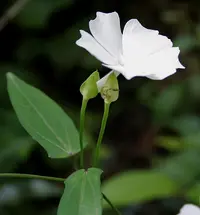
Thunbergia fragrans, commonly called whitelady, is a fast-growing evergreen vine known for its pure white, funnel-shaped flowers and soft green leaves. It often climbs with support or forms a scrambling mound.
This species is native to tropical regions of India and Southeast Asia, where it grows in warm, humid conditions and bright light. In suitable climates it can spread quickly and may behave aggressively outdoors.
The plant is generally easy to manage under controlled conditions, but its vigorous growth means it needs regular guiding and pruning. Gardeners who care for whitelady usually grow it in well-drained soil with moderate moisture and plenty of light.

Care Difficulty
Moderate Care

Light Preference
Full Sun

Water Requirements
Regular Water

Temperature Preference
Tropical / Frost Sensitive

Hardiness Zone
9–11

Soil Texture
Sandy, Loamy, Organic-rich

Soil pH
Acidic (5.5–6.5), Slightly acidic (6.5–7.0)

Soil Drainage
Moist but well-drained

Fertilization
Light (every 4–6 weeks)
Scan your plant to receive care tips personalized for your specific plant
Available on iOS and Android
This vigorous vine prefers bright outdoor conditions with gentle, not harsh, sun.
This fast-growing climber needs steadily moist but not waterlogged soil.
This subtropical vine thrives in warm, frost-free conditions with only brief exposure to cooler temperatures.
This species manages well in typical household humidity but benefits from slightly moist air in heated homes.
Thunbergia fragrans prefers a loose, airy mix that drains quickly yet retains moderate moisture.
This vine is well suited to container growing outdoors on patios, balconies, or near supports.
Thunbergia fragrans responds well to light, consistent feeding in active growth.
Thoughtful pruning helps Thunbergia fragrans stay compact, manageable, and free-flowering.
Container-grown plants benefit from occasional repotting to maintain healthy root growth.
Thunbergia fragrans is commonly propagated from both stem cuttings and seeds.
This frost-tender vine needs careful winter management in cooler climates.

Plant Health Check
Not sure what's wrong with your plant? Check your plant's health inside the app.
This species produces white, tubular flowers that open mainly in bright light during the day and release a light, sweet fragrance, unlike many other Thunbergia species that are less scented or non-fragrant.
Instead of using tendrils or clinging roots, this vine climbs by wrapping its flexible stems around nearby supports, which allows it to scramble over shrubs, fences, and small trees in warm climates.
Outside its native range in tropical Asia, this plant has become naturalized and locally invasive in several tropical and subtropical regions, where it can form dense mats that smother native vegetation if not managed.

Botanical records show that this species was described as early as the late 18th century, and its name commemorates Carl Peter Thunberg, a Swedish naturalist and student of Linnaeus who made major contributions to early tropical plant exploration.
Lack of flowers usually comes from insufficient light, low temperatures, or too much nitrogen fertilizer, which promotes foliage instead of buds. Light pruning after a flush of flowers and steady feeding with a balanced fertilizer helps restore blooming.
Keep your plants happy and healthy with plant identification, disease detection, and easy care guidance.

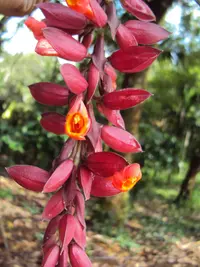
Scarlet clock vine
Thunbergia coccinea
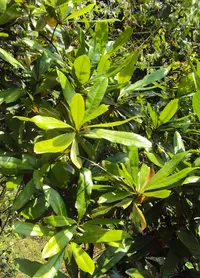
Kardal
Ancistrocladus heyneanus
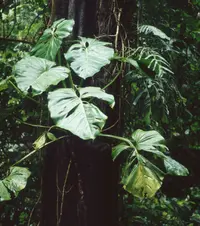
Philodendron pterotum
Philodendron pterotum
angled pea
Lathyrus angulatus
Aristolochia griffithii
Aristolochia griffithii

Aristolochia constricta
Aristolochia constricta

Wintercreeper
Euonymus fortunei var. radicans 'Emerald 'n Gold'
Aristolochia indica
Aristolochia indica