Install sturdy support
Provide a robust trellis, fence, or arbor made of wood or metal and fix the young stems to it with soft ties so the vine climbs safely instead of strangling nearby trees or structures.

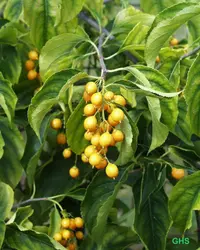
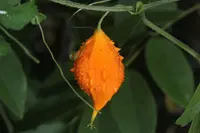
American bittersweet, Celastrus scandens, is a vigorous deciduous vine known for its twining stems and bright orange-yellow fruit capsules that split to reveal red berries. It is native to North America, where it grows in woodlands, thickets, and along fences and edges.
Plants climb by wrapping around supports, so they need sturdy structures and some space to spread. The showy fruit appears on female plants and is valued for autumn and winter interest.
This species is relatively tough but can be slow to establish. It prefers sun to light shade, moderately moist, well-drained soil, and minimal disturbance, which shapes how to care for American bittersweet.

Care Difficulty
Moderate Care

Light Preference
Full Sun

Water Requirements
Moderate Water

Temperature Preference
Cold Hardy

Hardiness Zone
3–8

Soil Texture
Sandy, Loamy, Clay

Soil pH
Acidic (5.5–6.5), Slightly acidic (6.5–7.0)

Soil Drainage
Well-drained

Fertilization
Minimal (feed rarely)
Scan your plant to receive care tips personalized for your specific plant
Available on iOS and Android
This vigorous vine needs strong outdoor light to flower and fruit well.
This hardy vine prefers evenly moist, well-drained soil once established.
This cold-hardy vine tolerates a wide outdoor temperature range when established.
Humidity is rarely critical for this species, which adapts well to typical outdoor air levels.
This woody vine accepts a range of soils but performs best in moderately fertile, well-structured ground.
This vigorous, twining vine is generally unsuitable for long-term container growing due to its strong root system and size.
Celastrus scandens is not a heavy feeder but responds well to modest, well-timed nutrition in poor soils.
Pruning helps keep Celastrus scandens manageable, healthy, and productive.
American bittersweet is usually grown in the ground, so focus on careful transplanting rather than frequent repotting.
Celastrus scandens is commonly propagated by seeds, semi-hardwood cuttings, and simple layering.
This species is cold hardy across much of its range and usually needs minimal winter care in the ground.

Plant Health Check
Not sure what's wrong with your plant? Check your plant's health inside the app.
American bittersweet is dioecious, meaning individual plants are either male or female and only female plants produce the showy fruit clusters when a compatible male plant is nearby.
Its stems wrap by twining around supports rather than using tendrils or roots, allowing the vine to climb shrubs and trees and sometimes constrict their bark over many years.
The bright orange and red berries remain on the vine into winter and are eaten by many native birds and small mammals, making the plant an important late-season food source in its natural range.

Before the invasive Oriental bittersweet became widespread in North America, American bittersweet was commonly harvested from wild populations for decorative wreaths and holiday arrangements, a practice that significantly reduced local populations and later prompted recommendations to cultivate and grow Celastrus scandens instead of foraging it.
This species needs both male and female plants nearby for fruit, and adequate maturity before heavy flowering. Excessive pruning, deep shade, or nutrient imbalance, especially too much nitrogen, can also reduce flower bud formation.
Keep your plants happy and healthy with plant identification, disease detection, and easy care guidance.