Mountain Bluet Care (Centaurea montana 'Amethyst in Snow')

Also known as: Perennial Bachelor's Button, Mountain Cornflower, Perennial Cornflower

About Mountain Bluet

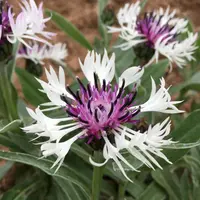
Centaurea montana 'Amethyst in Snow' is a hardy, clump-forming perennial grown mainly for its striking bicolored flowers. It belongs to the cornflower group and produces fringed white petals with deep purple centers on upright stems above gray-green foliage.

This mountain bluet originates from European mountain regions and adapts well to many temperate gardens. It tends to spread gently, creating informal drifts that suit cottage or naturalistic plantings.

Gardeners generally find it easy to grow, as it tolerates poor soils and moderate drought once established. Understanding how to care for Mountain Bluet focuses mostly on providing full sun, free-draining soil, and avoiding waterlogged conditions.

Main Plant Requirements

Care Difficulty

Easy Care

Light Preference

Full Sun

Water Requirements

Moderate Water

Temperature Preference

Cold Hardy

Hardiness Zone

3–8

Soil Texture

Sandy, Loamy, Rocky

Soil pH

Acidic (5.5–6.5), Slightly acidic (6.5–7.0)

Soil Drainage

Well-drained

Fertilization

Minimal (feed rarely)

Get Personalized Care Plan

Scan your plant to receive care tips personalized for your specific plant

Available on iOS and Android

How to Care for the Mountain Bluet

This perennial thrives in bright outdoor conditions with sufficient daily sun for strong flowering.

  • Provide 6–8 hours of direct sun, ideally with morning sun and light afternoon shade to protect the white petals from scorching.
  • Tolerates light partial shade (about 3–4 hours sun), but Mountain Bluet will bloom less and stems may stretch toward the light.
  • In hot summers, give some filtered light after 2–3 pm to reduce leaf scorch, while in cooler seasons full sun all day is suitable.

This plant prefers moderately moist, well-drained soil rather than constant wetness.

  • Water when the top 3–5 cm of soil feel dry, then soak the root zone thoroughly and let excess drain away.
  • In summer, expect to water more often during hot, dry spells; in spring and fall, watering needs usually decrease with cooler temperatures and rainfall.
  • Yellowing, limp leaves can signal overwatering or poor drainage, while wilting with dry, crumbly soil indicates Centaurea montana 'Amethyst in Snow' needs water.

This hardy perennial tolerates cool climates but performs best in moderate temperatures.

  • Optimal growth occurs around 60–75°F (16–24°C), with strong flowering in cool to mild spring and early summer weather.
  • Fully hardy in the ground down to about -20°F (-29°C) when established, surviving typical winter frost and snow in many temperate regions.
  • Heat above 85°F (29°C), especially with drought, can reduce flowering and cause stress, so provide mulch and consistent moisture during hot spells.

Humidity is rarely a concern for Centaurea montana 'Amethyst in Snow' in typical outdoor conditions.

This perennial prefers loose, well-drained mineral soils that never stay waterlogged.

  • Aim for a moderately fertile loam or sandy loam with 20–30% organic matter for structure and moisture balance.
  • Ensure sharp drainage by mixing in coarse sand or fine gravel, especially in heavy or clay-based sites.
  • Keep pH slightly acidic to neutral, around 6.0–7.5, where nutrient availability is most stable for growth.
  • Avoid compacted, boggy, or highly saline soils, which promote root rot and weak, floppy growth in Centaurea montana 'Amethyst in Snow'.

This species adapts reasonably well to container growing outdoors when drainage is managed carefully.

  • Use a deep, heavy pot that resists tipping as the plant forms a bushy clump and becomes top-heavy in wind.
  • Fill with a gritty mix, such as 60–70% peat-free potting substrate plus coarse sand or fine gravel for fast runoff.
  • Raise the container on pot feet or bricks so drainage holes never sit in pooled water after rain or irrigation.

This perennial needs only modest feeding in typical garden soil, so focus on light support rather than heavy fertilizing.

  • Apply a thin layer of compost around clumps in early spring to support strong flowering in Mountain Bluet.
  • Use a balanced, slow-release fertilizer (around 10-10-10) once in spring if soil is poor or plants bloom weakly.
  • Dilute liquid balanced fertilizer to 1/2 strength for any in-season feed, avoiding direct contact with stems and crowns.
  • Stop feeding by late summer; do not apply fertilizer during fall and winter dormancy.

Thoughtful pruning keeps Centaurea montana 'Amethyst in Snow' compact, tidy, and flowering well.

  • Deadhead spent blooms promptly in late spring and early summer to extend flowering and reduce self-seeding.
  • Shear back the entire plant by about 1/3 after the first flush of flowers to encourage fresh foliage and rebloom.
  • Remove dead, damaged, or weak stems at the base with clean, sharp hand pruners to improve air flow and plant health.
  • In late fall or very early spring, cut back old stems to just above ground level to refresh growth.

This perennial is usually grown in beds or borders, so focus on dividing and transplanting older clumps rather than frequent repotting.

  • Plan division or transplanting in early spring or early fall when temperatures are mild and soil is workable.
  • Lift congested clumps every 3–4 years, especially if flowering declines or centers become woody and sparse.
  • Gently tease apart the root mass, replanting vigorous outer sections at the same depth into well-drained soil.
  • Water thoroughly after transplanting, then keep soil slightly moist for several weeks to limit root stress and improve establishment.

Centaurea montana 'Amethyst in Snow' is commonly propagated by division or from seed under suitable conditions.

  • Divide established clumps in early spring or early fall, replanting healthy sections with several buds and roots attached.
  • Sow fresh seed in trays or pots in late summer to fall, keeping the medium evenly moist and well-drained.
  • Provide bright light and cool conditions (about 55–65°F) to support steady germination and early growth.
  • Label cultivars carefully, since seedlings may not flower true to the original named form.

This species is generally cold hardy in much of the US and usually needs minimal winter care in the ground.

  • Tolerates typical frosts once established; top growth may die back while crowns remain viable.
  • After the first hard frost, cut back dead stems to a few cm above soil to reduce disease carryover.
  • Apply a light mulch layer (2–5 cm) over the root zone in colder climates, keeping mulch slightly away from crowns.
  • Move container-grown plants to a sheltered, unheated but frost-free spot if pots are small or poorly insulated.

Care Tips

Staggered Deadheading

Cut individual faded blooms back to a lower leaf node every few days instead of waiting for a full flush to finish, which encourages a longer, more continuous display of bicolored flowers.

Summer Rejuvenation Cut

If plants become floppy or tired after the first main flush, shear stems back by about one-third and lightly mulch; this often triggers fresh, compact regrowth and a smaller second bloom period.

Self-Seeding Control

Remove spent flower heads before seeds mature if you want to limit spread, or leave a few on the strongest plants only to allow controlled self-sowing in the best spots.

Targeted Clump Division

Every 3–4 years in early spring or early fall, lift and divide only the congested or weak center of the clump, replanting vigorous outer sections to maintain flowering quality and prevent die-out in the middle.

Airflow And Spacing

Space plants so mature foliage just touches rather than overlaps heavily, and thin out a few inner stems in dense clumps to improve airflow and reduce the risk of powdery mildew when growing Mountain Bluet in humid climates.

Common Pests and Diseases

Powdery mildew

This disease causes a white, dusty coating on leaves, often starting on older foliage in crowded or shaded clumps. Symptoms include distorted growth and premature leaf yellowing if conditions stay humid and airflow is poor.

Solution

Remove and dispose of affected leaves, then thin or divide clumps to improve airflow and reduce shade. Water at soil level in the morning, avoid wetting foliage, and if needed apply a labeled sulfur or potassium bicarbonate fungicide during extended humid periods as part of Centaurea montana 'Amethyst in Snow' care instructions.

Leaf spot

This disease produces tan to brown circular or irregular spots on leaves, sometimes with a darker border and yellow halo. Symptoms include gradual thinning of foliage and early dieback of lower leaves in wet summers or poorly drained sites.

Solution

Cut off and discard spotted leaves and any heavily affected stems to reduce inoculum, and keep overhead watering to a minimum. Improve drainage and spacing, then use a copper-based or chlorothalonil fungicide only if spots spread rapidly and cultural steps are not enough.

Aphids

These insects cluster on young stems, buds, and undersides of leaves, sucking sap and causing curling or distortion. This pest also excretes sticky honeydew that can lead to sooty mold on foliage and flowers.

Solution

Spray plants with a strong stream of water to dislodge colonies, then repeat every few days during outbreaks. For persistent infestations, treat new growth with insecticidal soap or a light horticultural oil, making sure to cover leaf undersides and buds, and encourage natural predators such as lady beetles by avoiding broad-spectrum insecticides nearby.

Spider mites

This pest is most common in hot, dry weather and feeds on leaf undersides, causing fine stippling and a dull, silvery look. Symptoms include fine webbing between leaves and gradual leaf bronzing and drop if not controlled.

Solution

Increase humidity around the plants and hose down foliage, including undersides, to knock mites off and break webs. In case of continued damage, apply insecticidal soap or a low-rate horticultural oil at 5–7 day intervals, avoiding application during full sun or high heat to prevent leaf scorch.

Crown rot

This disease affects the crown at soil level, especially in heavy or poorly drained soils, leading to sudden wilting and collapse of stems from the base. Symptoms include brown, mushy tissue at the crown and poor regrowth in spring.

Solution

Dig up and discard severely affected plants, including surrounding rotted crown tissue, and avoid replanting in the exact spot for a time. Improve drainage with raised beds or soil amendment, plant divisions at the correct depth with the crown just at soil level, and avoid mulch piled against the stems to reduce moisture around the crown.

Interesting Facts

Bicolor mountain hybrid

This cultivar is a selected form of the European mountain cornflower that shows a stable white outer petal ring with a contrasting violet-purple center, a color pattern not seen in wild populations of Centaurea montana.

Stable flower pattern

The distinct white-and-amethyst bicolor pattern is genetically fixed, so plants grown from vegetative division reliably repeat the same coloration and ray floret shape year after year.

Wild-type foliage traits

Although the flowers are highly modified in color, the plant keeps the typical mountain cornflower features of softly hairy, gray-green leaves adapted to cooler, higher-elevation conditions in its native range.

FAQs about Mountain Bluet

Lack of flowers usually comes from too much shade, nutrient-poor or very dry soil, or old, crowded clumps. Divide every 3–4 years, remove spent stems, and ensure moderate feeding to support reliable flowering.

Grow Healthy Plants with Botan Care

Keep your plants happy and healthy with plant identification, disease detection, and easy care guidance.

Botan plant care app — identify plants on mobile

Explore More Plants