Substrate selection
Attach the lichen to old, untreated conifer bark or naturally weathered wood rather than fresh lumber, since the stable, mildly acidic surface better mimics its natural habitat and improves long‑term adherence.

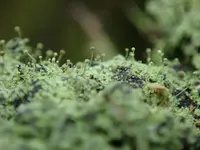
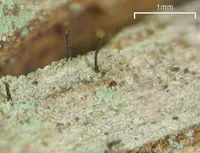
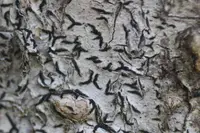
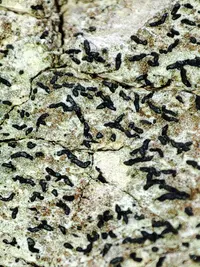
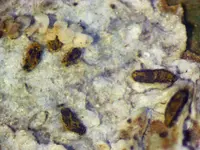
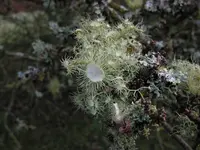
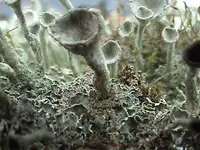
Needle lichen (Chaenotheca furfuracea) is a crust-like lichen, not a true plant, formed by a partnership between a fungus and photosynthetic algae. It develops tiny, upright, needle-like fruiting stalks that give it a fine, bristly texture on bark or decaying wood.
This species is most often found in cool, moist forests of temperate regions, especially on shaded tree trunks and old logs. It tends to be slow-growing and sensitive to air pollution and habitat disturbance, which makes it challenging to keep in artificial settings.
Those who want to care for needle lichen should aim to mimic its natural environment, with stable humidity, gentle light, and undisturbed, slightly rough bark or wood as a substrate.

Care Difficulty
Hard Care

Light Preference
Shade

Water Requirements
Keep Soil Moist

Temperature Preference
Cool Climate

Hardiness Zone
Unknown

Soil Texture
Rocky, Organic-rich

Soil pH
Strongly acidic (4.5–5.5)

Soil Drainage
Moist but well-drained

Fertilization
Minimal (feed rarely)
Scan your plant to receive care tips personalized for your specific plant
Available on iOS and Android
Chaenotheca furfuracea is a lichen that thrives in low to moderate, indirect natural light.
This lichen relies on ambient moisture rather than direct watering in most outdoor situations.
This species prefers cool to mild conditions and tolerates a broad outdoor temperature range.
This lichen prefers cool, moist air and declines in persistently dry indoor conditions.
Chaenotheca furfuracea usually grows on bark or decaying wood, so an artificial substrate must mimic this rather than standard potting soil.
This species is only marginally suitable for containers and does best when mounted on bark or wood pieces rather than planted in a pot.
Chaenotheca furfuracea, a nutrient-efficient lichen, generally does not need added fertilizer when growing on suitable natural substrates.
Pruning is not part of standard care for Chaenotheca furfuracea, as its tiny, slow-growing structures are easily damaged by handling.
Transplanting this lichen is rarely recommended, as it is highly adapted to specific bark or wood microhabitats and reacts poorly to disturbance.
Practical home propagation of Chaenotheca furfuracea is difficult, as lichens are symbiotic associations that re-form slowly and unpredictably.
This lichen is naturally cold hardy in temperate climates and usually requires no special winter care outdoors.

Plant Health Check
Not sure what's wrong with your plant? Check your plant's health inside the app.
This species has a very reduced, powdery thallus composed mainly of loose fungal hyphae and lichenized granules, rather than the leaf-like or crust-like body seen in many other lichens.
It typically colonizes deeply fissured bark of mature conifers and other trees in humid, shaded forests, making it an indicator of long habitat continuity in some European forest studies.
Its reproductive structures form tiny dark stalks topped with pale, floury-looking spore heads, which are easily overlooked without magnification but are characteristic for Chaenotheca furfuracea care instructions research and identification work.
This species grows very slowly, often only fractions of a millimeter per year. Growth rate depends on stable moisture, clean air, and low disturbance. It is not suitable for situations where quick coverage or rapid change is desired.
Keep your plants happy and healthy with plant identification, disease detection, and easy care guidance.