Wind-exposure planning
Site young trees where buildings or taller shrubs break prevailing winds, as this reduces desiccation and branch breakage while roots establish in the first 2–3 years.

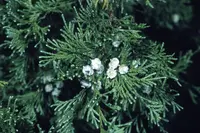
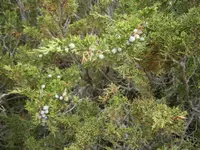
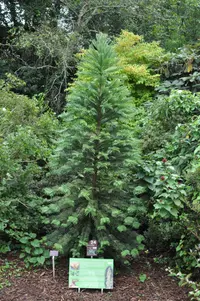
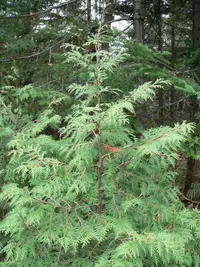
Atlantic white cedar, Chamaecyparis thyoides, is an evergreen coniferous tree native to freshwater wetlands and bogs along the eastern United States. It forms a narrow, pyramid-shaped crown with dense, scale-like foliage in soft blue-green tones.
In gardens, it is valued for its upright habit, fine texture, and good cold tolerance. The wood is naturally decay resistant, which contributes to the species’ longevity in wet habitats.
This species prefers consistently moist, acidic, well-drained soils and full sun to light shade. Understanding how to care for Atlantic White Cedar starts with providing reliable moisture and avoiding hot, exposed, very dry sites.

Care Difficulty
Moderate Care

Light Preference
Full Sun

Water Requirements
Keep Soil Moist

Temperature Preference
Cold Hardy

Hardiness Zone
3–8

Soil Texture
Sandy, Loamy, Peaty

Soil pH
Strongly acidic (4.5–5.5), Acidic (5.5–6.5)

Soil Drainage
Waterlogged tolerant

Fertilization
Minimal (feed rarely)
Scan your plant to receive care tips personalized for your specific plant
Available on iOS and Android
This coastal conifer prefers consistent outdoor light that balances sun exposure and moisture retention.
This species naturally grows in wet, acidic soils, so moisture management focuses on avoiding both drought and stagnant water.
This hardy conifer tolerates a wide temperature range but grows best in cool to mild conditions.
This species prefers steady moisture with moderately high humidity, especially in warm or windy conditions.
Chamaecyparis thyoides naturally thrives in moist, acidic, sandy to peaty substrates.
This species can be grown in containers for several years if moisture and root space are carefully managed.
Chamaecyparis thyoides is a slow-growing conifer that needs only modest feeding in most garden soils.
Pruning Chamaecyparis thyoides is mainly corrective, helping maintain structure and plant health.
This species is usually grown in the ground, so focus on careful transplanting rather than frequent repotting.
Chamaecyparis thyoides is commonly propagated by semi-hardwood cuttings or seeds in nursery production.
This Atlantic White Cedar is cold hardy in much of its range and usually needs minimal winter attention in the ground.

Plant Health Check
Not sure what's wrong with your plant? Check your plant's health inside the app.
This conifer is naturally restricted to freshwater and slightly brackish peat wetlands along the Atlantic Coastal Plain from Maine to Mississippi, making it one of the few North American conifers specialized for coastal bogs and swamps.
Its slow-decomposing, resinous wood and litter help build deep peat layers, and old stands often sit on organic soils several meters thick that formed largely under its canopy over thousands of years.
Despite living near the ocean, it is highly sensitive to salt spray and saltwater flooding and quickly declines where sea-level rise or storm surges push salty water into its freshwater swamps.
This species forms naturally even-aged, near-monospecific stands after severe disturbances such as wildfire or logging, and some remaining old-growth groves contain trees that are several centuries old and provide habitat for a suite of rare, bog-adapted plants and animals.
This species has a moderate growth rate, usually adding about 20–30 cm per year under good conditions. Young trees may grow a bit faster, then slow slightly as they mature and canopy fills in.
Keep your plants happy and healthy with plant identification, disease detection, and easy care guidance.