

Spider Plant Identification (Chlorophytum comosum)

Recognize Spider Plant by its dense basal rosette of narrow, arching leaves, usually 8 to 18 inches long (20 to 45 cm), with no visible trunk.

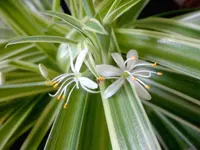
It also sends out long, wiry runners that carry small plantlets, and bears small white, six-parted, star-shaped flowers along those stems.

Chlorophytum comosum Identification

Check Your Plant with Botan

Upload a plant photo and check the identification in seconds.

Clear images work best. Avoid photos taken too close or too far away

Check the plant’s leaf rosette and trailing shoots first.

  • Leaves are narrow, arching, and strap-like, usually 8-18 inches (20-45 cm) long, with smooth edges and a pointed tip.
  • Foliage grows in a dense basal rosette, with leaves arising from the center and no upright woody stem or trunk.
  • Long, thin runners extend beyond the leaf clump and often carry small plantlets at their tips.
  • Flowers, when present, are small, white, star-shaped, and typically have 6 narrow segments.

The combination of a leaf rosette and dangling plantlets is especially useful for identification.

Chlorophytum comosum shows clear visual shifts from compact rosette to arching, flowering clump.

  • Juvenile plant: A juvenile plant forms a tight basal rosette with short, upright leaves and no trailing runners, giving a compact, centered outline.
  • Mature plant: The mature plant develops a broader fountain shape, with arching straplike leaves often 8-18 inches (20-45 cm) long and offsets on long runners.
  • Flowering stage: Flowering plants carry thin, wiry stalks beyond the foliage, bearing small white star-shaped flowers and baby plantlets at spaced nodes.

Spider plant has several stable foliage forms that are easy to tell apart at a glance.

  • 'Vittatum': Leaves have a broad white stripe down the center with green margins, unlike the typical plain green form.
  • 'Variegatum': Leaves show green centers with white to cream margins, reversing the stripe pattern seen in 'Vittatum'.
  • 'Bonnie': Leaves are strongly curled or twisted instead of flat and arching, often on a smaller plant about 8-12 inches (20-30 cm) tall.
  • 'Hawaiian': Leaves are shorter and broader, with a creamy to yellow center stripe that often deepens toward the leaf base.

In spring into summer, Spider Plant is most likely to show its clearest seasonal clue: thin arching flower stalks that rise above the leaf clump and carry small white star-shaped flowers. Later, those same stalks often hold dangling baby plantlets, which become more obvious through summer and can remain visible for a while after flowering ends.

A few arching, striped houseplants are often mistaken for Spider Plant.

bichetii grass(Ophiopogon intermedius)

It can mimic the narrow, variegated leaves. The key difference is growth form: leaves rise in dense fans from short clumps, not loose rosettes, and it does not make long runners with baby plantlets.

Bromeliad(Neoregelia carolinae)

Some variegated forms resemble a compact rosette of strap leaves. Unlike Chlorophytum comosum, the leaves are thicker and stiffer, often with tiny edge teeth, and the rosette forms a central cup.

Chlorophytum comosum is native to tropical and southern Africa, with records from countries including South Africa. In the wild it is found in shaded to semi-shaded woodland and forest margins, often on rocky ground. That setting helps narrow identification because it separates this species from houseplant look-alikes tied to arid deserts, wetlands, or true rainforest understory. Habitat is supportive rather than decisive, but it fits a woodland-edge Chlorophytum rather than a dryland succulent or marsh plant.

Does Your Plant Match?

Upload a photo to Botan to identify it or confirm the name, which helps avoid mix-ups with similar houseplants.

FAQ

The quickest Spider Plant identification clue is the fountain-like rosette of narrow, arching leaves plus long runners that carry small baby plantlets. Mature plants often show green leaves with a white center stripe or white margins.

More Plant Identification Guides

Find Out What Plant It Is

Upload a photo to Botan for identification, then see plant details, care information, and common problems for that species.

Botan app identifying a plant from a photo
Can Plants Grow With Artificial Light?

6 min read · 15 Sept 2026

Can Plants Grow With Artificial Light?

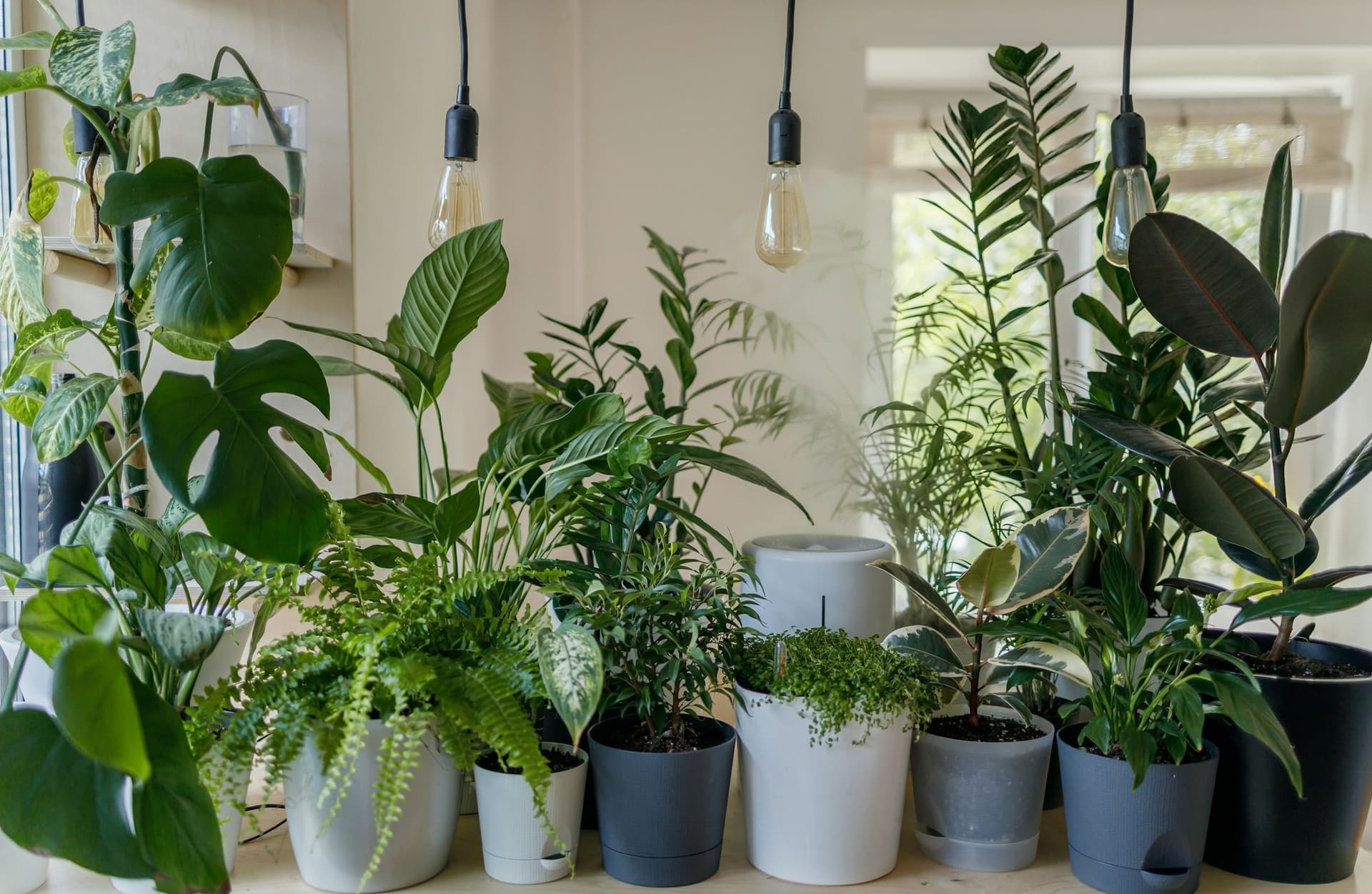
Plants can grow under artificial light when the setup provides a suitable spectrum, enough intensity, and sufficient daily exposure. This guide explains how artificial lighting compares with sunlight, which options work indoors, and how to match a setup to houseplants.

Plant Care
Can Plants Grow With Artificial Light?
Top 15 Plants That Don’t Need Sunlight

8 min read · 17 Sept 2026

Top 15 Plants That Don’t Need Sunlight

Some plants thrive in dim rooms, shaded corners, and places with indirect light. In this guide, you’ll explore the top 15 species best suited to low-light conditions and how to care for them.

Plant Recommendations
Top 15 Plants That Don’t Need Sunlight
Plant Pot Sizes: How to Choose the Right Plant Container

7 min read · 20 Aug 2026

Plant Pot Sizes: How to Choose the Right Plant Container

Plant pot sizes can be confusing because the number on the label only tells you part of the required information. A container may look spacious but actually be too shallow. So, how to choose pot size for plant species?

Beginner Guides
Plant Pot Sizes: How to Choose the Right Plant Container