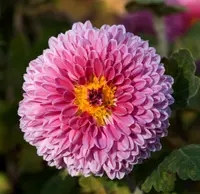



florist's daisy (Chrysanthemum × morifolium) Light Needs

Florist's daisy grows best in full sun, with several hours of direct light each day.

Light Preference

Full Sun

Chrysanthemum × morifolium Light Requirements

As a cultivated hybrid, Chrysanthemum × morifolium is selected for open, sunny growing conditions rather than forest shade. In production beds and outdoor containers, it receives long days of bright seasonal light, often with direct sun for much of the day. This background explains its need for strong light to keep stems compact and support bud formation. It prefers full sun.

  • Ideal exposure:

    Florist's daisy needs about 6–8 hours of full sun daily, including 6 or more hours of direct sun.

  • Direct sun:

    Established plants tolerate full sun outdoors, especially when exposure is built up gradually.

  • Partial sun:

    About 4–6 hours of direct sun is tolerated, but flowering may be lighter.

  • Harsh afternoon sun:

    Hot late-day sun behind glass can stress foliage and fade flowers faster.

Florist's daisy is often kept indoors as a bright, temporary flowering potted plant, where window choice matters.

NPoor
North-facing window:

A north-facing window is usually too dim to maintain compact growth and strong flowering.

ESuitable
East-facing window:

An east-facing window gives gentle direct morning sun and is usually suitable if the plant receives bright light afterward.

SBest
South-facing window:

A south-facing window is usually best indoors, especially in winter, if hot midday rays do not scorch leaves or flowers.

WConditional
West-facing window:

A west-facing window can work when afternoon sun is softened by distance or a sheer curtain during hot months.

Keep it close to the brightest safe glass rather than across the room.

Excess light is most likely during sudden exposure or hot afternoon sun.

Scorched leaf patches:

Dry tan or pale patches can appear on upper leaves after intense direct sun, especially behind glass.

Faded flower color:

Open blooms may look washed out sooner when strong sun combines with high heat.

Midday collapse:

Foliage may droop during the hottest hours, then partly recover when moved to gentler light.

Papery exposed leaves:

Leaves facing the sun can become thin, crisp, or bleached while shaded leaves look normal.

Move the plant to morning sun or bright filtered light. Reintroduce stronger sun gradually over 5–7 days, especially after indoor display.

Weak light usually shows through growth habit before the plant fails. Flowering is often the clearest clue.

  • Stretched stems:

    New stems grow longer and softer, with more space between leaves than normal.

  • Leaning growth:

    Shoots angle strongly toward the brightest side instead of staying compact and even.

  • Fewer buds:

    Bud formation may slow, and existing buds may open poorly in dim positions.

  • Small new leaves:

    Fresh growth can stay undersized when light is too weak during active growth.

  • Open shape:

    The plant may look loose and uneven rather than dense, even when other care is steady.

Move it to a brighter spot with direct sun, increasing exposure over several days if conditions are much brighter.

If ideal full sun is not available, choose the brightest area that gives at least 4–6 hours of direct sun. Accept reduced flowering as a realistic tradeoff in partial sun.

Rotate the pot every few days so all sides receive strong light. Use a sheer curtain only when afternoon rays are causing visible scorch.

Deep shade is unsuitable because it encourages stretched growth and weak bud production.

Get Personalized Care Plan

Scan your plant to receive care tips personalized for your specific plant

FAQ

The best light for florist's daisy is full sun, ideally with about 6–8 hours of bright exposure daily. Strong light supports compact growth and better bud formation.

More Plant Light Guides

Get the Botan App

Discover how to care for your plants with Botan.

Botan app identifying a plant with a phone camera
What Plants Don't Like Epsom Salt?

11 min read · 29 Jul 2026

What Plants Don't Like Epsom Salt?

Learn which plants can be seriously damaged by Epsom salt and which will thrive on it. We’ll explain when and how to use it properly, provide tips for indoor & outdoor plants — read on and enjoy a healthy garden.

Plant Care
What Plants Don't Like Epsom Salt?
Planting Grass Seed in Summer – What Works and What Fails

7 min read · 6 Aug 2026

Planting Grass Seed in Summer – What Works and What Fails

Summer seeding succeeds when the grass type suits the season, and the soil stays moist. Find out how to prepare the seedbed and choose a safe window for planting.

Plant Care
Planting Grass Seed in Summer – What Works and What Fails
Best Water for Plants – How to Choose the Right Type

7 min read · 13 Aug 2026

Best Water for Plants – How to Choose the Right Type

Rainwater, filtered, distilled, and tap water affect plants differently. Learn which types support healthy growth and which cause slow damage. Match each to your plants and discover how to easily improve tap water quality.

Plant Care
Best Water for Plants – How to Choose the Right Type