Encourage Dense Clumps
After flowering, lightly shear back the top 5–8 cm of stems to promote compact, bushy regrowth and reduce lodging in windy sites.

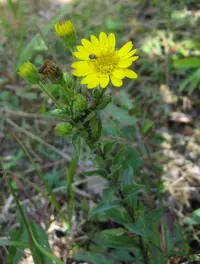
Maryland goldenaster (Chrysopsis mariana) is a native perennial wildflower in the aster family, valued for its late-season yellow blooms. It typically forms low, clumping mounds with hairy stems and narrow leaves, then sends up taller flowering stalks in late summer to fall.
This species is found in dry, open habitats across the eastern United States, including sandy roadsides, woodland edges, and old fields. Its tolerance of poor, well-drained soils and drought makes it relatively easy to grow.
Those looking to care for Maryland goldenaster should know it prefers full sun, low to moderate moisture, and soils that do not stay wet for long periods.

Care Difficulty
Easy Care

Light Preference
Full Sun

Water Requirements
Low Water

Temperature Preference
Cold Hardy

Hardiness Zone
4–9

Soil Texture
Sandy, Loamy, Rocky

Soil pH
Acidic (5.5–6.5), Slightly acidic (6.5–7.0)

Soil Drainage
Well-drained

Fertilization
Minimal (feed rarely)
Scan your plant to receive care tips personalized for your specific plant
Available on iOS and Android
This sun-loving perennial thrives in open, bright sites and stays most compact with strong light.
This species prefers dry to moderately dry soil and resents constantly wet conditions.
This hardy perennial tolerates a wide range of outdoor temperatures once established.
This species is adapted to dry, open habitats and does not have demanding humidity needs.
Chrysopsis mariana prefers lean, sandy soil that drains rapidly and does not stay wet.
This species can be grown in containers if the potting setup stays dry and sharply drained between waterings.
Chrysopsis mariana grows well in lean soils and usually needs only light feeding in garden settings.
Pruning Chrysopsis mariana is mainly used to maintain a compact shape and sustain flowering performance.
This species is usually grown in the ground, so focus on transplanting young plants rather than frequent repotting.
Chrysopsis mariana is commonly propagated by seed and by careful division of established clumps.
This species is cold hardy in much of its native range and generally needs minimal winter care in the ground.

Plant Health Check
Not sure what's wrong with your plant? Check your plant's health inside the app.
This species naturally occurs in dry, sandy habitats of the eastern United States, such as open pine woods, sandhills, and roadsides, where many other perennials struggle to survive.
It flowers in late summer to fall, providing nectar and pollen for native bees, butterflies, and other insects when many earlier-blooming native species have already finished.
In its native range, it often colonizes disturbed, open patches of soil and can form loose colonies from short rhizomes, helping stabilize exposed sandy ground.
Poor flowering usually comes from too much shade, overly rich or wet soil, or heavy competition from nearby plants. Provide full sun, lean well-drained soil, and avoid high-nitrogen fertilizers. Deadhead old flowers to encourage more buds.
Keep your plants happy and healthy with plant identification, disease detection, and easy care guidance.