Cibotium cumingii Care

Cibotium cumingii

About Cibotium cumingii

Cibotium cumingii is a tree fern, valued for its arching fronds and sturdy, trunk-like base that gives a lush, tropical appearance. It forms a broad, elegant crown that can become a striking focal point in shaded gardens or large indoor spaces.

This species is native to tropical regions of Southeast Asia, where it grows in humid, forested slopes and ravines. In cultivation it prefers consistently moist, humus-rich soil and shelter from harsh sun and wind.

Its need for high humidity, steady moisture, and frost-free conditions means it is moderately challenging outside suitable climates. Understanding how to care for Cibotium cumingii helps prevent stress, frond scorch, and decline over time.

Main Plant Requirements

Care Difficulty

Hard Care

Light Preference

Partial Shade

Water Requirements

Keep Soil Moist

Temperature Preference

Tropical / Frost Sensitive

Hardiness Zone

11–12

Soil Texture

Loamy, Peaty, Organic-rich

Soil pH

Strongly acidic (4.5–5.5), Acidic (5.5–6.5)

Soil Drainage

Moist but well-drained

Fertilization

Light (every 4–6 weeks)

Get Personalized Care Plan

Scan your plant to receive care tips personalized for your specific plant

Available on iOS and Android

How to Care for the Cibotium cumingii

This tree fern prefers bright, filtered light that mimics a humid forest understory.

  • Provide 3–5 hours of soft morning sun with dappled or filtered shade the rest of the day, avoiding harsh midday and afternoon sun.
  • Site Cibotium cumingii where it gets high, shifting shade under taller plants or shadecloth, which reduces leaf scorch and frond bleaching.
  • In summer, increase shade during heat waves; in winter, allow more indirect light by thinning overhead cover so fronds still receive 4–6 hours of bright shade.

This species needs consistently moist but not waterlogged soil around its fibrous root system.

  • Water when the top 2–3 cm of soil feel slightly dry, aiming to keep the root zone evenly moist, especially during active growth in spring and summer.
  • Use deep, slow watering so moisture reaches 15–20 cm deep, and ensure soil drains freely to prevent standing water, sour smells, or black, mushy roots.
  • Reduce frequency in cooler months while never allowing the root ball to fully dry; drooping, crisp frond tips indicate underwatering, while yellowing with soft bases suggests excess moisture.

This fern thrives in stable, mild to warm conditions with high humidity.

  • Aim for 65–80°F (18–27°C) for steady growth, as temperatures in this range support active frond production and healthy root function.
  • Protect Cibotium cumingii from cold; growth slows below 55°F (13°C) and damage can occur near 40°F (4°C), with young plants especially sensitive.
  • During hot spells above 85°F (29°C), increase shade and humidity, and avoid hot, dry winds, which can cause frond scorch and stress even if soil moisture is adequate.

This fern requires consistently high humidity to maintain healthy fronds and new growth.

  • Aim for 60–80% humidity; prolonged levels below 50% cause browning tips and crisping fronds.
  • Tolerates short dry spells if soil stays evenly moist, but extended dry indoor air leads to stunted, deformed fronds.
  • Increase humidity with grouped plants, a wide pebble tray under the pot, or a cool-mist humidifier placed nearby.

This species prefers deep, loose, organic-rich soil that stays evenly moist yet freely draining.

  • Use a mix of 50–60% peat or coco coir, 20–30% composted bark, and 10–20% perlite to mimic humusy forest soil.
  • Ensure rapid drainage; water should pass through the mix within seconds, leaving it damp but never waterlogged.
  • Aim for slightly acidic to neutral pH around 5.5–6.8, avoiding chalky or strongly alkaline conditions.
  • Avoid compacted clay, heavy garden soil, or bark-only mixes that either suffocate fine roots or dry out abruptly.

This fern can be grown successfully in containers when given enough depth and stability for its vigorous root system.

  • Choose a wide, heavy container to counterbalance the tall, arching fronds and prevent tipping in wind or from accidental bumps.
  • Select a pot at least 30–40 cm deep so the fibrous roots can anchor well and support strong trunk development.
  • Line the bottom with a coarse, fast-draining layer above the drainage holes to keep the lower root zone from sitting in residual water.

Nutrient supply supports lush frond growth in Cibotium cumingii, but the root system is sensitive to excess salts.

  • Use a balanced liquid fertilizer (e.g., 10-10-10) at 1/4–1/2 strength every 4–6 weeks during active spring–summer growth.
  • Apply only to moist soil, never dry, to limit root burn and salt accumulation in the potting mix.
  • Pause feeding in fall and winter, or reduce to 1 very light application if growth continues indoors under warm, bright conditions.
  • Organic options like diluted fish emulsion or a thin top-dressing of well-aged compost are suitable for slow, steady nutrition.

Pruning Cibotium cumingii is mainly hygienic, aimed at removing spent or damaged fronds.

  • Carry out light pruning in late winter or early spring before vigorous new fronds unfurl.
  • Remove only dead, yellowing, or badly damaged fronds by cutting them at the base of the stipe with clean, sharp pruners.
  • Thin out severely crowded, crossing fronds to improve air flow and reduce fungal issues while keeping the arching form natural.
  • Disinfect tools before and after use to reduce transmission of fungal spores and bacterial diseases between plants.

Container-grown plants of this tree fern benefit from careful, infrequent repotting to avoid root shock.

  • Check for crowded roots circling the pot, water running straight through, or slowed growth as signals that Cibotium cumingii needs more space.
  • Plan repotting or transplanting in spring when new growth begins, typically every 2–3 years for actively growing container specimens.
  • Move into a pot only 2–5 cm wider, using a deep container and a fibrous, moisture-retentive but well-drained mix with bark and peat or coir.
  • Handle the root ball gently, keep it largely intact, water thoroughly after potting, and shade the plant for 1–2 weeks to reduce transplant stress.

Propagation of this species is specialized and usually handled by experienced growers or nurseries.

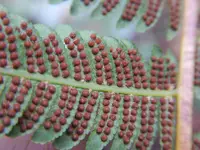
  • Cibotium cumingii is most often propagated from spores collected from ripe sori on the undersides of mature fronds.
  • Sow spores on sterile, finely milled, moist substrate in shallow trays, then seal to maintain very high humidity and stable warmth around 70–77°F.
  • Provide low to medium diffuse light and avoid direct sun, which can overheat the closed container and dry the delicate gametophytes.
  • Germination and establishment are slow, often taking many months, and young plants must stay evenly moist and protected from temperature swings.

This tropical tree fern is frost sensitive and needs protection in regions with cool or cold winters.

  • Keep outdoor plants in climates above roughly 40–45°F; in colder zones, grow in containers for easier seasonal movement.
  • Before the first frost, shift containers indoors to a bright, frost-free space with 55–65°F and high humidity.
  • Mulch the root zone of in-ground specimens with 5–10 cm of leaf mold or compost to buffer soil temperature and moisture.
  • Avoid cold drafts and sudden temperature drops indoors, and reduce watering so the mix stays lightly moist, never waterlogged.

Care Tips

Pot weight check

Use the weight of the pot as a quick guide to root health; a very light pot with still-green but limp fronds often indicates a dry, stressed root ball, so water thoroughly and recheck weight over the next few days to learn your plant’s normal range.

Frond space planning

Position the container where emerging croziers (unfurling fronds) have at least 30–45 cm of radial clearance so new growth can extend without rubbing walls or furniture, which reduces mechanical damage and fungal entry points.

Sturdy container choice

Select a wide, heavy container made from ceramic or thick plastic to stabilize the top-heavy crown and prevent tipping as the fern forms long arching fronds and a developing trunk.

Crown debris removal

Regularly remove fallen leaflets, old stipe bases, and moss buildup from around the crown to keep the growing point open and reduce persistent moisture pockets that favor rot and scale insects when caring for Cibotium cumingii.

Seasonal relocation plan

If kept outdoors in mild climates, plan a fixed temperature threshold (around 50°F) at which the plant is routinely moved to a protected, bright, frost-free space, preventing cold shock from sudden weather changes.

Common Pests and Diseases

Scale insects

This pest feeds on sap along the frond midribs and young stems, causing yellowing, frond weakening, and sticky honeydew that can lead to sooty mold. Symptoms include brown, dome-shaped bumps that are firmly attached to the plant surface.

Solution

Remove heavily infested fronds if practical and wipe remaining colonies with cotton pads dipped in 70% isopropyl alcohol, taking care not to saturate the fuzzy trunk. For larger ferns or outdoor specimens, use a horticultural oil spray labeled for ferns, applied in the early morning and repeated as needed, and improve air movement to reduce reinfestation.

Mealybugs

These insects hide in frond bases, croziers, and trunk crevices, appearing as white cottony clusters and causing stunted new growth. This pest excretes honeydew that encourages black sooty mold on the soft, arching fronds.

Solution

Isolate the plant, then manually remove visible clusters with a soft brush or cotton swab dipped in alcohol, avoiding excess wetting of the trunk fibers. For persistent infestations, apply a low-toxicity insecticidal soap or neem-based product to fronds and crevices at 7–10 day intervals, and reduce plant stress by maintaining stable moisture and shade as part of overall Cibotium cumingii care instructions.

Soft scale sooty mold complex

This disease complex occurs when honeydew from sap-feeding insects supports growth of black sooty mold fungi on fronds. Symptoms include a gray-black film on the upper surface of fronds that dulls their color and reduces photosynthesis.

Solution

First control the underlying soft scale or mealybugs by mechanical removal and targeted use of horticultural oil or insecticidal soap. Once honeydew production decreases, gently wash affected fronds with lukewarm water and a mild, dilute soap solution, then rinse to restore light penetration while keeping the hairy trunk as dry as possible.

Rhizoctonia blight

This disease affects young croziers and surface rhizome tissue in warm, humid conditions, causing brown, sunken lesions, collapse of new fronds, and tan web-like fungal growth at the soil line. Symptoms include sudden wilt and death of emerging fronds even when soil moisture appears adequate.

Solution

Remove and discard all affected fronds and surface debris, then increase spacing and airflow around the plant to keep the crown drier. Avoid overhead watering, water early in the day, and if the problem persists, use a fungicide labeled for Rhizoctonia on ferns, applied to the crown and surrounding substrate according to label directions.

Nematode leaf lesions

These microscopic worms can invade frond tissue in moist fern collections, creating irregular brown patches between veins and distorted pinnae that fail to expand properly. Symptoms include patchy necrosis that starts on lower fronds and slowly progresses upward.

Solution

Remove and discard the most affected fronds, avoid splashing water from plant to plant, and keep foliage as dry as practical during irrigation. In collections with recurring problems, replace infested potting mix, sterilize containers, and source new plants from reputable nurseries that monitor for nematodes, since chemical nematicides for home use are limited.

Interesting Facts

Philippine tree fern

This species is native to the montane forests of the Philippines, where it often forms trunked, tree-like specimens that contribute strongly to the mid-story structure of moist, shaded slopes.

Hairy trunk scales

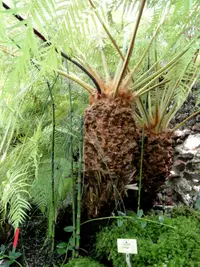
The stout rhizome and trunk carry dense, golden to brown, bristly scales that help protect young tissues from moisture loss and herbivory in its humid but variable mountain habitats.

Cool, cloud-forest origins

In nature it grows in cool to mild, constantly moist cloud-forest conditions at higher elevations, which influences its preference for high humidity, shade, and evenly moist, rich substrates in cultivation.

FAQs about Cibotium cumingii

This tree fern can be grown indoors in bright, filtered light and high humidity. It suits spacious rooms, conservatories, or bright bathrooms. Good air circulation, stable warmth, and a large, deep container are important for long-term success in Cibotium cumingii indoor care.

Grow Healthy Plants with Botan Care

Keep your plants happy and healthy with plant identification, disease detection, and easy care guidance.

Botan plant care app — identify plants on mobile

Explore More Plants