quickstick Care (Gliricidia sepium)

Also known as: Fence Post Tree
quickstick

About quickstick

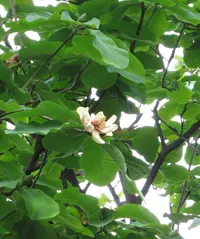
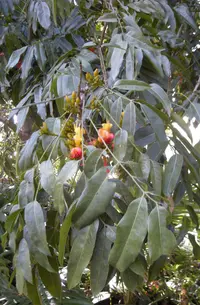
Quickstick (Gliricidia sepium) is a fast-growing, deciduous tree often used as a living fence, shade tree, or support plant in agroforestry systems. It typically has a slim trunk, light gray bark, and a spreading crown with many pinnate leaves. In suitable climates it produces clusters of pale pink, pea-like flowers along bare branches before leaf flush. The species is native to Central America and Mexico but is now widely cultivated in tropical and subtropical regions. It is considered easy to grow because it roots readily from cuttings, tolerates pruning, and copes with poor, dry soils. To care for quickstick, provide full sun, moderate moisture, and well-drained soil.

Main Plant Requirements

Care Difficulty

Easy Care

Light Preference

Full Sun

Water Requirements

Moderate Water

Temperature Preference

Tropical / Frost Sensitive

Hardiness Zone

10–12

Soil Texture

Sandy, Loamy, Clay

Soil pH

Slightly acidic (6.5–7.0), Slightly alkaline (7.0–7.5)

Soil Drainage

Well-drained

Fertilization

Minimal (feed rarely)

Get Personalized Care Plan

Scan your plant to receive care tips personalized for your specific plant

Available on iOS and Android

How to Care for the quickstick

Gliricidia sepium thrives in strong sun but tolerates some shade in hot climates.

  • Provide 6–8 hours of direct sun daily; full sun drives fastest growth and best flowering for quickstick in open ground.
  • Allow light afternoon shade in very hot regions to limit leaf scorch, especially on young trees or newly planted hedges.
  • In cooler or cloudy seasons, prioritize maximum sun exposure and avoid planting under dense tree canopies that block most direct light.

This species prefers deep, infrequent watering once established, supported by well-drained soil.

  • At planting, water slowly until the root zone is moist 20–30 cm deep, then allow the top 5–8 cm of soil to dry before watering again.
  • In the first 1–2 growing seasons, increase watering during hot, dry spells; mature Gliricidia sepium usually needs water only during prolonged drought.
  • Watch for yellowing leaves and soft stems as signs of overwatering, and for leaf drop and dry, curling leaves as signs of underwatering.

This tropical tree favors warm, frost-free conditions for reliable growth and flowering.

  • Aim for 70–90°F (21–32°C) for active growth; it handles short heat up to about 100°F (38°C) if soil moisture is not extremely low.
  • Protect from temperatures below 45°F (7°C); light chills can slow growth, and repeated exposure weakens young plants.
  • Avoid frost, as sustained drops near or below 32°F (0°C) can cause dieback or kill small trees; establish in warm, sheltered sites.

Humidity is not a major limiting factor for Gliricidia sepium, but very dry air can slow growth in young container plants.

  • Aim for 40–60% humidity around seedlings and young quickstick plants to support steady leaf development.
  • In very dry air, watch for crisp leaf edges and slow bud extension as signs of humidity stress rather than nutrient issues.
  • Increase local humidity with nearby trays of water and grouped plants rather than misting, which has little lasting effect outdoors.

Gliricidia sepium prefers well-drained, moderately fertile substrates rather than heavy, compacted ground.

  • Use a loamy or sandy-loam mix with 30–40% coarse material (sand, fine gravel, or perlite) to keep water moving through the root zone.
  • Incorporate 20–30% mature compost to supply organic matter that supports both drainage and moisture retention without waterlogging.
  • Target a slightly acidic to neutral pH of 6.0–7.5; avoid strongly acidic or saline soils that restrict root and nodule function.
  • Break up hardpan layers and avoid low spots where water stands after rain, since prolonged saturation encourages root rot and poor establishment.

This species can be grown in containers for early establishment or small-scale use, if the pot is chosen carefully for root space and stability.

  • Select a deep, heavy pot so the fast-developing taproot has room while the tall top growth remains stable in wind.
  • Use a free-draining mix and raise the container on feet or bricks so drainage holes never sit in collected runoff.
  • Place large containers where they will not need frequent moving, since the combined weight of moist mix and woody growth becomes substantial over time.

Gliricidia sepium, often called quickstick, usually needs minimal fertilization because it fixes nitrogen in its root nodules.

  • Use light applications of compost or well-rotted manure once at the start of the warm growing season if soil is poor.
  • In containers or depleted soils, apply a balanced NPK fertilizer at 1/2 strength every 6–8 weeks during active growth.
  • Avoid high-nitrogen products; excess nitrogen can cause overly lush, weak shoots and reduced flowering.
  • Stop feeding in late fall and winter to prevent soft, frost-sensitive growth and nutrient waste.

Pruning Gliricidia sepium helps manage its fast growth, encourage branching, and maintain safe structure.

  • Carry out main pruning in late winter to early spring before vigorous new growth begins.
  • Remove dead, diseased, rubbing, or storm-damaged branches first using clean, sharp loppers or a pruning saw.
  • Thin crowded interior shoots to improve light penetration and airflow, which supports stronger, more stable limbs.
  • Shorten or head back long, whippy stems to shape the canopy and keep the tree at a manageable height.

This species is usually field-grown, so care focuses on transplanting young trees rather than ongoing repotting.

  • Look for roots circling inside the nursery container, poor drainage, or slowed growth as signs it is ready for planting out.
  • Transplant in late spring to early summer when soil is warm and the risk of frost has passed.
  • Move seedlings from containers to the ground after 1–2 years, handling the root ball gently to limit disturbance.
  • Water deeply before and after transplanting, then shade for a few days and maintain even moisture to reduce root stress.

Gliricidia sepium is commonly propagated from both seed and woody cuttings for hedges, fodder, and living fences.

  • Collect mature seeds, scarify lightly if the coat is hard, then sow in warm, well-drained medium at 70–85°F.
  • Take semi-hardwood or hardwood cuttings in late spring to summer, 30–60 cm long with several nodes.
  • Plant cuttings in a free-draining, slightly moist substrate and keep warm with bright, indirect light.
  • Avoid waterlogging; moderate moisture and good aeration support callus formation and root development.

This is a tropical to subtropical tree that suffers in freezing conditions and needs protection in colder climates.

  • In USDA zones colder than 10, grow in large containers and move indoors or to a heated greenhouse before temperatures drop near 32°F.
  • Outdoors in marginal climates, apply a 5–10 cm mulch layer around the root zone, keeping it slightly away from the trunk.
  • Avoid winter pruning or heavy watering in cool conditions, as this encourages weak growth and increases cold damage risk.

Care Tips

Managed coppicing

Coppice young trees every 1–2 years at 50–100 cm height to promote multiple straight shoots for fodder, green manure, or living fences while keeping the root system vigorous and stable.

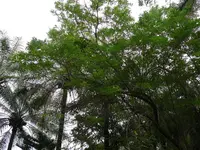
Living fence training

When establishing a live fence, plant stakes 1–2 m apart and loosely tie new shoots horizontally along wire or twine to quickly create a dense, windbreaking hedge and improve branch rooting where they touch the soil.

Rhizobium inoculation

At planting, dust seeds or dip bare-root seedlings in an appropriate rhizobium inoculant slurry to boost nitrogen fixation, especially on degraded or previously non-legume soils.

Branch cuttings propagation

For rapid multiplication, use woody stakes 2–5 cm thick and 1.5–2 m long, insert at least one-third of their length into moist, well-drained soil, and keep weed-free until new shoots and roots establish.

Integrated shade management

In agroforestry, prune or pollard trees just before the main crop’s critical light-demand period so canopy regrowth does not shade crops at flowering or early fruit set, which optimizes both crop yield and growing quickstick for biomass.

Common Pests and Diseases

Stem-boring beetles

This pest tunnels into young stems and branches, causing wilting, dieback, and sometimes sudden breakage of shoots. Symptoms include small entry holes, frass (sawdust-like material), and hollowed stems.

Solution

Prune and destroy infested branches as soon as boring is detected, cutting well below the damaged area. Encourage plant vigor with proper watering and nutrition, and use targeted trunk or stem sprays with an appropriate systemic insecticide if infestations are recurring and severe, following local regulations and label directions.

Leaf skeletonizers

These insects feed between the veins of Gliricidia leaves, leaving a lacy, skeletonized appearance and sometimes leading to premature defoliation. This pest is most damaging on young trees or new flushes of growth.

Solution

Inspect foliage regularly and hand-remove heavily infested leaves on smaller trees to reduce populations. For larger trees, use biological controls such as Bacillus thuringiensis (Bt) or neem-based sprays timed to young larvae, and maintain good tree health so it can quickly replace lost foliage.

Pod-boring caterpillars

These insects bore into green seed pods, feeding on developing seeds and causing premature pod yellowing and drop. Symptoms include small entry holes, frass around the pod surface, and shriveled or damaged seeds.

Solution

Collect and destroy infested and fallen pods to break the life cycle and reduce the next generation. In seed production plantings, monitor flowering and pod set closely and, where necessary, apply selective biological or insect growth regulator products early in the pod development stage, following label instructions.

Powdery mildew

This disease produces white, powdery fungal growth on leaves, young stems, and flower clusters, leading to leaf distortion, reduced photosynthesis, and early leaf drop in humid but not overly wet conditions. Symptoms include dull, grayish patches that can coalesce over time.

Solution

Improve air circulation by avoiding overcrowding and pruning dense internal branches so foliage dries quickly. Remove heavily affected leaves and apply a sulfur, potassium bicarbonate, or horticultural oil fungicide at the first sign of infection, repeating as directed during favorable conditions.

Leaf spot complex

This disease causes small brown to dark lesions on leaves that may enlarge, coalesce, and cause partial defoliation, especially during warm, wet weather. Symptoms include irregular spots often with yellow halos and, in severe cases, thinning of the canopy.

Solution

Rake and dispose of fallen leaves to reduce fungal inoculum, and avoid overhead irrigation so foliage stays as dry as possible. Prune to open the canopy and, if defoliation becomes significant, apply a broad-spectrum fungicide labeled for tree leaf spots during wet periods, rotating active ingredients to reduce resistance.

Interesting Facts

Nitrogen-fixing shade tree

This species forms symbioses with root bacteria that convert atmospheric nitrogen into plant-available forms, allowing it to enrich poor soils and provide shade for crops such as coffee and cacao.

Living fence pioneer

Farmers commonly plant it as closely spaced living fence posts; cut stems root readily, creating durable, resprouting boundaries that also supply fodder and firewood.

Bee-attracting blooms

Its pink, pea-like flowers are rich in nectar and are strongly visited by honeybees and other pollinators, making it a useful component of agroforestry systems that support pollination services.

Botan icon

Did you know?

In some tropical agroforestry systems, it is deliberately planted and pruned on a schedule so that its fallen leaves form a nutrient-rich green mulch, which can significantly reduce the need for synthetic nitrogen fertilizers in nearby crops.

FAQs about quickstick

This species is considered fast-growing, often adding 1–3 m of height per year in warm climates with adequate rainfall. Growth slows in poor soils, drought, or cool conditions, but pruning can help maintain manageable size.

Grow Healthy Plants with Botan Care

Keep your plants happy and healthy with plant identification, disease detection, and easy care guidance.

Botan plant care app — identify plants on mobile

Explore More Plants