Staggered Cutting
Cut back only a portion of flowering stems at a time, leaving some seed heads to mature so pollinators and seed-eating birds still benefit while the plant maintains energy reserves for the next season.

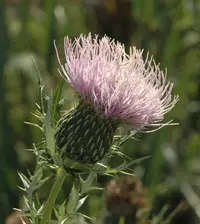
Field thistle, Cirsium discolor, is a tall, short-lived perennial native to eastern and central North America. It belongs to the daisy family and is valued by pollinators.
Plants form spiny, upright stems with deeply lobed, gray-green leaves and large, soft-looking purple flower heads in late summer. The downy underside of the leaves helps distinguish it from other thistles.
Field thistle often grows in sunny meadows, roadsides, and open woodland edges where soils are moderately moist but well drained. Once established, it handles poor soils and light drought, which makes it relatively undemanding if you understand how to care for field thistle in a garden setting.

Care Difficulty
Easy Care

Light Preference
Full Sun

Water Requirements
Moderate Water

Temperature Preference
Cold Hardy

Hardiness Zone
3–8

Soil Texture
Sandy, Loamy, Silty

Soil pH
Acidic (5.5–6.5), Slightly acidic (6.5–7.0)

Soil Drainage
Moist but well-drained

Fertilization
Minimal (feed rarely)
Scan your plant to receive care tips personalized for your specific plant
Available on iOS and Android
This North American native thistle thrives in open, sunny sites with only light shade.
This species prefers moderately moist yet free-draining soil and resents prolonged saturation.
This hardy perennial tolerates a wide temperature range but grows best in moderate summer conditions.
Humidity is not a major factor for Cirsium discolor, which is adapted to open, airy habitats.
Cirsium discolor prefers moderately fertile, well-structured soil that drains freely yet retains some moisture.
This species can be grown in containers outdoors, mainly for temporary display or habitat plantings.
This native wildflower generally thrives in lean soil and usually needs no supplemental fertilizer.
Thoughtful pruning supports flowering, prevents self-seeding spread, and keeps Cirsium discolor manageable in garden settings.
Field thistle is seldom container-grown; focus on careful transplanting of young plants or seedlings.
Propagation of Cirsium discolor is typically done from seed rather than division due to its deep taproot.
This cold-hardy perennial generally needs minimal winter attention once established in the ground.

Plant Health Check
Not sure what's wrong with your plant? Check your plant's health inside the app.
This species is native to eastern and central North American prairies, meadows, and open woods, where it often appears in later stages of prairie restoration projects as an indicator of recovering native plant communities.
Its deep pink flower heads provide abundant nectar for migrating monarch butterflies in late summer and early fall, making it an important stopover resource along their travel routes.
After flowering, its fluffy seed heads are used by finches and other small birds for both nesting material and food, and these birds help disperse the seeds across suitable open habitats.

Field thistle is often considered regionally uncommon or declining in parts of its native range because it depends on intact or well-managed open habitats, so conservation-focused land managers sometimes actively encourage or reintroduce this species in prairie and meadow restoration projects.
This species spreads mainly by seed, not running roots. In open, bare soil it can seed around and form patches, but regular deadheading and timely removal of unwanted seedlings usually keep it from becoming aggressively dominant.
Keep your plants happy and healthy with plant identification, disease detection, and easy care guidance.