Staggered Deadheading
Remove spent blooms weekly down the stem to the first strong side shoot to extend the flowering period while still leaving some seed heads at season’s end for birds and winter interest.

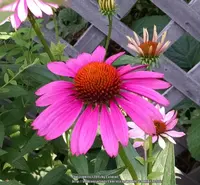
Purple coneflower, Echinacea purpurea 'Magnus', is a herbaceous perennial grown mainly for its sturdy pink-purple daisy-like flowers and strong vertical form. It forms clumps with upright stems and a prominent orange-brown central cone that attracts bees and butterflies.
This cultivar comes from prairies and open meadows of North America, so it is adapted to sun, wind, and seasonal temperature changes. It is generally considered easy to grow, with good drought tolerance once established and a long flowering season.
It prefers full sun, well-drained soil, and moderate watering, which makes it suitable for low-maintenance borders and wildlife-friendly gardens. Understanding how to care for Purple Coneflower helps keep plants compact, floriferous, and long lived.

Care Difficulty
Easy Care

Light Preference
Full Sun

Water Requirements
Low Water

Temperature Preference
Cold Hardy

Hardiness Zone
3–9

Soil Texture
Sandy, Loamy, Clay

Soil pH
Acidic (5.5–6.5), Slightly acidic (6.5–7.0)

Soil Drainage
Well-drained

Fertilization
Minimal (feed rarely)
Scan your plant to receive care tips personalized for your specific plant
Available on iOS and Android
This sun-loving perennial flowers best in open, bright conditions.
This drought-tolerant perennial prefers infrequent, deeper watering rather than frequent sips.
This hardy perennial tolerates a wide temperature range once established outdoors.
Humidity is rarely a concern for this species and typical outdoor levels suit Purple Coneflower well.
This perennial prefers lean, free-draining soil that does not stay wet after rain or watering.
This species can grow successfully in containers when given enough root depth and fast-draining conditions.
This perennial needs only modest feeding, especially in reasonably fertile garden soil.
Pruning Echinacea purpurea 'Magnus' is mainly done to tidy plants and influence bloom performance.
This cultivar is most often grown in garden beds, with transplanting done sparingly due to its deep taproot.
Echinacea purpurea 'Magnus' is commonly propagated by division or seed under suitable conditions.
This hardy perennial tolerates typical winter conditions in much of the US with minimal intervention.

Plant Health Check
Not sure what's wrong with your plant? Check your plant's health inside the app.
The cultivar 'Magnus' received the Royal Horticultural Society Award of Garden Merit after trials showed its strong flowering performance, reliability, and overall garden value compared to other coneflower cultivars.
Unlike many purple coneflowers with drooping petals, 'Magnus' was selected for its broader, more horizontal ray florets that create a flatter, daisy-like disc around the cone, making the flower heads more visually prominent in plantings.
'Magnus' is known for its consistent, rich rose-purple petal color and large, coppery-orange cone, showing less variation between individual plants than many seed-grown strains of Echinacea purpurea.

Plant trials at the Chicago Botanic Garden rated 'Magnus' among the more durable and ornamental Echinacea cultivars for Midwestern conditions, combining good winter hardiness, strong stems, and sustained bloom display over multiple seasons.
Lack of blooms usually comes from too much shade, overly rich or waterlogged soil, or immature plants. Divisions may need 1–2 years to flower well. Avoid heavy nitrogen fertilizer and ensure at least several months of established growth.
Keep your plants happy and healthy with plant identification, disease detection, and easy care guidance.