Cissus repanda Care

Cissus repanda

About Cissus repanda

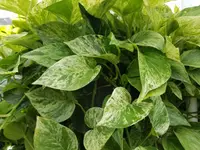
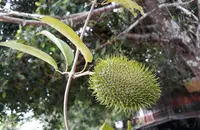
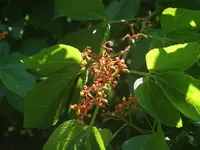
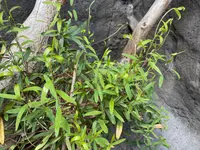
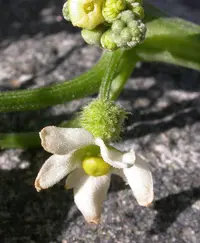
Cissus repanda is a tropical climbing vine in the grape family, grown mainly for its decorative foliage and vigorous trailing or scrambling habit. Its slender stems carry simple, often slightly toothed leaves that create a light, airy look rather than a dense curtain of foliage. Small flowers and fruits may appear but are usually not the main ornamental feature.

This species is native to warm, humid regions of Asia, where it grows in forest margins and thickets. It tends to be fast-growing under suitable conditions, so regular support or trimming is helpful. The plant prefers bright, filtered light, moderate moisture, and well-drained soil, which makes it relatively straightforward to care for Cissus repanda in controlled indoor or sheltered outdoor settings.

Main Plant Requirements

Care Difficulty

Moderate Care

Light Preference

Partial Shade

Water Requirements

Moderate Water

Temperature Preference

Tropical / Frost Sensitive

Hardiness Zone

11–12

Soil Texture

Loamy, Sandy, Organic-rich

Soil pH

Acidic (5.5–6.5), Slightly acidic (6.5–7.0)

Soil Drainage

Moist but well-drained

Fertilization

Light (every 4–6 weeks)

Get Personalized Care Plan

Scan your plant to receive care tips personalized for your specific plant

Available on iOS and Android

How to Care for the Cissus repanda

This vining species prefers bright, filtered light similar to a bright forest edge.

  • Provide 4–6 hours of bright, indirect light daily, such as dappled shade under taller plants or behind a sheer curtain indoors, to support steady growth for Cissus repanda.
  • Tolerates partial shade, especially afternoon shade; morning sun up to 2–3 hours is usually safe if leaves do not scorch or curl at the edges.
  • Avoid harsh midday sun that causes leaf bleaching or crispy margins, and in winter move plants closer to bright windows or open canopies to offset shorter days.

This plant prefers evenly moist but not saturated soil and reacts quickly to extremes.

  • Water when the top 2–4 cm of soil feels dry, letting water drain fully; in warm growing periods this may mean more frequent watering than in cool seasons.
  • Use a loose, well-draining mix and avoid standing water, since yellowing, soft leaves and a sour soil smell suggest overwatering and root stress.
  • Slight leaf droop, dull foliage, and dry, pulling-away soil indicate underwatering; water thoroughly, then allow excess to run off and avoid only shallow surface wetting.

This species grows best in warm, frost-free conditions with only mild temperature swings.

  • Aim for 65–80°F (18–27°C) during active growth for strongest vines and foliage, avoiding rapid shifts of more than about 10°F (6°C) in a short time.
  • Protect from cold; growth slows sharply below 55°F (13°C), and damage or leaf drop can occur if exposed to 40–45°F (4–7°C), especially with wind.
  • Cissus repanda tolerates short heat spells up to about 90°F (32°C) if shaded and well watered, but prolonged extreme heat plus full sun can scorch leaves and stunt new growth.

This species prefers moderately humid air but usually adapts to typical home conditions.

  • Aim for 40–60% humidity to support steady foliage growth and reduce leaf-edge drying.
  • It tolerates short spells of drier air, but prolonged humidity below 35% may cause crispy tips and leaf drop in Cissus repanda.
  • Increase humidity with a nearby humidifier, grouped plants, or a pebble tray rather than misting leaves directly.

Use a loose, airy mix that drains rapidly but holds some moisture.

  • Choose a mix based on peat or coco coir with added perlite and fine bark to create a crumbly, organic-rich structure.
  • Ensure fast drainage so water passes through in seconds; avoid compacted, heavy, or clay-based substrates that stay wet for long periods.
  • Keep pH slightly acidic to neutral, around 6.0–7.0, which supports nutrient availability for Cissus repanda.
  • Improve aeration by increasing coarse components (perlite, bark, pumice) if the mix feels dense or roots are slow to dry.

This species is well suited to container growing due to its manageable root system and vining habit.

  • Select a wide, stable pot so the trailing vines do not tip the container as they lengthen.
  • Use a container material that matches your watering style, such as terra-cotta for faster drying or plastic for slower moisture loss.
  • Provide a trellis or support fixed firmly in the pot to prevent wobbling as stems climb and gain weight.

Nutrient inputs support steady growth for Cissus repanda in containers or poor soils.

  • Use a balanced liquid fertilizer (around 10-10-10 or 20-20-20) at 1/2 strength every 4–6 weeks in spring and summer.
  • Apply to moist soil to reduce root burn, avoiding contact with dry roots.
  • In winter or dormancy, reduce to 1 light feeding every 8–10 weeks or pause if growth stops.
  • For low-maintenance feeding, incorporate a slow-release fertilizer or a thin layer of compost at the start of the growing season.

Thoughtful pruning keeps Cissus repanda compact, healthy, and manageable as a vine.

  • Time main pruning for late winter or early spring before strong new growth starts.
  • Remove dead, damaged, or crossing stems with clean, sharp scissors or hand pruners.
  • Shorten overly long vines to encourage branching and a fuller, bushier shape.
  • During the growing season, pinch soft tips to control length and maintain the plant within its support.

Container-grown plants benefit from occasional repotting to maintain root health and stable growth.

  • Check for roots circling the pot base, emerging from drainage holes, or unexplained slow growth as signals to repot Cissus repanda.
  • Plan repotting for spring, moving up only 1 pot size every 2–3 years.
  • Use a well-drained mix and gently tease circling roots apart, trimming only thickly tangled sections.
  • Water thoroughly after repotting, keep in bright indirect light, and avoid heavy feeding for 2–3 weeks to limit stress.

New plants are most commonly produced from stem cuttings taken from healthy vines.

  • Take 8–12 cm semi-ripe stem cuttings in late spring or early summer, each with 2–3 nodes.
  • Remove lower leaves and insert the cut end into a moist, free-draining mix; rooting hormone can improve success.
  • Maintain 70–80°F, high humidity, and bright indirect light until roots form.
  • Once rooted and new growth appears, pot individually and acclimate to slightly drier air over 7–10 days.

Winter needs depend on climate, as this vine dislikes prolonged freezing conditions.

  • In regions with frost, grow in containers and move indoors before temperatures drop near 40°F.
  • Provide bright indirect light indoors and keep soil just slightly moist, never waterlogged.
  • In mild climates, add a 5–8 cm mulch layer over the root zone to buffer temperature swings.
  • Avoid heavy pruning or fertilizing in winter while growth is naturally slower.

Care Tips

Provide firm support

Install a stable trellis, moss pole, or horizontal wire early, then loosely tie new vines with soft garden ties so the plant develops an orderly, well-supported framework instead of tangling on itself.

Tip-pinching strategy

Pinch or cut back the last 1–2 in of very long, thin shoots during active growth to encourage branching and a fuller, bushier plant rather than one or two long, weak vines.

Targeted pest scouting

Check the undersides of leaves and the junctions where tendrils meet the stem every 1–2 weeks, using a hand lens if possible, since mealybugs and spider mites often settle in these sheltered spots first.

Quarantine new plants

Keep any new houseplants at least 1–2 m away from your vine for 2–3 weeks and inspect them regularly, which greatly reduces the risk of introducing scale insects or mites to an established specimen.

Seasonal rest adjustment

In late fall, reduce training, handling, and any major pruning so the plant can slow its growth naturally over winter, then resume shaping and structural work once you see strong new shoots in spring for smoother overall Cissus repanda care instructions.

Common Pests and Diseases

Spider mites

This pest often appears on Cissus repanda in warm, dry indoor air and causes fine stippling, dull leaves, and delicate webbing on stems and leaf undersides.

Solution

Rinse foliage thoroughly with a strong but gentle stream of lukewarm water, then wipe leaf undersides; increase humidity to 50–60% and, if needed, apply insecticidal soap or a ready-to-use neem oil spray every 7–10 days until no new damage appears.

Mealybugs

These insects hide in leaf nodes and along stems, producing white cottony clusters and sticky honeydew that can lead to sooty mold on leaves.

Solution

Isolate the plant, dab visible insects with cotton swabs dipped in 70% isopropyl alcohol, then wash the plant and treat with insecticidal soap; repeat inspections weekly and remove heavily infested stems to support long-term Cissus repanda indoor care.

Scale insects

This pest forms small, hard, brown or tan bumps along stems and leaf veins, causing yellowing, reduced growth, and sticky residue on nearby surfaces.

Solution

Gently scrape or peel off individual scales with a fingernail or soft tool, prune badly affected sections, then apply horticultural oil or neem oil to fully coat stems and leaf undersides, repeating every 2–3 weeks until new growth remains clean.

Botrytis leaf blight

This disease develops in cool, humid, poorly ventilated conditions and produces tan or brown leaf spots that may coalesce, often with gray fuzzy mold on dead tissue.

Solution

Remove and discard affected leaves, improve air circulation, avoid overhead watering, and keep foliage dry; in persistent cases, use a labeled fungicide for ornamental vines and space plants so leaves can dry quickly after watering.

Powdery mildew

This disease shows as white, powdery patches on leaves and young stems, leading to distortion, reduced vigor, and premature leaf drop in shaded, stagnant air conditions.

Solution

Increase light and airflow, avoid crowding, and remove the most affected leaves; treat remaining foliage with a sulfur-based fungicide or a potassium bicarbonate product according to label directions, and water the soil directly rather than wetting the leaves.

Interesting Facts

Variable leaf shapes

This species shows considerable leaf polymorphism, with blades ranging from narrowly lanceolate to more ovate, even on the same plant, which helps it adapt to different light exposures in forest edges and thickets.

Climbing by tendrils

It climbs using slender, branched tendrils that can hook onto nearby vegetation or supports, allowing the vine to reach higher light levels without investing in thick, self-supporting stems.

Warm-climate distribution

Cissus repanda is naturally distributed in warm, seasonal parts of South and Southeast Asia, often occurring in disturbed habitats such as hedgerows, scrub, and secondary forest margins rather than deep shade.

FAQs about Cissus repanda

Brown edges usually result from low humidity, irregular watering, or excess fertilizer salts. Improve humidity, water evenly allowing partial drying between waterings, and flush the pot occasionally to remove built-up salts. Check for root damage or compacted soil.

Grow Healthy Plants with Botan Care

Keep your plants happy and healthy with plant identification, disease detection, and easy care guidance.

Botan plant care app — identify plants on mobile

Explore More Plants