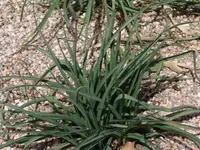
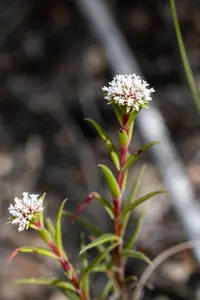
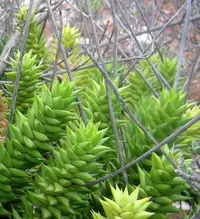
seaside pussypaws Care (Cistanthe maritima)

Also known as: seaside calandrinia
seaside pussypaws

About seaside pussypaws

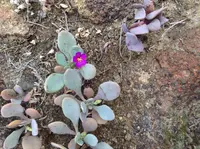
Seaside pussypaws (Cistanthe maritima) is a low, spreading perennial native to coastal bluffs and sandy dunes of western North America. It forms dense mats of fleshy, gray-green leaves that help it tolerate wind, salt, and drought.

Short stems carry clusters of soft, rounded pink flower heads that resemble tiny cat paws, usually blooming in spring and early summer. The plant is adapted to lean, fast-draining soils and full sun, which makes it suitable for rock gardens and dry coastal landscapes.

Because it is drought-tolerant and naturally compact, many gardeners find it relatively simple to care for seaside pussypaws when soil is not too rich or wet.

Main Plant Requirements

Care Difficulty

Easy Care

Light Preference

Full Sun

Water Requirements

Low Water

Temperature Preference

Warm Climate

Hardiness Zone

8–10

Soil Texture

Sandy, Loamy, Rocky

Soil pH

Slightly acidic (6.5–7.0), Neutral (7.0)

Soil Drainage

Well-drained

Fertilization

Minimal (feed rarely)

Get Personalized Care Plan

Scan your plant to receive care tips personalized for your specific plant

Available on iOS and Android

How to Care for the seaside pussypaws

This coastal succulent thrives in bright, open sites with strong sun exposure.

  • Provide 6–8 hours of direct sun daily; full sun suits seaside pussypaws best in cool, coastal climates.
  • In hotter inland areas, give morning sun with light afternoon shade to prevent leaf scorch or bleaching.
  • If stems stretch or flowering drops, light is too low; move to a more open, south- or west-facing spot, especially in spring.

This drought-tolerant succulent prefers infrequent, deep watering and fast-draining soil.

  • Water only when the top 3–5 cm of soil are completely dry; sandy or gritty soil is strongly preferred.
  • Reduce watering in cool seasons, allowing soil to dry more thoroughly; in summer, increase slightly during prolonged heat waves.
  • Watch for shriveling or limp leaves as a sign to water, and for soft, yellowing, or blackened stems as a sign of overwatering.

This coastal species prefers mild conditions and copes well with heat when soil drains quickly.

  • Aim for 60–75°F (16–24°C) for active growth; flowering is often best in cooler, bright spring conditions.
  • Mature plants can tolerate brief drops near 25°F (−4°C), but repeated hard frosts and frozen, wet soil increase loss risk.
  • Heat up to 90–95°F (32–35°C) is tolerated if soil is very free-draining and the plant is not newly transplanted.

This coastal succulent tolerates low humidity and rarely needs special humidity management indoors or outdoors.

  • Ideal humidity is broadly 20–50%, similar to most heated or air‑conditioned homes.
  • Dry indoor air is usually fine, but combined with heat can cause leaf shriveling and slower growth.
  • If air is extremely dry, group pots together and reduce strong airflow rather than misting, which adds little benefit.

This species prefers very well-drained, sandy soil that mimics its coastal native habitat.

  • Use a gritty mix such as 50–60% coarse sand or fine gravel with the rest a cactus/succulent potting mix to keep roots dry and aerated.
  • Ensure drainage is rapid; water should pass through the mix within seconds rather than pooling on the surface.
  • Aim for slightly acidic to neutral pH around 6.0–7.0, as very alkaline soils can limit nutrient availability.
  • Avoid heavy clay, peat-heavy, or compacted mixes that hold water, and lighten them with sand and perlite if no alternative is available.

This species grows well in containers, especially shallow, fast-draining ones suitable for succulents.

  • Choose a wide, shallow pot to match its spreading habit and prevent wasted depth that stays wet and cold around the roots.
  • Use unglazed terracotta if extra moisture loss is needed in cool or humid climates, as it allows faster evaporation from the mix.
  • Raise the container slightly on pot feet or bricks outdoors so drainage holes clear quickly and the base does not sit in rainwater.

This coastal succulent needs only light feeding, so focus on lean, well-drained soil rather than heavy fertilization when caring for seaside pussypaws.

  • Apply a diluted balanced liquid fertilizer (around 1/4 strength, such as 10-10-10) once a month during active spring–summer growth if soil is very poor.
  • Use a small amount of compost or low-dose slow-release granules mixed into the topsoil rather than rich organic blends.
  • Avoid feeding during fall and winter dormancy to prevent weak, stretched growth and root problems.
  • Always water lightly after feeding and ensure excess solution drains freely to avoid salt buildup in the root zone.

Pruning needs for Cistanthe maritima are minimal and mainly focused on keeping the plant tidy and flowering well.

  • Best time to prune is after the main flowering flush in late spring or early summer.
  • Remove spent flower stems, dead foliage, and storm-damaged parts with clean, sharp scissors or hand pruners.
  • Lightly trim straggly or overly long shoots to maintain a low, compact mound and encourage branching.
  • Avoid heavy cutting into old woody tissue, as this can slow recovery and reduce future blooms.

This coastal groundcover is more often transplanted in the landscape than repotted, and it dislikes frequent disturbance.

  • Transplant in early spring or mild fall when temperatures are cool and soil is workable.
  • Look for signs such as roots circling a pot, water running straight through, or stalled growth before moving container plants.
  • Shift to only 1 pot size larger, or a similar-sized outdoor spot with very free-draining, sandy soil to limit root shock.
  • Handle the root ball gently, keep as much soil attached as possible, water in lightly, and shade for a few days to reduce stress.

Cistanthe maritima is commonly propagated from seeds or soft stem cuttings under warm, bright, and dry-leaning conditions.

  • Sow fresh seeds in late winter–early spring on the surface of gritty, well-drained mix, barely covering them.
  • Maintain 65–75°F, bright light, and slightly moist but not wet substrate until germination.
  • For cuttings, take non-flowering shoots in late spring, allow cut ends to callus for 1–2 days, then insert into sandy mix.
  • Keep cuttings in bright, indirect light with very light watering until roots form, then gradually increase sun exposure.

This species is relatively cold tolerant in mild coastal climates but may need help in colder inland winters.

  • In-ground plants usually handle light frosts but struggle below about 20°F, especially in wet soils.
  • Apply a thin layer of gravel or coarse mulch around the crown to improve drainage rather than hold excess moisture.
  • Move containers under cover or indoors to a bright, cool, frost-free spot when hard freezes are forecast.
  • Water sparingly in winter so the soil stays mostly dry, which reduces rot risk in cold conditions.

Care Tips

Encourage Dense Mounding

Pinch back the soft tips of longer stems once or twice in early growth to promote a tighter, more compact mound that is less likely to split open in wind or rain.

Improve Coastal Drainage

In coastal or heavy-rain areas, plant on a low berm or raised strip of gritty soil so excess water sheds quickly away from the crown, which helps prevent crown rot in winter.

Use Mineral Mulch

Top-dress around plants with a thin layer of fine gravel or decomposed granite instead of organic mulch to keep foliage dry, reflect light to the lower stems, and maintain sharp drainage.

Control Self-Seeding

If natural reseeding is not desired, shear off spent flower clusters before seed pods fully dry, or collect seed heads into a paper bag and discard or store them for controlled sowing.

Plan for Winter Wet

In regions with very wet winters, consider planting in containers or elevated rock pockets so you can move or shelter plants during prolonged rain, which is one of the most practical strategies for caring for seaside pussypaws in marginal climates.

Common Pests and Diseases

Aphids

This pest feeds on tender shoots and flower stalks, sucking sap and causing distortion, yellowing, and sticky honeydew on seaside pussypaws. Symptoms include curling new growth and reduced vigor, especially on lush, well-watered plants.

Solution

Rinse colonies off stems and flower stalks with a firm stream of water, then inspect weekly during active growth. If populations persist, spot-treat with insecticidal soap or a light horticultural oil, applied in the early morning and repeated as needed, and avoid overfertilizing, which encourages soft, aphid-prone growth.

Mealybugs

These insects appear as small white cottony clusters in leaf axils and along stems, where they weaken plants by sucking sap. Symptoms include stunted growth, yellowing, and sticky honeydew that can lead to sooty mold on foliage and nearby surfaces.

Solution

Remove visible clusters with a cotton swab dipped in isopropyl alcohol and prune heavily infested stems. Improve air movement around plants and, if needed, use repeated applications of insecticidal soap or horticultural oil, taking care to coat all hidden crevices where mealybugs shelter.

Powdery mildew

This disease causes white, powdery patches on leaves and sometimes on stems, more often when days are warm and dry but nights are cool and humid. Symptoms include dull, mottled foliage and reduced flowering on dense plantings with poor air flow.

Solution

Thin or space plants to improve air circulation and avoid overhead watering that keeps foliage damp in the evening. Remove heavily affected leaves and, if necessary, use a sulfur-based or potassium bicarbonate fungicide labeled for ornamentals, applied according to label directions at the first sign of infection.

Leaf spot

This disease produces small brown to tan spots on leaves that may merge into larger blotches, especially under prolonged moisture on foliage. Symptoms include premature leaf drop and an overall patchy, tired appearance in otherwise healthy clumps.

Solution

Remove and discard affected leaves to reduce the source of infection and avoid wetting the foliage when irrigating. Water at the base in the morning, maintain good spacing, and in persistent cases apply a copper-based fungicide during wet periods to protect new growth.

Interesting Facts

Coastal salt tolerance

This species naturally grows along Pacific coastal bluffs and dunes and tolerates salty spray and sandy, fast-draining soils better than most ornamental perennials.

Summer-dry adaptation

It is adapted to Mediterranean-type climates with wet winters and dry summers, often going semi-dormant or sparse in the hottest months and flushing new growth and flowers in cooler seasons.

Pollinator-friendly blooms

The small, pink, fuzzy flower clusters provide nectar and pollen for native bees and other small pollinators in its coastal habitat, contributing to dune and bluff ecosystem diversity.

Botan icon

Did you know?

This species is part of the coastal strand flora of California and Baja California, where it helps stabilize loose sandy or rocky soils with its mat-forming root system, which reduces erosion on exposed ocean-facing slopes.

FAQs about seaside pussypaws

Poor flowering usually comes from too much shade, excess water, or overly rich soil that encourages leaves instead of buds. Light pruning after the main bloom and avoiding high-nitrogen fertilizer help maintain compact, floriferous growth.

Grow Healthy Plants with Botan Care

Keep your plants happy and healthy with plant identification, disease detection, and easy care guidance.

Botan plant care app — identify plants on mobile

Explore More Plants