common gum cistus Care (Cistus ladanifer)

Also known as: Gum Rock-rose, gum cistus, Laudanum
common gum cistus

About common gum cistus

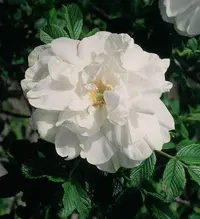
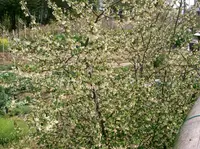
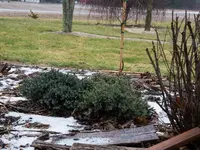
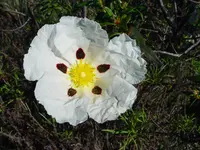
Common gum cistus (Cistus ladanifer) is an evergreen Mediterranean shrub valued for its resin-scented foliage and large, showy white flowers with or without dark blotches. It typically forms a rounded, bushy shape with stiff, aromatic leaves that feel sticky due to natural resins.

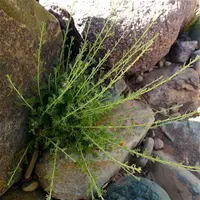
In the wild, it grows in dry, sunny scrublands and rocky slopes, especially in Spain, Portugal, and parts of North Africa. This origin explains its strong tolerance for heat, drought, and poor, stony soils.

The plant suits low-maintenance, water-wise gardens but dislikes heavy, waterlogged ground or frequent disturbance. Those looking to learn how to care for common gum cistus should note its preference for full sun, sharp drainage, and minimal fertilizer.

Main Plant Requirements

Care Difficulty

Moderate Care

Light Preference

Full Sun

Water Requirements

Low Water

Temperature Preference

Warm Climate

Hardiness Zone

8–10

Soil Texture

Sandy, Loamy, Rocky

Soil pH

Slightly acidic (6.5–7.0), Neutral (7.0)

Soil Drainage

Well-drained

Fertilization

Minimal (feed rarely)

Get Personalized Care Plan

Scan your plant to receive care tips personalized for your specific plant

Available on iOS and Android

How to Care for the common gum cistus

This Mediterranean shrub thrives in open, sunny positions with strong light exposure.

  • Provide full sun for 6–8 hours daily; common gum cistus flowers and branches best in unshaded, south- or west-facing sites.
  • It tolerates light partial shade (3–4 hours sun), but flowering and compact growth decline as shade increases.
  • In very hot inland summers, some light afternoon shade can reduce leaf scorch, while in winter, choose the brightest, least-obstructed spot to maintain vigorous growth.

This drought-tolerant shrub prefers infrequent, deep watering once established.

  • In the first growing season, water when the top 4–5 cm of soil are dry, then reduce as roots deepen.
  • For mature plants in the ground, rely mostly on rainfall and add water only after prolonged dry spells, ensuring soil dries between waterings.
  • Use sharply drained, sandy or gravelly soil; yellowing, soft leaves and dieback often indicate overwatering, while limp, curling leaves signal prolonged drought stress for Cistus ladanifer.

This species is adapted to warm, dry climates and tolerates a reasonable range of outdoor temperatures.

  • Optimal growth occurs around 65–80°F (18–27°C), especially during the main growing season in spring and early summer.
  • Mature plants tolerate brief drops to about 15–20°F (-9 to -6°C), but young shrubs are more vulnerable and benefit from shelter from cold winds and frost pockets.
  • The plant handles dry heat up to about 95°F (35°C) if soil is well drained; in extended heat waves, extra soil moisture and light afternoon shade help limit stress.

This Mediterranean shrub prefers relatively dry air and does not need elevated humidity.

  • Target 30–50% humidity, similar to typical indoor air in heated homes.
  • Leaves that yellow from the base combined with persistent leaf softness may indicate excess humidity and poor air movement rather than dryness.
  • Increase airflow instead of humidity by spacing plants apart and using an open, breezy position to prevent fungal problems on common gum cistus.

This shrub requires very free-draining, low-fertility soil to prevent root problems.

  • Use a gritty, sandy or stony mix with little organic matter, such as 50–70% coarse sand or grit blended with lean loam.
  • Aim for slightly acidic to neutral pH around 6.0–7.0, avoiding strongly acidic or alkaline extremes that restrict nutrient uptake.
  • Improve drainage and aeration by adding coarse grit or small stones rather than peat-rich compost, which holds excess moisture.
  • Avoid heavy clay, compacted ground, or any mix that stays wet for more than 1 day after watering, as this promotes root rot in Cistus ladanifer.

This species can be grown in containers if the pot and substrate are chosen to keep the root zone dry and stable.

  • Select a wide, heavy container to counterbalance its woody, sometimes top-heavy growth in windy sites.
  • Use a very coarse, mineral-rich mix so water drains through in seconds rather than minutes after irrigation.
  • Raise the pot on feet or bricks outdoors so drainage holes remain clear and runoff does not pool under the container.

Cistus ladanifer thrives in poor, well-drained soils and usually needs minimal feeding.

  • In the ground, skip fertilizer or use a light top-dressing of compost in early spring for nutrient-poor soils.
  • For potted plants, apply a low-dose, balanced slow-release fertilizer (for example 10-10-10) once in spring.
  • Use fertilizer at 1/2 strength to avoid soft, weak growth and reduced flowering.
  • Do not feed in late fall or winter, when growth is naturally slow.

Cistus ladanifer benefits from light, well-timed pruning to maintain shape and flowering wood.

  • Use clean hand pruners to remove dead, damaged, or diseased stems whenever noticed.
  • Right after flowering, lightly shorten leggy or sprawling shoots to keep a compact mound.
  • Avoid cutting into old, leafless wood, as this shrub reshoots poorly from hard prunes.
  • Thin crowded interior stems slightly to improve air flow and reduce disease risk.

This shrub is best grown in the ground; transplant Cistus ladanifer carefully because mature plants resent disturbance.

  • Transplant young plants in late winter or early spring while growth is still slow and weather is mild.
  • Look for roots circling the pot or water running straight through as signs a nursery plant needs moving.
  • Choose a sunny site with sharply drained soil, disturbing the root ball as little as possible when planting.
  • Water deeply once, then reduce watering so roots anchor quickly and stress is minimized.

Cistus ladanifer is commonly propagated from semi-ripe cuttings and sometimes from seed.

  • Take 7–10 cm semi-ripe stem cuttings in late summer, avoiding flowering tips.
  • Remove lower leaves, dip the base in rooting hormone, and insert into a gritty, free-draining mix.
  • Maintain bright light out of direct midday sun, with moderate warmth and slightly moist but not wet media.
  • Sow seeds in autumn in a well-drained mix; a brief hot-water soak can improve germination.

In mild, dry climates this evergreen shrub needs little winter attention, but cold or wet conditions require some care.

  • Cistus ladanifer tolerates light frost but can be damaged below about 15–20°F, especially in wet soils.
  • Apply a light gravel or bark mulch to improve drainage around the root zone in winter-rainy areas.
  • Shelter young plants from freezing winds with a temporary screen or windbreak.
  • Move container plants into a cool, bright, frost-free spot before hard freezes and keep soil just barely moist.

Care Tips

Summer root cooling

In very hot climates, apply a light gravel or small stone mulch around the root zone only, keeping it 5–8 cm away from the stem, to keep roots slightly cooler without trapping moisture against the crown.

Salt and spray tolerance

For coastal sites, place plants where they receive full sun but are protected from the strongest onshore wind, which reduces mechanical damage from salt-laden gusts while still taking advantage of this species’ good salt tolerance.

Low-input companioning

Combine it with other drought-adapted, lime-tolerant shrubs and perennials so all plants can be irrigated and fertilized on the same very lean schedule without stressing this naturally low-nutrient species.

Renewal through succession

Instead of hard rejuvenation pruning, start new young plants every 5–7 years and gradually replace older, woody specimens, which maintains the landscape look while respecting the species’ dislike of being cut back hard.

Firewise placement

In fire-prone regions, site shrubs at a safe distance from buildings, avoid creating continuous hedges, and maintain clear mineral soil or gravel breaks around groups, since the resinous foliage is naturally flammable when planning for growing common gum cistus.

Common Pests and Diseases

Botryosphaeria canker

This disease causes dieback of young shoots, sunken cankers on stems, and progressive death of branches, especially after drought or pruning stress. Symptoms include discolored, cracked bark and dry, brown wood beneath the surface.

Solution

Prune out affected shoots and branches well below the damaged tissue during dry weather and dispose of them, then disinfect tools between cuts. Reduce plant stress by avoiding summer pruning, maintaining good drainage, and spacing plants for airflow; in landscape settings, fungicides are rarely needed and are usually less effective than sanitation and stress reduction for Cistus ladanifer care.

Phytophthora wilt

This disease leads to sudden wilting, yellowing foliage, and dieback, often in plants growing in heavy or waterlogged soils. Symptoms include poor root systems with dark, soft, or decayed roots near the collar.

Solution

Remove and destroy severely affected plants and avoid replanting cistus in the same poorly drained spot. Improve drainage with raised beds or gravelly soil, water sparingly, and keep irrigation away from the stem base; in high‑value plantings, soil drenches with a phosphonate product can help protect remaining plants when combined with drainage correction.

Leaf spot

This disease produces small brown to gray spots on leaves that can merge into larger blotches, sometimes with a purple edge. Symptoms include premature leaf yellowing and drop in humid or wet periods.

Solution

Remove and discard heavily spotted leaves from the plant and soil surface to reduce inoculum. Improve air circulation, avoid overhead watering, and if the problem recurs severely, apply a labeled copper or other broad‑spectrum fungicide at the start of wet periods, following all product directions carefully.

Scale insects

These insects appear as small, rounded or oval bumps on stems and sometimes leaves, and they suck plant sap. Symptoms include sticky honeydew, sooty mold growth, and gradual decline or poor flowering on stressed plants.

Solution

Wipe or gently scrape off light infestations with a cloth or soft brush dipped in soapy water, then rinse the plant. For more established colonies, use a horticultural oil spray applied thoroughly to stems and leaf undersides during mild weather, making sure to repeat as needed according to label directions.

Aphids

These insects cluster on tender shoot tips, buds, and young leaves, sucking sap and causing distortion, curling, or stunted growth. Symptoms include sticky honeydew and black sooty mold on leaves beneath the colonies.

Solution

Dislodge aphids by spraying shoots with a strong stream of water, focusing on the undersides of leaves and new growth. If populations remain high, apply insecticidal soap or a light horticultural oil, making sure to coat all infested surfaces and repeat at intervals until natural predators and cultural measures bring numbers down.

Interesting Facts

Resin source labdanum

This species produces a sticky aromatic resin called labdanum on its leaves and stems, which has been used for centuries in perfumery as a fixative and for its warm, balsamic scent.

Fire-adapted shrub

The shrub is highly flammable, yet its seeds germinate readily after fire, allowing populations to dominate post-fire Mediterranean scrublands and shape local plant communities.

Metal-tolerant foliage

Populations growing on soils rich in heavy metals, such as those in parts of the Iberian Peninsula, show tolerance to elevated metal levels, which makes the species a useful bioindicator in ecological and soil studies.

Botan icon

Did you know?

Genetic studies show that this species has undergone extensive hybridization and introgression with related Cistus species in the western Mediterranean, making it a key model for understanding how repeated hybridization shapes shrub diversity and evolution in fire-prone ecosystems.

FAQs about common gum cistus

Poor flowering usually comes from too much shade, rich or damp soil, or heavy pruning of young wood. This shrub flowers on current growth, so light shaping only after bloom and very limited fertilizing support better bud formation.

Grow Healthy Plants with Botan Care

Keep your plants happy and healthy with plant identification, disease detection, and easy care guidance.

Botan plant care app — identify plants on mobile

Explore More Plants