Use mineral substrate
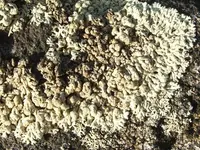
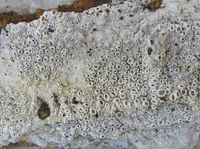
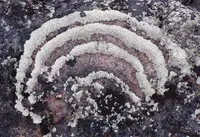
Mount the lichen on a stable, inert base such as lava rock, granite, or lime-free gravel so the thallus can anchor lightly without competition from mosses or soil microbes that break it down quickly.

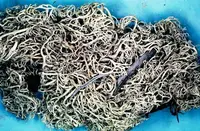
Reindeer lichen (Cladonia arbuscula) is a slow-growing lichen, not a true plant, formed by a partnership between a fungus and an alga. It creates dense, cushion-like mats of finely branched, pale gray-green stems that resemble tiny shrubs.
This species is common in colder regions, especially boreal forests and Arctic tundra, where it carpets dry, open ground and rocky areas. It is adapted to harsh, nutrient-poor conditions and is very sensitive to pollution, which makes it challenging to care for Reindeer Lichen in typical home environments.
It prefers bright, indirect light, clean air, and a very well-draining, low-nutrient substrate that stays slightly dry between light misting.

Care Difficulty
Hard Care

Light Preference
Partial Sun

Water Requirements
Low Water

Temperature Preference
Cold Hardy

Hardiness Zone
2–7

Soil Texture
Sandy, Rocky, Peaty

Soil pH
Strongly acidic (4.5–5.5)

Soil Drainage
Well-drained

Fertilization
Minimal (feed rarely)
Scan your plant to receive care tips personalized for your specific plant
Available on iOS and Android
This lichen prefers bright, cool light that mimics open, northern habitats.
This species relies on brief wetting and thorough drying rather than constant moisture.
This lichen is adapted to cool to cold conditions and tolerates a wide temperature range.
This lichen prefers consistently cool, moist air and reacts quickly to very dry conditions.
This species grows best on very lean, acidic, sharply drained substrates rather than conventional potting soil.
This species can be grown in shallow containers mainly as a display, since it has minimal anchoring structures and no true roots.
Cladonia arbuscula is adapted to nutrient-poor habitats and usually needs no fertilization in cultivation.
Cladonia arbuscula needs only light hygiene pruning to keep clumps tidy and healthy.
This lichen is seldom repotted; instead, it is gently transplanted or repositioned on its substrate when needed.
Cladonia arbuscula propagation is slow and is usually done by division of existing tufts rather than by spores.
Reindeer Lichen is very cold hardy and normally needs no special winter care outdoors within its hardiness range.

Plant Health Check
Not sure what's wrong with your plant? Check your plant's health inside the app.
This species is a major winter forage for reindeer and caribou in northern ecosystems, providing an energy-rich carbohydrate source when other vegetation is buried under snow.
It forms dense, cushion-like mats but typically grows only a few millimeters per year, so patches that appear modest in size can already be several decades old.
This lichen is highly sensitive to air pollutants such as sulfur dioxide and heavy metals, so its presence and vigor are often used as a bioindicator of clean, relatively undisturbed air in boreal and Arctic regions.

Cladonia arbuscula tolerates prolonged freezing and desiccation by entering a dormant state in which metabolic activity drops to very low levels, then rapidly resumes photosynthesis as soon as it becomes moist and temperatures rise above freezing.
Growth is very slow. In natural conditions this lichen often adds only 3–10 mm per year. In cultivation, even with ideal moisture and light, do not expect rapid expansion or to quickly grow Cladonia arbuscula.
Keep your plants happy and healthy with plant identification, disease detection, and easy care guidance.