Staggered Succession Sowing
Sow small batches every 2–3 weeks in late winter and spring to maintain continuous flowering and reduce the risk of losing the whole planting to one late frost or heatwave.

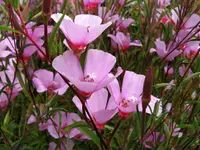
Ruby chalice clarkia (Clarkia rubicunda) is an annual wildflower native to coastal California, often found in open slopes and grasslands. It grows as an upright, branching plant with slender stems and narrow leaves.
Its main feature is the cup-shaped pink to rosy-magenta flowers, which appear in succession along the stems and attract bees and other pollinators. Plants complete their life cycle in one season, reseeding themselves in suitable conditions.
This species is generally easy to grow where summers are dry, provided it has good light, well-drained soil, and not overly rich conditions. Gardeners who care for ruby chalice clarkia often value it for naturalistic, low-input plantings.

Care Difficulty
Easy Care

Light Preference
Full Sun

Water Requirements
Moderate Water

Temperature Preference
Cool Climate

Hardiness Zone
7–10

Soil Texture
Sandy, Loamy, Rocky

Soil pH
Acidic (5.5–6.5), Slightly acidic (6.5–7.0)

Soil Drainage
Well-drained

Fertilization
Minimal (feed rarely)
Scan your plant to receive care tips personalized for your specific plant
Available on iOS and Android
This annual prefers bright conditions with cool roots and protection from harsh extremes.
This species prefers slightly dry, well-drained soil rather than constantly moist conditions.
This cool-season annual performs best in mild conditions without temperature extremes.
This species tolerates typical outdoor humidity and rarely needs special humidity management.
Clarkia rubicunda prefers light, free-draining ground that dries between waterings.
This species can grow in containers if the potting setup stays lean and sharply drained.
This annual wildflower needs only light feeding, especially in poor soils, for healthy growth and bloom.
Pruning focuses on removing spent growth and maintaining flowering performance in Clarkia rubicunda.
This species is usually grown as a direct-sown annual, so transplanting is minimal and should be done with care.
Propagation of Clarkia rubicunda is most effective from seed rather than vegetative methods.
This annual usually completes its life cycle in one season and needs little winter care in mild climates.

Plant Health Check
Not sure what's wrong with your plant? Check your plant's health inside the app.
This species is native to a narrow band of coastal and near-coastal habitats in central California, often growing on open, dry slopes and roadsides where the climate is influenced by Pacific fog.
As an annual from Mediterranean-type climates, it completes its life cycle before the peak of the summer dry season, surviving the rest of the year only as seed in the soil seed bank.
Its large, rose to magenta funnel-shaped flowers with paler centers are highly attractive to native bees and other insects, and are often used in wildflower mixes aimed at supporting local pollinators.

The species name rubicunda refers to the plant’s reddish or rosy coloration, highlighting the distinctive rose-purple tones of its blossoms that make it especially noticeable in its native Californian wildflower displays.
This species is typically grown as a cool-season annual. It germinates in fall or late winter, grows through spring, then flowers and sets seed in early summer before dying back and relying on self-sown seed.
Keep your plants happy and healthy with plant identification, disease detection, and easy care guidance.