Clematis buchananiana Care

About Clematis buchananiana

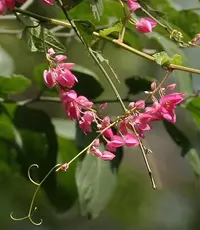
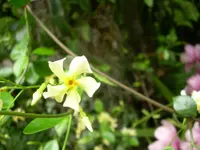
Clematis buchananiana is a vigorous, deciduous climbing vine in the buttercup family, known for its masses of small, creamy white flowers. It typically scrambles through shrubs or along supports, creating a light, airy screen rather than a dense wall of foliage. Native to the Himalayas and surrounding regions, it is adapted to cooler, upland conditions with distinct seasons.

This clematis can be relatively easy to manage if given a sturdy support, well-drained soil, and consistent moisture. Gardeners who learn how to care for Clematis buchananiana usually find it a reliable choice for covering arches, fences, or small trees.

Main Plant Requirements

Care Difficulty

Moderate Care

Light Preference

Partial Sun

Water Requirements

Moderate Water

Temperature Preference

Warm Climate

Hardiness Zone

9–11

Soil Texture

Loamy, Sandy, Organic-rich

Soil pH

Acidic (5.5–6.5), Slightly acidic (6.5–7.0)

Soil Drainage

Moist but well-drained

Fertilization

Light (every 4–6 weeks)

Get Personalized Care Plan

Scan your plant to receive care tips personalized for your specific plant

Available on iOS and Android

How to Care for the Clematis buchananiana

This vigorous climber prefers bright conditions with its top in sun and roots shaded or mulched.

  • Provide 4–6 hours of direct morning sun with light afternoon shade; strong late-day sun in hot summers can scorch leaves and fade flowers.
  • Tolerates light or dappled shade, but stems may stretch and flowering decline if it receives less than 3–4 hours of direct or filtered sun.
  • In cooler climates, Clematis buchananiana can handle near full sun if soil stays cool and moist and the base is protected by groundcovers or mulch.

This species prefers evenly moist, cool soil that never stays waterlogged.

  • Water when the top 3–5 cm of soil feels dry, applying a slow, deep soak so moisture reaches the full root zone without creating standing water.
  • In spring and summer growth, monitor more often during hot, windy periods; in cool or rainy weather, extend intervals and rely on natural rainfall when soil remains slightly moist.
  • Signs of overwatering include yellowing lower leaves and soft stems; dry, curling foliage and poor flowering suggest underwatering or very fast-draining soil.

This climber prefers moderate temperatures and benefits from protection from extremes.

  • Ideal growing temperatures are around 60–75°F (16–24°C), with steady conditions supporting strong vine growth and flowering.
  • Mature plants tolerate winter lows near 10–15°F (-12 to -9°C) once established, but young vines need mulch over the root zone and shelter from harsh frost heave.
  • In hot regions, prolonged heat above 90°F (32°C) can stress plants, so provide afternoon shade and maintain cool, moist soil to protect Clematis buchananiana roots.

This climber prefers moderate humidity but adapts to many garden conditions.

  • Aim for 40–60% humidity, as very dry air can slow growth and flower development.
  • Watch for crisp leaf edges and stalled new shoots as signs of humidity stress in hot, dry periods.
  • Increase humidity outdoors by mulching the root zone and grouping plants near other vegetation to reduce moisture loss.

This species grows best in deep, moisture-retentive yet well-drained, fertile soil.

  • Use a loamy structure with plenty of organic matter so the soil holds moisture but still drains freely.
  • Aim for slightly acidic to neutral pH, around 6.0–7.0, to support nutrient availability for Clematis buchananiana.
  • In garden beds, mix compost with coarse sand or fine grit to improve both aeration and drainage around the root zone.
  • Avoid compacted clay, waterlogged spots, and very shallow, stony soils that heat up and dry out quickly.

This clematis can be grown in containers if given a large, deep, and very stable setup outdoors.

  • Choose a tall, heavy pot (at least 40–45 cm deep) to anchor the vigorous top growth and prevent tipping in wind.
  • Use a free-draining mix, such as 60% loam-based compost with 40% bark chips and perlite, to balance moisture and aeration.
  • Position the container so the root zone is shaded by neighboring pots or low plants while the vine can climb into full sun.

Balanced feeding supports flowering and steady growth in Clematis buchananiana grown in garden soil or containers.

  • Use a balanced granular or liquid fertilizer (around 10-10-10) or well-rotted compost as the main nutrient source.
  • Apply a light feed every 4–6 weeks during the active growing season, from early spring to late summer.
  • Dilute liquid fertilizers to half the label strength to avoid salt buildup and root burn.
  • Reduce feeding to a single light compost top-dress or stop entirely in fall and winter when growth slows.

Thoughtful pruning keeps Clematis buchananiana flowering well and maintains a manageable framework on its support.

  • Prune in late winter or very early spring before strong new growth, when stems are easy to assess.
  • Remove dead, damaged, or weak stems first, cutting cleanly back to healthy buds with sharp bypass pruners.
  • Thin crowded or tangled growth to improve air flow and light, which supports healthier foliage and more blooms.
  • Shorten long, wayward stems to shape the vine and keep it within its trellis or support structure.

Transplanting and occasional container repotting help maintain healthy root systems and stable growth.

  • Transplant in early spring or early fall, when temperatures are mild and the plant is not under extreme heat stress.
  • Look for roots circling the pot, water running straight through, or slowing growth as signs a container plant needs repotting.
  • Move to a slightly larger container or planting hole, keeping the root ball intact and disturbing roots as little as possible.
  • Water thoroughly after planting, then shade the base and keep soil evenly moist for several weeks to reduce transplant shock.

Clematis buchananiana is commonly propagated by cuttings and layering to maintain desired characteristics.

  • Take semi-ripe stem cuttings in late spring to midsummer, using 2–3 node sections with healthy leaves.
  • Insert cuttings into a moist, free-draining mix, keep humidity high, and maintain temperatures around 65–75°F for rooting.
  • Use simple layering by pegging a flexible stem to the soil, covering a node, and keeping it moist until roots form.
  • Seed propagation is possible but slower and more variable; provide cold stratification and well-drained, cool conditions for germination.

This clematis benefits from moderate winter protection in colder climates, especially when young or container grown.

  • Mulch the root zone with 5–8 cm of straw, leaves, or compost in late fall, keeping mulch slightly away from stems.
  • In regions with hard frost, add a breathable fleece or burlap wrap around the base to limit freeze–thaw stress.
  • Move container plants into a sheltered, frost-free or minimally heated area, keeping soil barely moist, not wet.

Care Tips

Use sturdy support

Install a strong trellis, wire mesh, or tensioned twine system before planting so the stems can immediately twine and distribute their weight, reducing breakage in wind and rain.

Train young shoots

As new stems appear, loosely tie or weave them onto their support in a fan shape to encourage even coverage and reduce tangling and shading of inner growth.

Protect from root heat

Mulch the root zone with 5–8 cm of composted bark or leaf mold and, if in a hot site, place low perennials or stones around the base to shade roots while keeping top growth in full light.

Monitor vine congestion

During the growing season, thin out weak or crossing stems by pinching or cutting them at their origin to improve airflow and reduce the risk of fungal disease on dense foliage.

Check ties regularly

Inspect and adjust plant ties at least twice per season so they do not constrict thickening stems, using soft, flexible materials that can be loosened or replaced as the plant matures when caring for Clematis buchananiana.

Common Pests and Diseases

Clematis wilt

This disease causes sudden blackening and collapse of stems, often just as vigorous new growth or flower buds are forming. Symptoms include sharply defined brown to black lesions at stem bases and rapid loss of turgor above the infection point.

Solution

Cut affected stems back to healthy green tissue, sterilizing pruners between cuts, and dispose of all infected material in the trash. Improve air circulation, avoid mechanical damage at the stem base, keep the crown slightly shaded and evenly moist but not waterlogged, and plant slightly deeper so the vine can reshoot from lower buds, which is central to Clematis buchananiana care instructions.

Powdery mildew

This disease produces white to gray, powdery patches on leaves and young stems, often during warm days with cool, humid nights. Symptoms include distorted new growth and premature leaf yellowing or drop if the infection is heavy.

Solution

Remove and discard the worst-affected leaves, then improve airflow by thinning crowded stems and keeping nearby vegetation trimmed. Water at the base in the morning, avoid overhead watering, and apply a targeted fungicide or a potassium bicarbonate-based spray if the problem persists season after season.

Aphids

These insects feed on tender shoots and flower buds, causing curling, distortion, and sticky honeydew that can lead to sooty mold on leaves. This pest often clusters on the undersides of young leaves and around soft growing tips.

Solution

Dislodge colonies by spraying stems and leaves with a strong stream of water, repeating every few days as needed. For persistent infestations, treat soft tissue with insecticidal soap or a light horticultural oil, making sure to cover leaf undersides, and encourage natural predators such as lady beetles by avoiding broad-spectrum insecticides nearby.

Slugs and snails

These pests chew irregular holes in young leaves and can strip tender shoots near the base, especially in cool, damp conditions and dense groundcover. Symptoms include shredded foliage and slime trails around the plant crown and nearby surfaces.

Solution

Hand-pick slugs and snails in the evening or early morning and reduce hiding places such as dense mulch or debris around the base. Use iron phosphate pellets or copper barriers as targeted controls, and keep lower stems slightly clear of thick groundcover to reduce access to young growth.

Clematis leaf spot

This disease produces small brown or purplish spots on leaves that may enlarge and merge, leading to yellowing and early leaf drop on affected stems. Symptoms include more severe spotting on older leaves and in dense, poorly ventilated parts of the vine.

Solution

Prune out and discard heavily spotted leaves and any badly affected stems, and clean up fallen foliage to reduce spore sources. Improve sun exposure and airflow, avoid wetting foliage late in the day, and use a labeled foliar fungicide on new growth if the problem recurs each season.

Interesting Facts

Himalayan scrambling habit

This species is a vigorous woody climber native to the Himalayan region, where it scrambles over shrubs and small trees rather than producing strong twining stems like many other Clematis species.

Distinctive white panicles

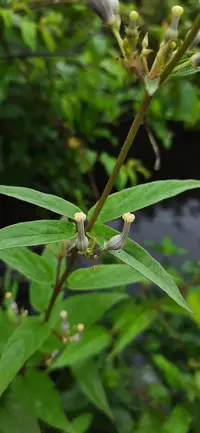
It produces loose clusters (panicles) of small, creamy white flowers with four petal-like sepals, creating a soft, frothy appearance that is more delicate and open than the large-flowered hybrid clematis commonly seen in gardens.

Feathery seed tails

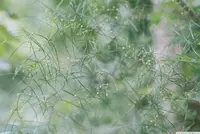
After flowering, it develops characteristic silky, feathery seed tails that catch the light and help wind disperse the dry fruits (achenes), giving the plant an ornamental value even after the blooming period.

FAQs about Clematis buchananiana

This species is a twining climber that wraps its leaf stalks around nearby supports. It naturally grows vertically on trellises, fences, or shrubs, rather than spreading along the ground like a ground cover.

Grow Healthy Plants with Botan Care

Keep your plants happy and healthy with plant identification, disease detection, and easy care guidance.

Botan plant care app — identify plants on mobile

Explore More Plants