Clematis campestris Care

Clematis campestris

About Clematis campestris

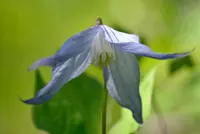
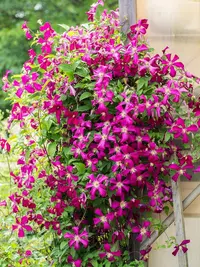
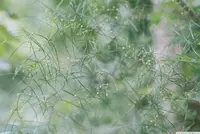
Clematis campestris is a herbaceous or semi-woody climber in the buttercup family, known for its fine, twining stems and small, usually pale flowers. It typically grows through and over shrubs or low vegetation, creating a light, lacy effect rather than a dense screen.

This species is native to parts of South America, where it occupies open, sunny to lightly shaded habitats with reasonably well-drained soils. It is generally moderate in difficulty, as it dislikes waterlogged conditions and needs support to climb but is not overly demanding once established.

Gardeners who want to care for Clematis campestris should focus on providing sun, free-draining soil, and enough space for its natural scrambling growth habit.

Main Plant Requirements

Care Difficulty

Moderate Care

Light Preference

Full Sun

Water Requirements

Moderate Water

Temperature Preference

Warm Climate

Hardiness Zone

8–11

Soil Texture

Sandy, Loamy, Organic-rich

Soil pH

Acidic (5.5–6.5), Slightly acidic (6.5–7.0)

Soil Drainage

Well-drained

Fertilization

Minimal (feed rarely)

Get Personalized Care Plan

Scan your plant to receive care tips personalized for your specific plant

Available on iOS and Android

How to Care for the Clematis campestris

This vine prefers bright conditions with several hours of direct sun but benefits from some protection during the hottest part of the day.

  • Provide 4–6 hours of direct morning sun with light or dappled shade after midday to reduce leaf scorch, especially in hotter regions.
  • Allow partial shade, but note that Clematis campestris may flower less if it receives under 3–4 hours of direct sun during the growing season.
  • In summer, shield the base with low plants or mulch so roots stay shaded while the top growth remains in sun, which supports stronger flowering and growth.

This climber prefers evenly moist but not waterlogged soil, with careful attention to drainage around the root zone.

  • Water when the top 3–5 cm of soil feels dry, applying a deep soak rather than light splashes so moisture reaches the full root depth.
  • Improve drainage with organic matter and avoid sites where water stands for more than 1–2 hours after rain, which increases root rot risk.
  • In hot, dry periods, monitor foliage for wilting or dull, curling leaves as a sign of underwatering; yellowing and soft stems may indicate overwatering.

This species tolerates a broad outdoor temperature range but performs best in moderate conditions without extreme heat or prolonged hard frost.

  • Optimal growth occurs around 60–75°F (16–24°C), supporting steady shoot extension and reliable flowering through the main growing season.
  • Dormant plants can usually withstand winter lows near 10–15°F (-12–-9°C) once established, but young vines benefit from mulch over the root zone.
  • During heat above 86°F (30°C), provide soil moisture and light afternoon shade to limit stress, leaf scorch, and premature bud drop.

This vine grows well in typical outdoor humidity but benefits from moderately moist air in dry regions.

  • Aim for 40–60% humidity; it tolerates occasional drier spells if soil moisture is consistent.
  • Clematis campestris may show crisp leaf edges and slowed growth when exposed to prolonged very dry air and heat.
  • Use mulch over the root zone and group nearby plants to slightly increase local humidity around the foliage.

This species prefers deep, moisture-retentive yet free-draining soil with a friable, loamy structure.

  • Use a mix of garden loam, compost, and coarse sand or fine grit to balance nutrient content, moisture holding, and drainage.
  • Target a slightly alkaline to neutral pH around 6.5–7.5, avoiding very acidic mixes that may reduce vigor.
  • Improve aeration and prevent compaction by incorporating coarse organic matter such as leaf mold or fine bark into the planting area.
  • Avoid heavy, waterlogged clay or pure sand; amend these with ample compost and mineral grit before planting Clematis campestris.

This vine is suitable for container growing when the pot provides ample root depth and stable support for climbing.

  • Choose a tall, heavy container that resists tipping once the vine covers a trellis or support frame.
  • Fill the pot with a loam-based mix enriched with compost and coarse grit to keep roots moist but prevent waterlogging.
  • Shade the container sides with mulch or neighboring pots to keep the root zone cooler than the sun-exposed foliage.

This vine benefits from modest, targeted feeding during active growth to support flowering without excessive foliage.

  • Apply a balanced granular or slow-release fertilizer (around 10-10-10) at half label rate in early spring as new growth starts.
  • Top-dress the root zone with compost once in spring to improve soil structure and gentle nutrient supply.
  • In mid-summer, give a light application of diluted liquid balanced feed if flowering is weak or foliage looks pale.
  • Stop feeding Clematis campestris in late summer so new growth can harden before winter dormancy.

Thoughtful pruning maintains flowering performance and manageable size in this scrambling clematis.

  • Time main pruning for late winter to very early spring, before strong new growth begins.
  • Remove dead, damaged, or weak stems at the base using clean, sharp bypass pruners or loppers.
  • Thin congested stems, keeping strong young shoots to improve air flow and light penetration through the plant.
  • Shorten remaining stems to a framework that fits the support, encouraging vigorous new flowering shoots.

This species is usually grown in the ground, so focus on careful transplanting rather than frequent repotting.

  • Transplant in early spring or early fall, when temperatures are mild and soil is workable.
  • Look for signs such as slow growth, sparse flowering, or a congested rootball circling the planting hole or container.
  • Lift with a generous soil ball, disturb roots minimally, and replant at the same depth in well-drained, enriched soil.
  • Water thoroughly after planting, then keep soil evenly moist and shaded at the base to limit transplant shock and support growing Clematis campestris.

Clematis campestris is commonly propagated by seed, cuttings, or simple layering, depending on the grower’s goal.

  • Sow fresh seed in pots outdoors in fall, allowing natural winter chilling to improve germination in spring.
  • Take softwood or semi-ripe stem cuttings in late spring to mid-summer and root them in a free-draining, moist mix under high humidity.
  • Use simple layering in spring: bend a flexible stem to the ground, lightly wound it, pin it down, and cover with soil.
  • Leave layered sections in place for 1 growing season before severing and transplanting the new rooted plant.

This clematis is moderately cold hardy and usually needs only basic winter care in most temperate gardens.

  • Tolerates light to moderate frost once established but young plants benefit from extra protection their first winter.
  • Apply a 5–8 cm mulch of compost or leaf mold around the root zone, keeping material slightly away from stems.
  • In very cold areas or exposed sites, tie stems loosely to supports to reduce wind damage and breakage.

Care Tips

Layered root cooling

Spread a 5–8 cm layer of coarse organic mulch around the root zone but keep it 5–8 cm away from the stems to keep roots cool, conserve moisture, and reduce stress in hot periods when growing Clematis campestris.

Fine-stem support

Install a trellis or mesh with narrow gaps (5–10 cm) or run horizontal wires so the thin twining leaf stalks can grip easily, then gently guide new shoots onto the support every 1–2 weeks.

Wind-direction training

In breezy sites, loosely tie young vines to run in the predominant wind direction using soft garden ties, which reduces stem breakage and helps the plant form a stable, evenly covered screen.

Root-zone protection

Place low perennials or groundcovers around the base to shade the soil and protect the shallow roots, but leave a clear ring around the crown to maintain airflow and reduce crown rot risk.

Targeted pest scouting

From spring through late summer, inspect the undersides of leaves and young stems weekly for aphids or spider mites and rinse them off with a firm water spray at the first sign of pests to prevent distortion of new growth.

Common Pests and Diseases

Clematis wilt

This disease causes sudden blackening and collapse of shoots, often just as plants come into active growth or early flowering. Symptoms include one or more stems rapidly wilting while the rest of the plant may initially look healthy.

Solution

Cut affected stems back to healthy green tissue at or just above soil level and remove all wilted material from the site. Encourage strong regrowth by maintaining even soil moisture, mulching the root zone, and planting the crown 5–8 cm deeper than normal to promote replacement shoots from below soil level as part of general Clematis campestris care instructions.

Powdery mildew

This disease appears as white to gray powdery patches on leaves and young stems, often during warm days and cool nights. Symptoms include distorted new growth and premature leaf yellowing or drop in severe cases.

Solution

Prune out heavily affected shoots, dispose of infected leaves, and increase air circulation around the plant by thinning crowded stems and avoiding overhead watering. In persistent cases, apply a sulfur or potassium bicarbonate fungicide labeled for ornamental vines during dry weather, covering both leaf surfaces thoroughly.

Leaf spot

This disease produces small brown, purple, or tan spots on leaves that may merge into larger blotches. Symptoms include early leaf shedding and a generally thin or patchy canopy when infections are heavy.

Solution

Remove and discard affected leaves and any fallen debris to reduce the source of reinfection. Water at soil level, avoid wetting foliage late in the day, and if needed use a copper-based or chlorothalonil fungicide at the first sign of new spotting, following label directions carefully.

Clematis borer

This pest tunnels inside stems near the base, causing localized swelling, frass (sawdust-like material), and eventual wilting or dieback of affected shoots. Symptoms include weak or broken stems and poor flowering on infested canes.

Solution

Cut out and destroy affected stem sections below the visible damage, then monitor for new frass or entry holes during the growing season. Maintain plant vigor with proper watering and fertilization, and use physical barriers or trunk wraps at the base where practical, combining this with targeted biological or contact controls if boring activity continues.

Aphids

These insects cluster on young shoots and flower buds, feeding on sap and excreting sticky honeydew that can lead to sooty mold on leaves. Symptoms include curled leaves, distorted growth, and reduced flowering on heavily infested vines.

Solution

Dislodge colonies by spraying stems and undersides of leaves with a strong stream of water, repeating every few days as needed. Where populations remain high, apply insecticidal soap or a light horticultural oil, ensuring thorough coverage of tender tips and buds while treating in cooler parts of the day to avoid leaf scorch.

Interesting Facts

South American grassland climber

Clematis campestris is native to open grasslands and shrubby areas of southern South America, especially Argentina and Uruguay, where it scrambles over low vegetation instead of climbing tall forest trees.

Fragrant summer flowers

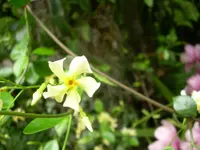
This species produces many small, creamy-white flowers in summer that release a noticeable sweet fragrance, which helps attract pollinating insects in its native habitats.

Feathery seed plumes

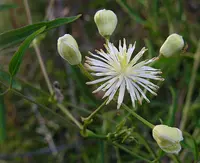
After flowering, it forms characteristic fluffy seed heads with long, silky styles that aid wind dispersal and give the plant a soft, feathery appearance late in the season.

FAQs about Clematis campestris

Lack of flowers often comes from pruning at the wrong time, overly heavy shade, or nutrient imbalance. Avoid cutting all new growth, ensure at least partial sun, and use a balanced, low-nitrogen fertilizer in spring.

Grow Healthy Plants with Botan Care

Keep your plants happy and healthy with plant identification, disease detection, and easy care guidance.

Botan plant care app — identify plants on mobile

Explore More Plants