Robust climbing support
Install a sturdy trellis, wire grid, or stretched mesh before planting and fix main vines loosely with soft ties so the plant can anchor safely as stems thicken and become woody over time.

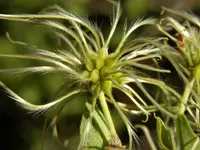
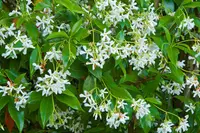
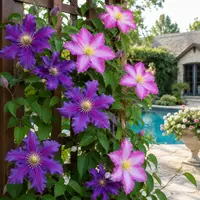
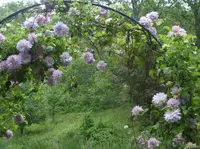
Cabellos de angel, Clematis dioica, is a vigorous woody vine known for its fine, hair-like seed tails that give the plant its common name. It typically climbs over shrubs, fences, or trees using leaf stalks to support itself.
This species is native to parts of Mexico and Central America, where it grows in warm, moderately moist habitats. It usually has small, creamy flowers followed by distinctive silky seed heads.
The plant can be moderately challenging to manage due to its strong growth and need for support structures. Gardeners who want to learn how to care for cabellos de angel should know it prefers bright light, free-draining soil, and consistent but not waterlogged moisture.

Care Difficulty
Moderate Care

Light Preference
Partial Sun

Water Requirements
Moderate Water

Temperature Preference
Warm Climate

Hardiness Zone
9–11

Soil Texture
Sandy, Loamy, Organic-rich

Soil pH
Slightly acidic (6.5–7.0), Neutral (7.0)

Soil Drainage
Moist but well-drained

Fertilization
Minimal (feed rarely)
Scan your plant to receive care tips personalized for your specific plant
Available on iOS and Android
Clematis dioica performs best with bright, direct sun on its upper growth and lighter exposure at the roots.
Clematis dioica prefers evenly moist, not soggy, soil around its root zone.
This species grows best in warm, frost-free conditions with moderate seasonal variation.
This vine handles a broad humidity range but grows best with moderate air moisture.
Clematis dioica prefers deep, loose, moisture-retentive but free-draining soil for stable growth.
This species can be grown in containers if the pot is large, deep, and very stable.
Clematis dioica benefits from modest, consistent feeding rather than heavy fertilization.
Pruning Clematis dioica maintains a manageable vine and supports healthy flowering.
This vigorous climber is usually grown in the ground, so focus on careful transplanting rather than frequent repotting.
Clematis dioica is commonly propagated by semi-ripe cuttings and simple layering for reliable results.
Clematis dioica is moderately cold tolerant but benefits from simple winter preparation in cooler climates.

Plant Health Check
Not sure what's wrong with your plant? Check your plant's health inside the app.
Clematis dioica has separate male and female plants, an uncommon trait within the genus, so only female plants can develop the characteristic fluffy seed heads if pollination occurs.
After flowering, female plants produce clusters of achenes with long, silky, feather-like styles that act as sails, allowing seeds to be carried away by wind over considerable distances.
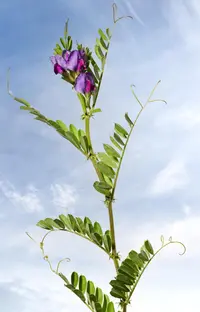
Instead of tendrils or twining stems, this species climbs by using its leaf petioles, which curl around supporting structures and help the vine anchor itself in surrounding vegetation.
This species is a twining climber. Stems wrap around nearby structures rather than clinging with tendrils or roots. It needs something slender to wind around, such as wires, trellis slats, or another shrub.
Keep your plants happy and healthy with plant identification, disease detection, and easy care guidance.