Clematis Care (Clematis 'Duchess of Edinburgh')

Clematis

About Clematis

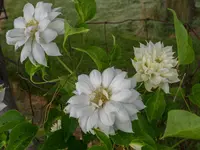
Clematis 'Duchess of Edinburgh' is a deciduous flowering vine known for its large, double white blooms and elegant, climbing habit. It is typically grown on trellises, fences, or pergolas, where it attaches using leaf tendrils rather than twining stems.

This cultivar belongs to a group of garden hybrids derived mainly from species native to Asia and Europe. It usually prefers cool, shaded roots and sunny upper growth, with evenly moist, well-drained soil.

The plant can be moderately demanding, as it dislikes waterlogged conditions and overheating at the base, but rewards consistent, thoughtful care. Gardeners who learn how to care for Clematis often find this cultivar reliable and long-lived in suitable climates.

Main Plant Requirements

Care Difficulty

Moderate Care

Light Preference

Full Sun

Water Requirements

Regular Water

Temperature Preference

Cold Hardy

Hardiness Zone

4–9

Soil Texture

Loamy, Sandy, Organic-rich

Soil pH

Acidic (5.5–6.5), Slightly acidic (6.5–7.0)

Soil Drainage

Moist but well-drained

Fertilization

Light (every 4–6 weeks)

Get Personalized Care Plan

Scan your plant to receive care tips personalized for your specific plant

Available on iOS and Android

How to Care for the Clematis

This large-flowered clematis prefers bright conditions with cool, shaded roots and sun on its vines for strongest flowering.

  • Provide 4–6 hours of direct morning sun with light or dappled shade from early afternoon, especially in hotter regions.
  • Tolerates bright partial shade, but flowering decreases if direct sun falls below about 3–4 hours per day.
  • In summer, protect from intense late-afternoon sun to reduce leaf scorch and faded blooms, and mulch the root zone to keep it shaded.

This clematis needs consistently moist but not saturated soil, especially during active growth and flowering.

  • Water when the top 3–5 cm of soil feels dry, soaking the root zone deeply so moisture penetrates 15–20 cm, then allow slight surface drying.
  • Increase monitoring in late spring and summer heat, as Clematis 'Duchess of Edinburgh' wilts quickly when too dry but recovers if watered promptly.
  • Ensure free-draining soil; persistent sogginess, yellowing leaves, and blackened stems suggest overwatering and risk of root or crown rot.

This hardy climber prefers cool to mild conditions and tolerates typical outdoor temperature swings in many temperate gardens.

  • Supports strong growth and flowering at roughly 55–75°F (13–24°C), with roots kept cool under mulch or low groundcover plants.
  • Survives winter frosts down to about -20°F (-29°C) once established, entering dormancy and resprouting from the crown in spring.
  • Handles short heat waves up to around 90°F (32°C) if soil stays evenly moist and the base is shaded, but prolonged extreme heat can stress vines and reduce buds.

This climber grows well in typical outdoor humidity and rarely needs special humidity management.

  • Performs reliably in 40–70% humidity common in most temperate gardens.
  • Tolerates short dry spells in the air if soil moisture is kept steady at the roots.
  • Humidity stress shows more as leaf scorch and wilting from dry soil than from dry air.
  • Mulch the root zone 5–8 cm deep to buffer soil moisture when air is hot and dry.

Soil for Clematis 'Duchess of Edinburgh' must be moisture-retentive yet free-draining to protect its roots.

  • Use a deep loamy mix with 40–50% garden loam, 30–40% compost, and 10–20% coarse grit or perlite for structure and aeration.
  • Aim for slightly alkaline to neutral pH around 6.8–7.5, adding garden lime if soil is distinctly acidic.
  • Improve drainage in heavy clay by double-digging and incorporating coarse sand or fine gravel through the top 30–40 cm.
  • Avoid waterlogged, compacted, or shallow soils, which increase risk of root rot and poor establishment.

This cultivar is suitable for large outdoor containers if the pot supports deep, cool root growth and stable top growth.

  • Choose a container at least 40–45 cm deep so the root system can stay cool and develop a strong framework.
  • Select a heavy, frost-resistant pot material such as thick ceramic or concrete to reduce tipping from tall vine growth.
  • Raise the container on pot feet so drainage holes never sit in standing water and oxygen can reach lower roots.

This clematis benefits from moderate, targeted feeding during the main growing season.

  • Use a balanced granular or slow-release fertilizer (around 10-10-10) or well-rotted compost worked into the topsoil in early spring.
  • Feed every 4–6 weeks through mid-summer, then stop to allow stems to harden before winter.
  • Apply at half to full label rate, keeping fertilizer 5–8 cm from the stem to avoid root burn.
  • During dormancy in late fall and winter, avoid high-nitrogen products and rely mainly on compost or not feeding at all.

Pruning supports flowering quality and structure for Clematis 'Duchess of Edinburgh'.

  • Prune in late winter to early spring, before strong new growth begins.
  • Remove dead, damaged, or weak stems first, cutting back to healthy buds with clean, sharp bypass pruners.
  • Lightly thin crowded growth, shortening some stems to strong pairs of buds to balance height and flowering.
  • After the first flush of blooms, deadhead spent flowers and lightly trim to tidy the plant and encourage some rebloom.

This clematis is usually grown in the ground, so focus on careful transplanting rather than frequent repotting.

  • Transplant or up-pot in early spring or early fall when temperatures are mild and soil is workable.
  • Look for roots circling the container, water running straight through, or declining vigor as signs it needs more space.
  • Move into a slightly larger container or ground hole with rich, well-drained soil, keeping the root ball intact and crown at soil level.
  • Water thoroughly after planting, provide shade at the root zone, and keep soil evenly moist for several weeks to reduce transplant stress.

Clematis 'Duchess of Edinburgh' is usually propagated vegetatively to preserve cultivar traits.

  • Take semi-ripe stem cuttings in late spring to summer, using non-flowering shoots about 8–10 cm long.
  • Remove lower leaves, dip the cut end in rooting hormone, and place in a free-draining mix under high humidity and bright, indirect light.
  • Air layering in late spring is another option; wound a flexible stem, apply rooting hormone, and wrap with moist sphagnum and plastic until roots form.
  • Seed is not recommended because offspring will not come true to the named cultivar and may vary in flower form.

This clematis is generally cold hardy but benefits from simple winter care, especially in colder regions.

  • Tolerates typical garden frosts once established, but young plants appreciate extra protection in the first 1–2 winters.
  • Apply 5–8 cm of organic mulch over the root zone in late fall, keeping it slightly away from the stem base.
  • In exposed sites, tie stems loosely to supports to limit wind damage and breakage during freezing weather.
  • Move container-grown plants to a sheltered, unheated but frost-sheltered spot, keeping soil just barely moist.

Care Tips

Early vine training

As new shoots emerge in spring, gently weave them horizontally through the support (trellis, wires, or mesh) to encourage a dense wall of flowers rather than a few tall, bare stems.

Cool the root zone

Lay a flat rock, pavers, or a low groundcover at the base to shade the root area and keep the soil cooler and more even in moisture, which this cultivar strongly prefers.

Secure heavy blooms

Because the double flowers are large and heavy, add extra ties or soft clips along the main stems before peak bloom to prevent wind damage and stem snapping.

Stem base protection

Mark the planting spot and keep mulch or soil just below, not over, the crown so you can avoid cutting or damaging the brittle base when hoeing, edging, or replanting nearby.

Prevent wilt spread

If a stem suddenly collapses from suspected clematis wilt, cut it back into healthy tissue, remove all affected material from the garden, and disinfect pruners with a 10% bleach solution before continuing caring for Clematis nearby.

Common Pests and Diseases

Clematis wilt

This disease causes sudden blackening and collapse of stems, often just as flower buds are forming. Symptoms include a sharp boundary between healthy green tissue and dark, shriveled sections, with leaves and buds hanging limp but still attached.

Solution

Cut affected stems back well into healthy green tissue and remove all wilted material from the area, then dispose of it in the trash. Improve air flow, avoid damaging stems at soil level, keep the crown cool and evenly moist, and ensure the plant is not stressed to reduce future outbreaks, following general Clematis care instructions consistently.

Powdery mildew

This disease appears as white or gray powdery patches on leaves, stems, and sometimes flower buds, leading to distorted or yellowing foliage. Symptoms include a dusty coating that can spread quickly in warm, dry conditions with poor air movement.

Solution

Remove and dispose of heavily affected leaves, then improve spacing and air circulation around the vine. Water at soil level, avoid overhead watering, and if needed apply a sulfur or potassium bicarbonate-based fungicide according to label directions when symptoms first appear.

Aphids

These insects cluster on new shoots, undersides of leaves, and flower buds, feeding on sap and causing distortion, sticky honeydew, and sometimes sooty mold. This pest can weaken growth and reduce flowering if populations become heavy.

Solution

Spray affected shoots with a firm stream of water to knock aphids off, repeating as needed. For persistent infestations, use insecticidal soap or a horticultural oil, making sure to cover all leaf surfaces and treating again after 5–7 days if necessary.

Clematis leaf spot

This disease produces small brown or black spots on leaves that may enlarge and merge, causing premature yellowing and leaf drop. Symptoms include irregular lesions often with a darker border, mostly on older foliage in humid or wet conditions.

Solution

Remove and dispose of spotted, fallen leaves and avoid overhead watering to keep foliage as dry as possible. Improve air circulation, mulch to reduce splash from soil, and if the problem recurs each year, apply a labeled ornamental fungicide at the first signs of spotting.

Slugs and snails

These pests chew irregular holes in young leaves and shoots, especially near the base of the plant, and may damage tender new growth emerging in spring. This pest is most active at night and in damp, shaded conditions around the crown of the clematis.

Solution

Hand-pick slugs and snails in the evening or early morning and reduce hiding places such as dense debris around the base. Use barriers like copper tape or rough mulch, and if needed place iron phosphate-based slug pellets around the plant, following label directions and keeping them away from children and pets.

Interesting Facts

Victorian-era introduction

This double-flowered white clematis was introduced in the late 19th century and quickly became popular in Victorian gardens, where heavily petalled, rose-like blooms were especially prized.

Stable double blooms

Unlike some double clematis that revert to single flowers under stress, this cultivar is known for reliably producing fully double, pompom-like blooms on older wood when grown under suitable conditions.

Narrow genetic background

Clematis 'Duchess of Edinburgh' is believed to derive from a small number of Clematis lanuginosa-type parents, which contributes to its distinctive large, layered flowers but also to its relative sensitivity to harsh winter conditions compared with some modern hybrids.

Botan icon

Did you know?

This cultivar received the Royal Horticultural Society Award of Garden Merit, reflecting long-term trials that confirmed its ornamental value and stable performance under typical garden conditions in the UK.

FAQs about Clematis

Poor flowering often comes from incorrect pruning group, planting too deep or shallow, or nutrient imbalance. Late frosts can damage buds. Check pruning timing, ensure stable moisture, and use a balanced, not high-nitrogen, fertilizer.

Grow Healthy Plants with Botan Care

Keep your plants happy and healthy with plant identification, disease detection, and easy care guidance.

Botan plant care app — identify plants on mobile

Explore More Plants