Clematis Care (Clematis 'Ramona')

Clematis

About Clematis

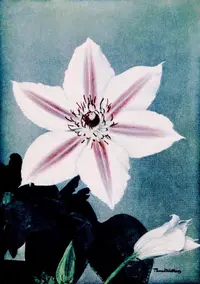
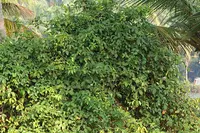
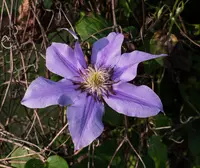
Clematis 'Ramona' is a deciduous climbing vine grown mainly for its large, flat, lavender-blue flowers and contrasting yellow stamens. It belongs to the buttercup family and is widely used on trellises, fences, and archways in temperate gardens.

This cultivar typically grows with a twining, scrambling habit and needs a support structure to climb. It originates from breeding work based on species native to Europe and Asia, now adapted to many garden climates.

Flowering performance depends on good light, consistent moisture, and well-drained, fertile soil, so site choice strongly affects success. Once its pruning group and basic needs are understood, most gardeners find it reasonably straightforward to care for Clematis.

Main Plant Requirements

Care Difficulty

Moderate Care

Light Preference

Full Sun

Water Requirements

Regular Water

Temperature Preference

Cold Hardy

Hardiness Zone

4–9

Soil Texture

Loamy, Sandy, Organic-rich

Soil pH

Acidic (5.5–6.5), Slightly acidic (6.5–7.0)

Soil Drainage

Moist but well-drained

Fertilization

Light (every 4–6 weeks)

Get Personalized Care Plan

Scan your plant to receive care tips personalized for your specific plant

Available on iOS and Android

How to Care for the Clematis

This large-flowered vine prefers bright conditions with its top in sun and roots shaded or mulched.

  • Provide 4–6 hours of direct sun daily, ideally morning sun with light afternoon shade to prevent petal scorch on Clematis 'Ramona'.
  • In hot summers, give dappled or filtered light after 1–2 pm to protect flowers and foliage from bleaching and leaf burn.
  • In cooler climates, it can handle full sun all day, but flowering drops if light falls below about 3–4 hours of direct exposure.

This vine likes consistently moist but not saturated soil, especially during active growth and flowering.

  • Water when the top 3–5 cm of soil feels dry, soaking the root zone deeply, then allow excess water to drain away fully.
  • Increase watering frequency in hot, windy weather and reduce in cool or rainy periods; mulched soil helps maintain even moisture for Clematis 'Ramona'.
  • Watch for wilting with dry soil as a sign of underwatering, and yellowing leaves or soggy soil as signs of poor drainage or overwatering risk.

This hardy climber tolerates winter cold but performs best with moderate seasonal temperatures.

  • Optimal growth occurs around 60–75°F (16–24°C), with strong flowering in mild springs and summers that avoid extreme heat spikes.
  • The roots tolerate down to about -20°F (-29°C) in the ground when well mulched, but new shoots can be damaged by late frosts near 30–32°F (-1–0°C).
  • During hot spells above 86–90°F (30–32°C), provide root shade and mulch to keep the soil cooler and reduce heat stress on the vine.

This climber performs well in typical outdoor humidity and rarely needs special humidity management.

Clematis 'Ramona' grows best in deep, moisture-retentive yet free-draining soil with a slightly alkaline reaction.

  • Aim for a loamy soil rich in organic matter that holds moisture but never becomes waterlogged.
  • Mix garden soil with compost and coarse sand or fine grit to improve both fertility and drainage.
  • Target a soil pH of 6.5–7.5; add garden lime in acidic soils to prevent nutrient lockout.
  • Avoid heavy, compacted clay or low-lying spots where water stands after rain, which encourage root rot.

This clematis is suitable for container growing if the pot is large, deep, and very stable.

  • Choose a container at least 40–50 cm deep to allow its extensive root system to anchor and access moisture evenly.
  • Use a heavy, frost-resistant pot material like thick terracotta or ceramic to reduce tipping as vines gain height.
  • Place the container where it can be secured to a sturdy trellis or railing so the top growth does not stress the root zone.

Feeding supports strong flowering and vine growth for Clematis 'Ramona' during the main growing season.

  • Use a balanced granular or liquid fertilizer around 10-10-10 or 14-14-14, or apply well-rotted compost to the root zone in early spring.
  • Feed every 4–6 weeks through mid-summer, then stop to allow stems to harden before cold weather.
  • Apply at half to three-quarter label strength for container plants to avoid root burn and excessive leafy growth.
  • Water before and after fertilizing to distribute nutrients evenly and reduce risk of fertilizer salt buildup.

Thoughtful pruning keeps Clematis 'Ramona' flowering well and maintains a manageable framework on its support.

  • Prune in late winter to very early spring, before strong new growth, using clean, sharp bypass pruners.
  • First remove dead, diseased, or weak stems down to healthy wood, then thin tangled or crowded shoots.
  • Shorten remaining strong stems to a pair of healthy buds about 60–90 cm from the ground to balance old and new wood flowering.
  • Tie surviving stems gently to trellis or wires to space shoots, improve air flow, and support large flowers.

This clematis is usually grown in the ground, so focus on careful transplanting rather than frequent repotting.

  • Plan transplanting for early spring or early fall when weather is mild and soil is workable.
  • Move plants that show weak growth, poor flowering, or are shaded out, keeping the root ball intact to limit shock.
  • Replant at the same depth in fertile, well-drained soil, setting the crown 5–8 cm below the surface for stability and bud protection.
  • Water deeply after transplanting, then keep soil evenly moist and mulch the root zone to reduce temperature swings and stress.

Propagation of Clematis 'Ramona' is usually done vegetatively to preserve the named cultivar’s traits.

  • Take semi-ripe stem cuttings in late spring to mid-summer, each with 2–3 nodes, and remove lower leaves.
  • Insert cuttings into a moist, free-draining mix, use rooting hormone, and maintain high humidity with bright, indirect light.
  • Layer flexible stems in late spring by pinning a section into shallow soil and keeping it evenly moist until roots form.
  • Seed propagation is possible but slow and does not produce true-to-type plants, so it is mainly used for breeding or experimentation.

This clematis is fairly cold hardy but benefits from simple winter care, especially in colder climates or containers.

  • Apply 5–8 cm of organic mulch around the root zone in late fall to buffer freeze–thaw cycles.
  • Leave old stems in place over winter where possible, as they offer some protection to buds and structure.
  • For container-grown plants, move pots into a sheltered, unheated but frost-free or minimally freezing area if winters are severe.

Care Tips

Root Zone Shading

Place flat stones or a low groundcover at the base to shade the root area while leaving the stems and top growth in full light, which helps keep roots cool and reduces moisture stress in summer.

Secure Vine Training

As new stems reach 20–30 cm, loosely tie them to the trellis or wires using soft garden ties or jute twine so the heavy flowers are supported and the stems do not snap in wind or rain.

Rodent And Slug Protection

Install a short wire mesh collar around the planting hole and use slug traps or barriers in spring to protect tender new shoots, which are highly attractive to rodents and mollusks.

Mulch Management

Apply a 5–8 cm layer of organic mulch over the root zone each spring, keeping it 5 cm away from the stems, to moderate soil temperature, conserve moisture, and reduce weed competition when growing Clematis.

Clematis Wilt Response

If a stem suddenly wilts, cut it back to healthy tissue at or just above soil level, dispose of the affected material in the trash, and allow the plant to reshoot from the base rather than leaving diseased stems in place.

Common Pests and Diseases

Clematis wilt

This disease causes sudden blackening and collapse of stems, often just as flower buds are forming. Symptoms include entire shoots drooping and dying back from a seemingly healthy plant within a short time.

Solution

Immediately cut affected stems back to healthy green tissue at or near soil level and dispose of all infected material in the trash. Keep the crown area well mulched and evenly moist, avoid mechanical damage to stems, and encourage strong regrowth from the base as part of long-term Clematis 'Ramona' plant care.

Powdery mildew

This disease shows up as a white, powdery coating on leaves, stems, and sometimes flower buds, leading to yellowing and premature leaf drop. Symptoms include distorted new growth in severe cases.

Solution

Remove and discard heavily affected leaves to reduce spore load, then improve air circulation by lightly thinning crowded shoots and avoiding overhead watering. If needed, apply a labeled fungicide or a potassium bicarbonate-based spray during dry, warm periods when powdery mildew tends to spread most rapidly.

Slugs and snails

These pests chew irregular holes in young leaves and may completely strip emerging shoots near ground level. Symptoms include shiny slime trails on soil, stems, and nearby hard surfaces.

Solution

Hand-pick slugs and snails at dusk or dawn, use iron phosphate bait around the base, and place barriers such as copper tape or rough grit to protect young shoots. Keeping the base area less cluttered with debris and dense groundcovers also makes conditions less favorable for these pests.

Aphids

These insects cluster on soft shoot tips and flower buds, sucking sap and causing curling, distortion, and sticky honeydew that can attract sooty mold. Symptoms include stunted new growth and deformed blooms when populations are high.

Solution

Spray colonies off with a strong stream of water, then use insecticidal soap or horticultural oil to cover remaining aphids on all shoot surfaces. Encouraging natural predators such as lady beetles and avoiding excessive nitrogen fertilizer also help limit recurring infestations.

Clematis leaf spot

This disease produces small brown or purplish spots on leaves that may merge into larger blotches, leading to premature yellowing and drop of foliage on lower parts of the vine. Symptoms include a patchy, thinned canopy while stems often remain alive.

Solution

Prune out and destroy heavily spotted leaves and stems, clean up fallen leaves around the base, and water at soil level to keep foliage dry. In gardens with recurring problems, start a preventative fungicide program in spring, focusing on lower leaves where leaf spot usually begins, and maintain good spacing for air movement along the trellis or support.

Interesting Facts

Historic 19th-century hybrid

This large-flowered cultivar was introduced in the late 1800s and is one of the older classic blue clematis hybrids still widely grown today, valued for its stable color and flower form over many decades of cultivation.

Distinctive blue-violet hue

Its flowers show a characteristic cool blue to blue-violet tone with slightly darker midribs on the petals, a color range that made it popular in breeding and in traditional cottage-style plantings where a true blue effect was desired.

Repeat-flowering habit

It belongs to the early large-flowered clematis group and can flower on both old and new wood, often producing a main flush in late spring to early summer and a lighter repeat bloom later in the season when pruned correctly, which is central to Clematis 'Ramona' care instructions.

FAQs about Clematis

Poor flowering often comes from too much shade, heavy pruning at the wrong time, or nutrient imbalance. Avoid hard pruning of mature stems, keep the base cool but top in good light, and use balanced, low-nitrogen fertilizer.

Grow Healthy Plants with Botan Care

Keep your plants happy and healthy with plant identification, disease detection, and easy care guidance.

Botan plant care app — identify plants on mobile

Explore More Plants