scarlet leather flower Care (Clematis texensis)

Also known as: Scarlet Clematis
scarlet leather flower

About scarlet leather flower

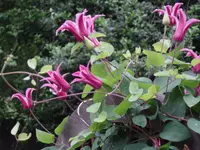
Scarlet leather flower, Clematis texensis, is a deciduous, clumping vine known for its small, tulip-shaped red flowers and leathery textured petals. It typically grows with a twining habit, using leaf stalks to climb supports.

This species is native to rocky stream banks and limestone outcrops in central Texas, where it experiences hot summers and well-drained soils. It is considered moderately easy to grow when its basic needs are met, but young plants can be slow to establish.

In gardens, it prefers sun to light shade, consistent moisture without waterlogging, and fertile, well-drained soil, which guides how to care for scarlet leather flower.

Main Plant Requirements

Care Difficulty

Moderate Care

Light Preference

Full Sun

Water Requirements

Regular Water

Temperature Preference

Cold Hardy

Hardiness Zone

4–9

Soil Texture

Sandy, Loamy, Organic-rich

Soil pH

Acidic (5.5–6.5), Slightly acidic (6.5–7.0)

Soil Drainage

Moist but well-drained

Fertilization

Light (every 4–6 weeks)

Get Personalized Care Plan

Scan your plant to receive care tips personalized for your specific plant

Available on iOS and Android

How to Care for the scarlet leather flower

This sun-loving climber flowers best with strong, consistent light exposure.

  • Provide 6–8 hours of direct sun daily, ideally with morning sun and light afternoon shade in hot summer climates to protect blooms and foliage.
  • Plant so the top growth is in sun but the root zone is shaded or mulched to keep roots cool and moist, which suits scarlet leather flower well.
  • In cooler regions, full sun all day is suitable; in hotter regions, give filtered light after 2–3 p.m. to limit leaf scorch and wilting.

This species prefers evenly moist but not saturated soil throughout the growing season.

  • Water when the top 3–5 cm of soil feels dry, applying a slow, deep soak so moisture reaches the full root zone without creating standing water.
  • During hot, windy periods, expect to water more often; reduce frequency in cool or rainy weather and in late autumn as Clematis texensis growth slows.
  • Watch for limp, dull foliage and dry, crisp leaf edges as signs of underwatering, and yellowing leaves or blackened stems as possible overwatering symptoms in poorly drained soil.

This hardy vine tolerates a wide temperature range but performs best in moderate conditions.

  • Active growth and flowering are strongest around 65–80°F (18–27°C), with good air circulation to limit fungal disease on dense foliage.
  • Mature plants typically survive winter lows down to about -20°F (-29°C) in the ground, though young plants benefit from a winter mulch layer over the root zone.
  • In summer heat above 90°F (32°C), protect roots with mulch and provide afternoon shade to reduce stress, leaf scorch, and shortened bloom duration.

Clematis texensis handles a wide humidity range but benefits from moderately moist air outdoors.

  • Target ambient humidity around 40–60% in most garden settings.
  • Tolerates brief dry air, but prolonged hot, very dry wind can cause leaf edge browning and faster wilting.
  • Increase humidity slightly by mulching the root zone and grouping plants, but prioritize soil moisture over misting when caring for scarlet leather flower.

Clematis texensis grows best in deep, loose, well-aerated soil that drains freely yet holds steady moisture.

  • Use a loamy structure with plenty of organic matter, such as garden loam mixed with compost and leaf mold.
  • Ensure strong drainage by avoiding heavy, compacted clay and by incorporating coarse sand or fine bark to open the soil.
  • Aim for slightly acidic to neutral pH, roughly 6.0–7.0, and avoid planting in highly alkaline, chalky ground.
  • Maintain soil moisture with organic mulch over the root zone, which protects fine roots while keeping the surface from baking and cracking.

This species is suitable for long-term container growing if the pot is deep, stable, and drains very efficiently.

  • Choose a tall, heavy container to balance the vine’s climbing top growth and prevent tipping in wind.
  • Fill the pot with a loose, soilless mix enriched with compost and at least 30–40% coarse material such as bark or perlite for aeration.
  • Position the container so the root zone is shaded by nearby low plants or a cover, while the upper vine can reach full sun on a support.

Clematis texensis responds well to modest, consistent feeding during the growing season.

  • Use a balanced, slow-release fertilizer (around 10-10-10) or well-rotted compost mixed into the soil in early spring.
  • Apply a half-strength balanced liquid fertilizer every 4–6 weeks during active growth for flowering support.
  • Stop feeding scarlet leather flower in late summer so new growth can harden before winter dormancy.
  • Avoid fertilizing in winter; excess nutrients then encourage weak, frost-prone shoots.

Pruning helps Clematis texensis maintain a manageable size and produce strong flowering wood.

  • Cut back old flowering stems hard in late winter or very early spring, leaving 20–30 cm of healthy framework.
  • Remove dead, damaged, or crossing stems with clean, sharp bypass pruners to reduce disease risk.
  • Thin congested growth to improve light and air flow, which supports better bud formation.
  • Shape the vine by selecting a few main stems for training and trimming back weak side shoots.

This clematis is usually grown in the ground, so focus on careful planting and occasional transplanting rather than frequent repotting.

  • Transplant in early spring or early fall, when temperatures are mild and soil is workable.
  • Look for signs like slow top growth or tight, circling roots in containers to judge when a move is needed.
  • Lift the plant with a wide root ball, keep roots shaded and moist, and replant at the same depth with cool, rich soil.
  • Water thoroughly after transplanting and keep soil evenly moist for several weeks to limit transplant shock.

Clematis texensis is commonly propagated by cuttings or layering, with seeds used mainly by specialists.

  • Take semi-ripe stem cuttings in late spring to midsummer and root them in a gritty, free-draining mix under high humidity.
  • Use simple layering in spring: bend a flexible stem to the ground, wound lightly, peg, cover with soil, and detach once rooted.
  • Sow fresh seeds in pots outdoors for natural cold stratification, accepting variable germination times.
  • Provide bright, indirect light and steady moisture for all methods, avoiding waterlogging to prevent rot.

This clematis is generally cold hardy but benefits from some root-zone protection in colder regions.

  • Tolerates typical winters in many temperate climates once established, though young plants are more vulnerable.
  • Apply a 5–8 cm mulch layer over the root area in late fall, keeping it slightly away from stems.
  • In very cold or exposed sites, add a loose straw or leaf layer around the base to buffer freeze-thaw cycles.
  • Move container-grown plants to a sheltered, frost-free or minimally heated area, keeping soil barely moist.

Care Tips

Cool Root Zone

Lay a flat stone, low groundcover, or 5–8 cm of organic mulch over the root area to shade the crown and keep roots cool while still allowing the vine to grow into full sun above.

Secure Early Stems

As new shoots reach 15–20 cm, gently tie them to the support with soft ties in a loose figure-eight so the stems do not whip in wind and can quickly find their own grip.

Use Fine Supports

Provide supports such as trellis netting, thin wires, or twiggy branches no thicker than a pencil so the plant’s leaf petioles can curl around them and climb efficiently.

Seasonal Base Check

In late winter, clear away old mulch and debris from the crown, check for rot or damage at soil level, then reapply fresh mulch to reduce fungal issues and improve spring regrowth when growing scarlet leather flower.

Prevent Wilt Spread

If a stem suddenly collapses from suspected clematis wilt, cut it back to healthy tissue immediately, remove the infected material from the garden, and disinfect tools to reduce the chance of the disease spreading to remaining vines.

Common Pests and Diseases

Clematis wilt

This disease causes sudden blackening and collapse of stems and leaves, often affecting an entire shoot very quickly while the rest of the plant still looks healthy. Symptoms include dark, shriveled stems that wilt from the top down.

Solution

Cut affected stems back into healthy green tissue, disinfecting pruners between cuts, and discard all infected material in the trash. Keep the crown shaded and soil evenly moist, avoid mechanical damage at the base, and encourage new shoots from below ground by maintaining good Clematis texensis care and mulching the root zone lightly.

Powdery mildew

This disease appears as white or gray powdery coating on leaves and young stems, sometimes causing yellowing or distortion. Symptoms include leaves that look dusty and may eventually dry and drop early.

Solution

Remove and discard heavily affected leaves, then improve air circulation by thinning overcrowded growth and avoiding overhead watering. If needed, apply a sulfur or potassium bicarbonate-based fungicide labeled for ornamentals, starting early in the season and repeating as directed, especially during warm, dry conditions with poor airflow.

Clematis leaf spot

This disease causes small brown or purplish spots on leaves that may enlarge, merge, and lead to partial defoliation in humid conditions. Symptoms include speckled foliage and premature yellowing on lower parts of the vine.

Solution

Prune out and dispose of spotted leaves and stems, keeping the area around the plant clear of fallen debris. Water at the base in the morning, space plants to improve airflow, and use a copper or chlorothalonil-based fungicide if spotting progresses despite cultural changes.

Aphids

These insects cluster on young shoots, flower buds, and leaf undersides, sucking sap and causing curling, distortion, and sticky honeydew that can attract sooty mold. This pest reproduces quickly during mild weather and can slow new growth.

Solution

Spray colonies off with a firm stream of water, repeating every few days, and pinch off heavily infested soft tips if practical. For persistent infestations, apply insecticidal soap or a ready-to-use neem oil product, coating leaf undersides and new growth in the evening and repeating as labeled.

Spider mites

This pest is most common in hot, dry weather and causes fine stippling on leaves, bronzing, and eventual leaf drop, often with delicate webbing between leaf stalks. Symptoms include dull, dusty-looking foliage that worsens quickly under drought stress.

Solution

Rinse foliage thoroughly with water, including the undersides of leaves, on a regular schedule to disrupt mites and reduce dust. If damage continues, use horticultural oil or insecticidal soap labeled for mites, apply in cooler parts of the day, and maintain higher humidity and consistent soil moisture to reduce stress on the plant.

Interesting Facts

Distinct tulip-shaped flowers

This species produces nodding, tulip-shaped flowers with thick, slightly leathery petals that curl back at the tips, creating a very different profile from the flat, star-shaped flowers of most other clematis species.

Heat- and sun-tolerant climber

Native to rocky limestone slopes and canyon walls of central Texas, this vine is adapted to intense sun and heat, which makes Clematis texensis care somewhat easier in hot summer climates than many large-flowered clematis types.

Key parent in hybrids

Breeders have used this species extensively in crossing programs, and its distinctive bell-shaped flowers and strong color have contributed to many modern hybrid clematis cultivars.

Botan icon

Did you know?

In its native habitat, Clematis texensis often threads through low shrubs and other vegetation rather than climbing high into trees, using nearby plants and rocks as a scaffold to display its flowers to pollinators close to ground level.

FAQs about scarlet leather flower

Lack of flowers often comes from pruning at the wrong time, too much shade, or excess nitrogen fertilizer. This species blooms on new growth, so late-winter pruning and balanced feeding usually restore flowering.

Grow Healthy Plants with Botan Care

Keep your plants happy and healthy with plant identification, disease detection, and easy care guidance.

Botan plant care app — identify plants on mobile

Explore More Plants