Clematis Care (Clematis 'Ville de Lyon')

Clematis

About Clematis

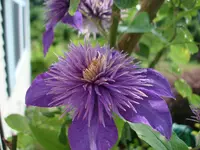
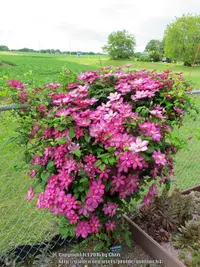
Clematis 'Ville de Lyon' is a deciduous, woody climbing vine grown mainly for its large, deep rose-red flowers with slightly ruffled petals. It typically grows through supports such as trellises, fences, or shrubs, creating a vertical wall of color in season.

This cultivar belongs to the Clematis viticella group, which is known for good vigor and relatively reliable flowering. It originates from garden breeding in Europe, not from a single wild habitat.

Compared with some clematis types, it is considered moderately easy to grow if its roots stay cool and moist and the stems receive good light. Understanding how to care for Clematis in warm summers and colder winters helps keep 'Ville de Lyon' long-lived and floriferous.

Main Plant Requirements

Care Difficulty

Moderate Care

Light Preference

Full Sun

Water Requirements

Regular Water

Temperature Preference

Cold Hardy

Hardiness Zone

4–9

Soil Texture

Loamy, Sandy, Organic-rich

Soil pH

Acidic (5.5–6.5), Slightly acidic (6.5–7.0)

Soil Drainage

Moist but well-drained

Fertilization

Light (every 4–6 weeks)

Get Personalized Care Plan

Scan your plant to receive care tips personalized for your specific plant

Available on iOS and Android

How to Care for the Clematis

This large-flowered climber prefers strong light on its vines but cooler, shaded roots for balanced growth.

  • Provide 4–6 hours of direct morning to early afternoon sun, with light or dappled shade in the hottest mid-afternoon, especially in warm climates.
  • Tolerates bright partial shade (2–4 hours sun), but flowering decreases and stems may stretch if light falls below this.
  • In hot summers, protect from intense late-afternoon sun to reduce leaf scorch; ensure the base is shaded with mulch or low plants for stable soil light and temperature.

This vine prefers evenly moist, cool soil that never stays waterlogged.

  • Water when the top 3–5 cm of soil feels dry, soaking the root zone deeply so moisture reaches 20–30 cm down, then let the surface dry slightly again.
  • In spring and early summer, monitor more often during active growth; in cool, rainy periods, skip waterings if soil remains moist and drains within 24 hours.
  • Yellowing, limp leaves with soggy soil suggest overwatering or poor drainage, while dull, wilting foliage and dry, crumbly soil indicate Clematis 'Ville de Lyon' is too dry.

This hardy climber tolerates winter cold but grows best in moderate, stable temperatures.

  • Active growth and flowering are strongest around 60–75°F (16–24°C), with buds forming well in these mild conditions.
  • Mature plants tolerate winter lows near -20°F (-29°C) in the ground, but new or container plants need protection from hard freezes and rapid freeze–thaw cycles.
  • In summer, plants handle up to about 85–90°F (29–32°C) if soil stays moist and roots are shaded; prolonged hotter periods can stress vines and reduce flowering.

This clematis tolerates a broad humidity range and rarely needs special humidity management outdoors.

Clematis 'Ville de Lyon' performs best in deep, moisture-retentive yet free-draining soil.

  • Aim for a loamy structure with plenty of organic matter, such as compost or well-rotted manure, to hold moisture without becoming sticky.
  • Ensure sharp drainage by avoiding heavy, compacted clay and, if needed, working in coarse sand or fine grit to improve percolation.
  • Target a slightly alkaline to neutral pH around 6.5–7.5; add garden lime if conditions are strongly acidic.
  • Maintain aeration by avoiding waterlogged spots and periodically loosening the top 5–8 cm around, but not over, the root crown.

This cultivar is suitable for container growing if the pot is large, deep, and very stable.

  • Choose a tall, heavy container that will not tip when the vine gains height and catches wind on a support or trellis.
  • Use a pot wide enough to keep the root zone shaded by companion plants or mulch while the stems can climb into full sun above.
  • Select a material like thick terracotta or glazed ceramic where weight adds stability but the wall thickness prevents extreme, rapid root temperature swings.

This vigorous flowering vine benefits from steady, moderate feeding during the growing season.

  • Use a balanced granular or slow-release fertilizer (around 10-10-10) or well-rotted compost in early spring as new growth starts.
  • Feed every 4–6 weeks through mid-summer, then stop to allow stems of Clematis 'Ville de Lyon' to harden before fall.
  • Apply at half to three-quarter label strength for container plants to avoid root burn and salt buildup.
  • During winter dormancy, do not apply fertilizer; rely on existing soil nutrients until growth resumes.

Thoughtful pruning maintains strong flowering and a manageable framework for Clematis 'Ville de Lyon'.

  • Use clean, sharp bypass pruners to make angled cuts just above healthy buds or leaf joints.
  • In late winter or very early spring, remove dead, diseased, or weak stems down to sound wood.
  • Thin out crowded or tangled shoots to improve air flow and light, encouraging larger, more abundant blooms.
  • Shape the vine by shortening vigorous stems to suitable supports, training new shoots along trellis wires or arbors.

This clematis is usually grown in the ground but can be transplanted or moved in containers with care.

  • Plan major transplanting for early spring or early fall, when temperatures are mild and the plant is not in peak bloom.
  • Look for roots circling the container drainage holes, dry-out occurring very quickly, or declining vigor as signs it needs a larger space.
  • Lift with a generous root ball, disturb roots as little as possible, and set at the same soil depth in a larger pot or prepared bed.
  • Water thoroughly after moving, shade for several days, and maintain even moisture to limit transplant shock and support re-establishment.

Clematis 'Ville de Lyon' is most reliably propagated by cuttings or layering rather than by seed.

  • Take semi-ripe stem cuttings in late spring to mid-summer, each with 2–3 nodes, and remove lower leaves.
  • Insert cuttings into a moist, free-draining mix under high humidity and bright, indirect light to promote rooting.
  • For simple layering in spring, bend a flexible stem to the ground, lightly wound the underside, pin it down, and cover with soil.
  • Leave layered sections in place until they develop strong roots, then sever from the parent and transplant carefully.

This clematis is generally cold hardy in many temperate climates but benefits from moderate winter preparation.

  • Once the ground cools, apply 5–8 cm of organic mulch over the root zone, keeping it slightly away from the stems.
  • Allow top growth to die back naturally in colder regions, then prune according to its pruning group in late winter or early spring.
  • For container plants in very cold areas, move pots into an unheated garage, shed, or against a sheltered wall to reduce freeze–thaw stress.

Care Tips

Cool root zone

Lay a 5–8 cm layer of organic mulch or place low groundcover plants around the base to keep roots cool and shaded while allowing the top growth to stay in full sun, which is especially helpful when growing Clematis in hot summers.

Early vine training

As new shoots reach 20–30 cm, gently fan them out and tie them loosely to their support with soft ties every 15–20 cm to create an even, well-covered trellis and reduce tangled, wind-damaged stems later in the season.

Sturdy support choice

Install a rigid support with thin elements such as mesh, wires, or narrow canes (0.5–1 cm thick) before planting so the leaf petioles can easily hook on, and anchor the structure firmly to withstand wind and the plant’s mature weight.

Crown protection

Place a small, slanted stone or a short section of roof tile at the base, leaning away from the stem, to shield the crown from intense midday sun and heavy rain splash that can stress young plants.

Airflow for disease

Space plants so that mature vines do not overlap heavily with other climbers and remove congested side shoots to maintain good air circulation, which lowers the risk of clematis wilt and powdery mildew on dense foliage.

Common Pests and Diseases

Clematis wilt

This disease causes sudden blackening and collapse of stems, often just as flower buds are forming, while roots may remain alive underground.

Solution

Cut affected stems back to healthy green tissue or to the base, disinfecting pruners between cuts, and remove all fallen infected material from the area. Maintain even soil moisture, avoid damaging stems at ground level, and plant the crown 5–8 cm deeper than the soil surface to encourage replacement shoots from below ground as part of Clematis 'Ville de Lyon' care instructions.

Powdery mildew

This disease shows as white to gray powdery patches on leaves and stems, leading to yellowing and premature leaf drop in warm, dry conditions with poor airflow.

Solution

Remove and discard heavily infected leaves, then improve air circulation by thinning crowded growth and avoiding overhead watering late in the day. If needed, apply a sulfur or potassium bicarbonate-based fungicide labeled for ornamental vines at the first sign of mildew and repeat as directed on the product label.

Slugs and snails

These pests chew irregular holes in young leaves and shoots, and can severely damage emerging stems near soil level in cool, damp weather.

Solution

Hand-pick slugs and snails in the evening, use copper tape or barriers around the base, and reduce hiding places such as dense mulch directly against stems. In high-pressure areas, place iron phosphate slug bait around but not touching the plant, following label directions.

Aphids

These insects cluster on tender shoots and buds, sucking plant sap and causing distorted growth and sticky honeydew that can attract sooty mold.

Solution

Spray infested shoots with a firm stream of water to dislodge aphids, then treat remaining colonies with insecticidal soap or neem oil, coating the undersides of leaves and young stems. Encourage natural predators such as lady beetles by avoiding broad-spectrum insecticides in the garden.

Clematis leaf spots

Symptoms include brown or purplish spots on leaves that may enlarge and merge, leading to yellowing and premature leaf drop, especially in humid conditions.

Solution

Remove and dispose of affected leaves, including fallen ones, and water at the base to keep foliage dry. If spotting is recurrent or severe, apply a copper-based or chlorothalonil fungicide labeled for ornamental vines early in the season and repeat according to label directions, while also improving spacing and airflow around the plant.

Interesting Facts

Historic French origin

This large-flowered hybrid was raised by the French breeder Francisque Morel around 1899 and introduced by Morel & Fils in Lyon, which is reflected in its cultivar name.

Colorfast summer bloomer

The velvety, carmine-red flowers maintain good color in strong sun compared with many red clematis cultivars, and they can flower repeatedly from early to late summer under suitable conditions.

Vigorous yet compact habit

This cultivar typically reaches about 2.5–3.5 m in height, making it vigorous enough for arches and trellises but more restrained than many older large-flowered clematis hybrids, which suits smaller gardens.

FAQs about Clematis

Poor flowering often comes from too-deep planting, heavy pruning at the wrong time, or low light. Overfertilizing with high nitrogen also reduces buds. Stable moisture, balanced fertilizer, and correct pruning group identification greatly improve blooming.

Grow Healthy Plants with Botan Care

Keep your plants happy and healthy with plant identification, disease detection, and easy care guidance.

Botan plant care app — identify plants on mobile

Explore More Plants