Hosta Care (Hosta Shadowland Empress Wu)

Hosta

About Hosta

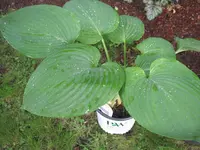
Hosta Shadowland Empress Wu is a large, shade-loving perennial grown mainly for its bold foliage. It forms a dense clump with huge, deeply veined leaves and a mounding habit that creates strong structure in shaded beds.

This cultivar was developed from species native to woodland areas of East Asia, where cool, moist, and shaded conditions are common. Pale summer flowers rise above the foliage on tall stems, but the leaves remain its main ornamental feature.

It is generally long-lived and reliable when given consistent moisture, good drainage, and protection from strong sun, which makes it relatively straightforward to care for Hosta in many temperate gardens.

Main Plant Requirements

Care Difficulty

Easy Care

Light Preference

Partial Shade

Water Requirements

Regular Water

Temperature Preference

Cold Hardy

Hardiness Zone

3–9

Soil Texture

Loamy, Silty, Organic-rich

Soil pH

Acidic (5.5–6.5), Slightly acidic (6.5–7.0)

Soil Drainage

Moist but well-drained

Fertilization

Light (every 4–6 weeks)

Get Personalized Care Plan

Scan your plant to receive care tips personalized for your specific plant

Available on iOS and Android

How to Care for the Hosta

This large shade perennial thrives in bright shade with brief gentle sun exposure.

  • Provide 2–4 hours of soft morning sun with dappled or open shade the rest of the day for best leaf size and color.
  • Avoid strong midday and afternoon sun; foliage can scorch, yellow, or develop dry brown patches under more than 4–5 hours of direct summer sun.
  • In warmer zones, choose a site with deeper shade in summer, while in cooler climates Hosta can handle a bit more morning or late-day sun.

This plant prefers consistently moist, cool soil without becoming waterlogged.

  • Water when the top 3–5 cm of soil feels dry, aiming for evenly moist soil around the root zone during active growth.
  • Use rich, well-drained soil or amended garden beds so excess water drains away; soggy soil leads to root rot and pale, limp leaves.
  • In spring and early summer, increase moisture as foliage expands; in late summer and drought, watch for drooping leaves that recover after watering, a sign of thirst.

This hardy perennial tolerates cold winters but grows best in moderate temperatures.

  • Active growth is strongest around 60–75°F (16–24°C), with cool nights helping maintain firm, large leaves.
  • The crown survives down to about -30°F (-34°C) with mulch and snow cover, but new spring shoots are sensitive to late frosts and may need protection.
  • During hot spells above 85°F (29°C), provide extra shade and soil moisture to reduce stress, leaf scorch, and slowed growth.

This large shade perennial prefers moderate ambient humidity but usually adapts to typical outdoor garden conditions.

  • Target 40–60% humidity in sheltered, shaded beds or patio spots, avoiding very exposed, desiccating wind.
  • Dry air combined with strong sun can cause marginal leaf browning and papery tips that mimic drought stress.
  • Increase humidity by mulching 5–8 cm deep and grouping plants near other foliage to reduce evaporation around the Hosta canopy.

This plant grows best in deep, moist, well-aerated soil that stays evenly damp but not waterlogged.

  • Use a loamy, organic-rich soil that feels crumbly, with plenty of fine roots able to move through it easily.
  • Aim for slightly acidic to neutral pH around 6.0–7.0, blending garden loam with compost and shredded bark for structure.
  • Improve drainage and aeration by incorporating pine bark fines and coarse sand or grit, especially in heavier clay sites.
  • Avoid compacted, poorly drained spots or very sandy, nutrient-poor areas, as these limit leaf size and vigor for Hosta Shadowland Empress Wu.

This cultivar can be grown in large containers, but the pot must accommodate its vigorous root system and heavy foliage.

  • Choose a wide, heavy container that resists tipping when the foliage reaches full height and catches wind.
  • Select thick-walled pots such as glazed ceramic to moderate rapid moisture loss and temperature swings around the roots.
  • Fill tall containers at the base with coarse, inert material to reduce weight while still allowing free drainage and root depth above.

This large shade perennial benefits from moderate, targeted feeding during the active growing season.

  • Apply a balanced slow-release fertilizer (around 10-10-10) in early spring as shoots emerge, following label rates.
  • Supplement with a light top-dressing of compost around the root zone once per season, keeping material off the crowns.
  • During summer, use a half-strength balanced liquid feed every 4–6 weeks if growth seems weak or soil is lean.
  • Stop feeding Hosta in late summer and do not fertilize during fall and winter dormancy.

Hosta Shadowland Empress Wu needs simple, seasonal pruning to stay tidy and healthy.

  • In spring, remove any remaining dead or mushy foliage at ground level using clean, sharp pruners or scissors.
  • During the growing season, cut off damaged, yellowing, or slug-torn leaves to improve appearance and airflow.
  • Shear spent flower stalks at the base after blooming to direct energy back into foliage and root growth.
  • In fall after frost, allow foliage to die back, then cleanly remove collapsed leaves to reduce overwintering pests and diseases.

This large Hosta is usually grown in the ground and benefits from occasional division and transplanting rather than frequent repotting.

  • Consider transplanting every 4–6 years when the clump becomes crowded, shows reduced vigor, or invades nearby plants.
  • Plan moves for early spring as new shoots emerge, or early fall, so roots re-establish in cool, moist conditions.
  • Dig widely around the clump, lifting with as much root and soil as possible to minimize disturbance and stress.
  • Replant at the same depth in enriched, well-drained soil, water thoroughly, and keep evenly moist for several weeks.

Division is the standard method for propagating Hosta Shadowland Empress Wu while maintaining cultivar traits.

  • Divide mature clumps in early spring as eyes emerge, or in early fall while soil is still warm and moist.
  • Lift the parent plant carefully and split the crown into sections, each with 2–3 eyes and a healthy root system.
  • Trim damaged roots, keep divisions shaded, and replant promptly at the original soil depth in prepared soil.
  • Water thoroughly after planting and maintain consistent moisture until new growth clearly resumes.

This hardy perennial tolerates typical winter conditions in most temperate climates and needs only minimal care.

  • Hosta Shadowland Empress Wu survives freezing temperatures once dormant, with foliage naturally dying back after hard frost.
  • After dieback, remove collapsed leaves to limit slugs and fungal problems around the crowns.
  • Apply a 5–8 cm layer of mulch over the root zone in late fall, keeping mulch slightly away from the crowns.

Care Tips

Slug barrier management

Install a continuous 5–10 cm wide barrier of iron phosphate pellets or rough grit around the clump in early spring, and refresh it after heavy rain to protect emerging leaves from slug and snail damage before they unfurl.

Spring eye thinning

When eyes (shoots) are 5–8 cm tall, remove a few inner shoots at the crown with a clean knife to slightly reduce density, which improves air flow and produces fewer but larger leaves on this giant cultivar.

Mulch gap strategy

Apply 3–5 cm of organic mulch around the plant but keep a 5–8 cm clear ring around the crown to keep new eyes from rotting and to make it easier to monitor for pests at soil level.

Dividing with restraint

Divide only mature clumps every 5–7 years in early spring or early fall, cutting the crown into large sections with at least 4–6 eyes each so plants re-establish quickly and maintain the bold size expected when growing Hosta cultivars bred for large foliage.

Leaf support spacing

When planting, allow at least 120–150 cm of open space around the crown so the heavy leaves can fully expand and dry quickly after rain, which reduces the need for staking and lowers the risk of foliar disease.

Common Pests and Diseases

Slug and snail damage

This pest feeds heavily on tender Hosta leaves, leaving large ragged holes and slime trails, especially in cool, moist shade beds.

Solution

Hand-pick slugs and snails in the evening, use iron phosphate bait around clumps, and reduce hiding places such as dense mulch or debris; for heavy pressure, combine traps, barriers like copper tape, and drier mulch to protect new foliage on large-leaved cultivars like Shadowland Empress Wu.

Foliar nematodes

These microscopic worms move in water films on leaves, causing tan, rectangular patches limited by veins that eventually turn brown and dry out.

Solution

Remove and destroy affected leaves, avoid overhead watering, and keep foliage dry; in beds with repeated problems, discard severely affected plants, improve spacing and airflow, and water at soil level to limit splash spread when caring for Hosta.

Hosta virus X (HVX)

This disease causes mottled, ink-bleed patterns, twisted growth, or sunken dark areas on leaves and spreads through contaminated tools or division.

Solution

Immediately remove and destroy suspicious plants, disinfect cutting tools with a 10% bleach solution or 70% alcohol between plants, and purchase new Hostas from reputable sources that test stock for HVX to prevent long-term contamination of the bed.

Crown rot (southern blight)

This disease starts at the crown, leading to sudden collapse, browning of leaf bases, and sometimes white, cottony fungal growth with small round sclerotia at soil level.

Solution

Dig out and destroy affected plants with surrounding soil, improve drainage, avoid planting crowns too deep, and keep mulch pulled slightly back from the base; in sites with a history of this problem, replant in a different location or use raised beds to keep crowns drier.

Black vine weevil

This insect pest causes notched feeding damage along leaf edges, while its larvae feed on roots and crowns, leading to stunted or wilting clumps.

Solution

Inspect leaves at night and hand-pick adults, use corrugated cardboard or boards as traps at the base of plants, and consider applying beneficial nematodes to the soil in spring or late summer to target larvae around the root zone of large Hosta clumps.

Interesting Facts

Giant cultivated hosta

This cultivar is among the largest hostas in cultivation, capable of forming clumps over 1.5 m wide with individual leaves commonly exceeding 45 cm in length under good conditions.

Thick corrugated foliage

Its leaves are notably thick and heavily corrugated, traits selected by breeders for improved resistance to slug feeding compared to many thin-leaved hosta types.

Blue-green color stability

The foliage shows a stable blue-green coloration derived from a waxy surface layer called glaucous bloom, which helps reduce water loss and sun stress, especially in cooler, shaded gardens.

Botan icon

Did you know?

This cultivar was developed by hybridizer Brian and Virginia Skaggs and introduced through Walters Gardens as part of the Shadowland series, and it quickly gained attention among collectors for pushing the size limits of ornamental hostas in home gardens.

FAQs about Hosta

This giant cultivar forms an upright, spreading clump about 1–1.2 m tall with a 1.5–1.8 m spread. Individual leaves can reach 45–60 cm long, creating a substantial architectural presence in a shaded border or large container.

Grow Healthy Plants with Botan Care

Keep your plants happy and healthy with plant identification, disease detection, and easy care guidance.

Botan plant care app — identify plants on mobile

Explore More Plants