Timed succession sowing
Stagger sowing every 2–3 weeks in early spring so fading early plants are replaced by younger ones, extending the flowering display and reducing gaps in the border.

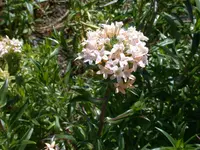
Grand collomia (Collomia grandiflora) is an annual wildflower from western North America, often found in dry open slopes, meadows, and disturbed ground. It forms upright, branching stems with narrow leaves and clusters of soft, funnel-shaped flowers in pale cream, yellow, or peach tones.
This plant has a relatively fast life cycle and relies on good light and drainage rather than rich soil. It reseeds in suitable conditions, so it can appear reliably each year once established. With its preference for full sun and dry to moderately moist, well-drained soil, it suits low-input gardens where gardeners want to learn how to care for grand collomia without complicated routines.

Care Difficulty
Easy Care

Light Preference
Full Sun

Water Requirements
Low Water

Temperature Preference
Cool Climate

Hardiness Zone
4–8

Soil Texture
Sandy, Loamy, Rocky

Soil pH
Slightly acidic (6.5–7.0), Neutral (7.0)

Soil Drainage
Well-drained

Fertilization
Minimal (feed rarely)
Scan your plant to receive care tips personalized for your specific plant
Available on iOS and Android
This sun-loving annual thrives in open, bright conditions for strong flowering and compact growth.
This species prefers dry to moderately moist conditions and is sensitive to waterlogged soil.
This annual wildflower grows best in moderate, dry climates without prolonged extremes.
This species thrives in dry to moderately dry air and rarely needs humidity adjustment.
Collomia grandiflora prefers loose, fast-draining soil that mimics its native dry, open habitats.
This annual can be grown in containers if the pot allows its taproot to develop without confinement.
This annual wildflower grows well in lean soil and usually needs minimal fertilization.
Pruning needs for Collomia grandiflora are simple and focus on tidiness and flowering.
This species is usually grown as a direct-sown annual, so transplanting is more relevant than repotting.
Collomia grandiflora is most commonly propagated from seed rather than by cuttings or division.
As a cool-season annual, this plant usually dies back after flowering and needs little winter care.

Plant Health Check
Not sure what's wrong with your plant? Check your plant's health inside the app.
The sticky, forked stigma of this species initially sits in a position that collects its own pollen, then later bends away, which helps shift from self-pollination to cross-pollination as flowers age.
This plant is naturally adapted to dry, sandy, and disturbed soils in western North America, often colonizing road cuts, open slopes, and recently burned or eroded sites where few other forbs establish easily.
Its tubular flowers often open a soft peach or salmon color and may fade toward paler shades as they age, creating a subtle multi-toned effect on the same inflorescence.

The genus name Collomia comes from the Greek word for glue, referring to the unusually sticky texture of this species’ seeds when wet, which likely aids in soil adherence and short-distance dispersal.
This species is usually grown as an annual, completing its life cycle in 1 season from seed to seed. In mild, well-drained sites it may sometimes behave as a short-lived perennial, self-seeding to maintain presence.
Keep your plants happy and healthy with plant identification, disease detection, and easy care guidance.