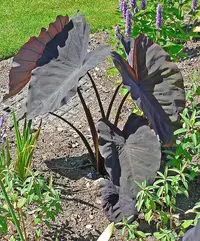



Elephant Ear (Colocasia esculenta 'Black Magic') Light Needs

Elephant Ear grows best in bright partial sun, with gentle direct light and protection from harsh afternoon exposure.

Light Preference

Partial Sun

Colocasia esculenta 'Black Magic' Light Requirements

Colocasia esculenta is associated with warm, humid, wet habitats such as marsh edges, stream margins, and open lowland sites. In these places, leaves may receive strong seasonal sun, but nearby vegetation and high humidity often soften the exposure. The dark-leaved cultivar is typically grown with enough brightness to hold color without constant harsh sun. Preferred light is partial sun with bright filtered light.

  • Ideal exposure:

    Elephant Ear needs about 6–8 hours of bright filtered light or partial sun daily, including 2–4 hours of direct morning sun.

  • Full sun tolerance:

    Acclimated outdoor plants can handle longer direct sun, but hot afternoon exposure can scorch dark leaves.

  • Lower light tolerance:

    Shade is tolerated, though growth is slower and leaf color may look less rich.

  • Afternoon risk:

    In hot climates, give afternoon shade or filtered light rather than sudden all-day sun.

Indoors, choose the brightest spot available and manage direct sun by time of day.

NPoor
North-facing window:

A north-facing window is usually too dim unless it is large, unobstructed, and the plant sits very close to the glass.

EBest
East-facing window:

An east-facing window is often best because it gives gentle morning sun and bright light without intense afternoon heat.

SSuitable
South-facing window:

A south-facing window can work if the plant is set 2–4 ft back or protected from midday rays with a sheer curtain.

WConditional
West-facing window:

A west-facing window is conditional because late-day sun can be hot enough to fade or scorch exposed leaves.

Rotate the pot every 1–2 weeks if leaves lean toward the light.

Strong sun usually shows on the leaf areas facing the light.

Bleached patches:

Dark leaves may develop pale bronze or tan areas after sudden direct sun, especially near windows or on exposed outdoor sides.

Crisp scorch:

Thin, papery brown spots can form where afternoon rays hit the blade most directly.

Faded color:

The near-black tone may look washed out when light is intense for many hours.

Heat droop:

Leaves may sag during peak sun and recover later, suggesting the exposure is too harsh.

Move the plant back from the glass or add a sheer curtain. Outdoors, shift it to morning sun and afternoon shade, then reintroduce brighter light gradually.

Low light often shows as weak structure before obvious leaf damage. Watch new growth during the active season.

  • Long petioles:

    Leaf stems may stretch and lean strongly toward the nearest bright area.

  • Smaller leaves:

    New leaves may emerge smaller than older leaves when light is consistently weak.

  • Duller color:

    Colocasia esculenta 'Black Magic' may lose some deep purple-black intensity in too much shade.

  • Slow growth:

    During spring and summer, few new leaves can indicate the plant is not receiving enough usable light.

  • Loose form:

    Growth may look open and unbalanced rather than upright and full.

Move it gradually to brighter filtered light or a spot with gentle morning sun. Avoid a sudden shift from deep shade into full afternoon sun.

If ideal partial sun is not available, choose the brightest protected position and favor morning sun over afternoon sun. Filter harsh rays with a sheer curtain, shade cloth, or a small setback from hot glass.

Rotate the pot ¼ turn every 1–2 weeks to keep the large leaves from leaning. A deep interior corner is unsuitable because shade tolerance does not mean strong indoor growth in dim rooms.

Get Personalized Care Plan

Scan your plant to receive care tips personalized for your specific plant

FAQ

The best light for Elephant Ear is bright filtered light or partial sun, with several hours of gentle direct morning sun and protection from harsh afternoon rays.

Everything About Elephant Ear

More Plant Light Guides

Get the Botan App

Discover how to care for your plants with Botan.

Botan app identifying a plant with a phone camera
Plants That Repel Mosquitoes – 10 Effective Choices

8 min read · 6 Jul 2026

Plants That Repel Mosquitoes – 10 Effective Choices

Plants that repel mosquitoes can help mask human scent naturally and make outdoor spaces more comfortable. Explore the most effective options, their benefits and drawbacks, and choose the right plant for your space.

Plant Recommendations
Plants That Repel Mosquitoes – 10 Effective Choices
12 Best Plants for Bathroom That Thrive in Humid Conditions

9 min read · 29 Sept 2026

12 Best Plants for Bathroom That Thrive in Humid Conditions

Discover the 12 best plants for bathroom spaces. Each pick comes with its own advantages, plus light, humidity, watering, and placement tips. Take a look and match the plant to your specific bathroom.

Plant Recommendations
12 Best Plants for Bathroom That Thrive in Humid Conditions
How Long Can Flowers Go Without Water? Everything You Need to Know

6 min read · 10 Jul 2026

How Long Can Flowers Go Without Water? Everything You Need to Know

Flowers can survive without water anywhere from 1-2 hours to several months, depending on the plant type, species, and growing conditions. Some strong-looking flowers are drought-sensitive, while delicate-looking plants may tolerate long dry periods surprisingly well.

Plant Care
How Long Can Flowers Go Without Water? Everything You Need to Know