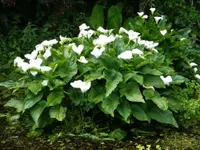



Calla lily (Zantedeschia aethiopica) Light Needs

Calla lily grows best in bright partial sun, with gentle direct sun and protection from harsh afternoon exposure.

Light Preference

Partial Sun

Zantedeschia aethiopica Light Requirements

Zantedeschia aethiopica is native to moist stream banks, marsh edges, and seasonally wet ground in southern Africa. In these open habitats, it can receive direct sun for part of the day, especially where soil stays cool and damp.

Filtered light or partial shade is common near taller vegetation and during hotter periods. Cultivated plants usually perform best when this balance is repeated. Preferred light is bright partial sun.

  • Ideal exposure:

    Calla lily needs about 6–8 hours of bright partial sun daily, including 3–5 hours of direct morning sun.

  • Full sun tolerance:

    Full sun is tolerated outdoors when temperatures are mild and roots stay cool, but intense afternoon sun can stress foliage.

  • Light shade:

    Light shade is tolerated, especially outside in hot areas, but flowering is usually weaker with limited sun.

  • Best direct sun:

    Morning sun is safer than late-day sun, particularly indoors behind glass or during summer heat.

Indoors, place this plant where it receives bright light and a few hours of gentle direct sun.

NPoor
North-facing window:

A north window is usually too dim for strong flowering unless it is unusually bright and unobstructed.

EBest
East-facing window:

An east window gives morning sun and bright daylight without the strongest afternoon heat.

SSuitable
South-facing window:

A south window works if the pot sits 2–4 ft back or the glass is lightly filtered at midday.

WConditional
West-facing window:

A west window can be too hot, so use it only with filtering or a few feet of distance from direct afternoon rays.

The best indoor position keeps light bright while avoiding prolonged hot rays through glass.

Excess light usually shows after sudden exposure or hot afternoon sun.

Bleached patches:

Leaves may develop pale tan or whitish areas on the sun-facing side, especially behind hot glass.

Scorched flowers:

White spathes can mark, fade, or dry faster when direct sun is strong.

Curling in heat:

Leaves may cup or look limp during the brightest hours, then partly recover as light softens.

Crisp exposed tips:

Tips or margins facing the window may turn dry while shaded leaves remain normal.

Move Zantedeschia aethiopica out of harsh afternoon rays, or add a sheer curtain. Keep brighter conditions by choosing morning sun or filtered midday light.

Low light often appears during active growth, when the plant should be making leaves or blooms.

  • Leaning growth:

    Stems and leaves may angle strongly toward the brightest side instead of standing evenly.

  • Long leaf stalks:

    Petioles, the leaf stalks, may stretch as new leaves reach toward the nearest bright source.

  • Few blooms:

    Flowering may be sparse or absent even when foliage continues to grow.

  • Small new leaves:

    New leaves may emerge smaller and thinner than older growth.

Move Zantedeschia aethiopica to brighter partial sun over several days. Choose a spot with morning sun rather than deep shade.

If ideal light is not available, choose the brightest location that avoids hot afternoon rays. Keep the plant close to the light source, then filter direct midday sun with a sheer curtain if leaves mark.

Rotate the pot a quarter turn weekly so leaves and flower stems do not lean strongly in one direction.

A dim corner is not suitable because it usually reduces flowering and produces stretched growth.

Get Personalized Care Plan

Scan your plant to receive care tips personalized for your specific plant

FAQ

Calla lily light requirements are bright partial sun, ideally 6–8 hours of strong daylight with several hours of gentle direct sun. Light shade is tolerated, but blooming may decrease.

More Plant Light Guides

Get the Botan App

Discover how to care for your plants with Botan.

Botan app identifying a plant with a phone camera
How Long Can Flowers Go Without Water? Everything You Need to Know

6 min read · 10 Jul 2026

How Long Can Flowers Go Without Water? Everything You Need to Know

Flowers can survive without water anywhere from 1-2 hours to several months, depending on the plant type, species, and growing conditions. Some strong-looking flowers are drought-sensitive, while delicate-looking plants may tolerate long dry periods surprisingly well.

Plant Care
How Long Can Flowers Go Without Water? Everything You Need to Know
10 Easy Garden Flowers to Grow

8 min read · 10 Sept 2026

10 Easy Garden Flowers to Grow

Discover 10 garden flowers that require minimal care. Learn which characteristics make plants easy to grow and follow tips on how to create a beautiful corner from beginner-friendly blooms on your property.

Beginner Guides
10 Easy Garden Flowers to Grow
12 Best Landscaping Trees for Your Garden

8 min read · 6 Oct 2026

12 Best Landscaping Trees for Your Garden

Choosing the landscape tree depends on what your garden needs most. These 12 options include compact flowering specimens, colorful deciduous trees, shade varieties, and evergreens suitable for screening and year-round structure.

Plant Recommendations
12 Best Landscaping Trees for Your Garden